
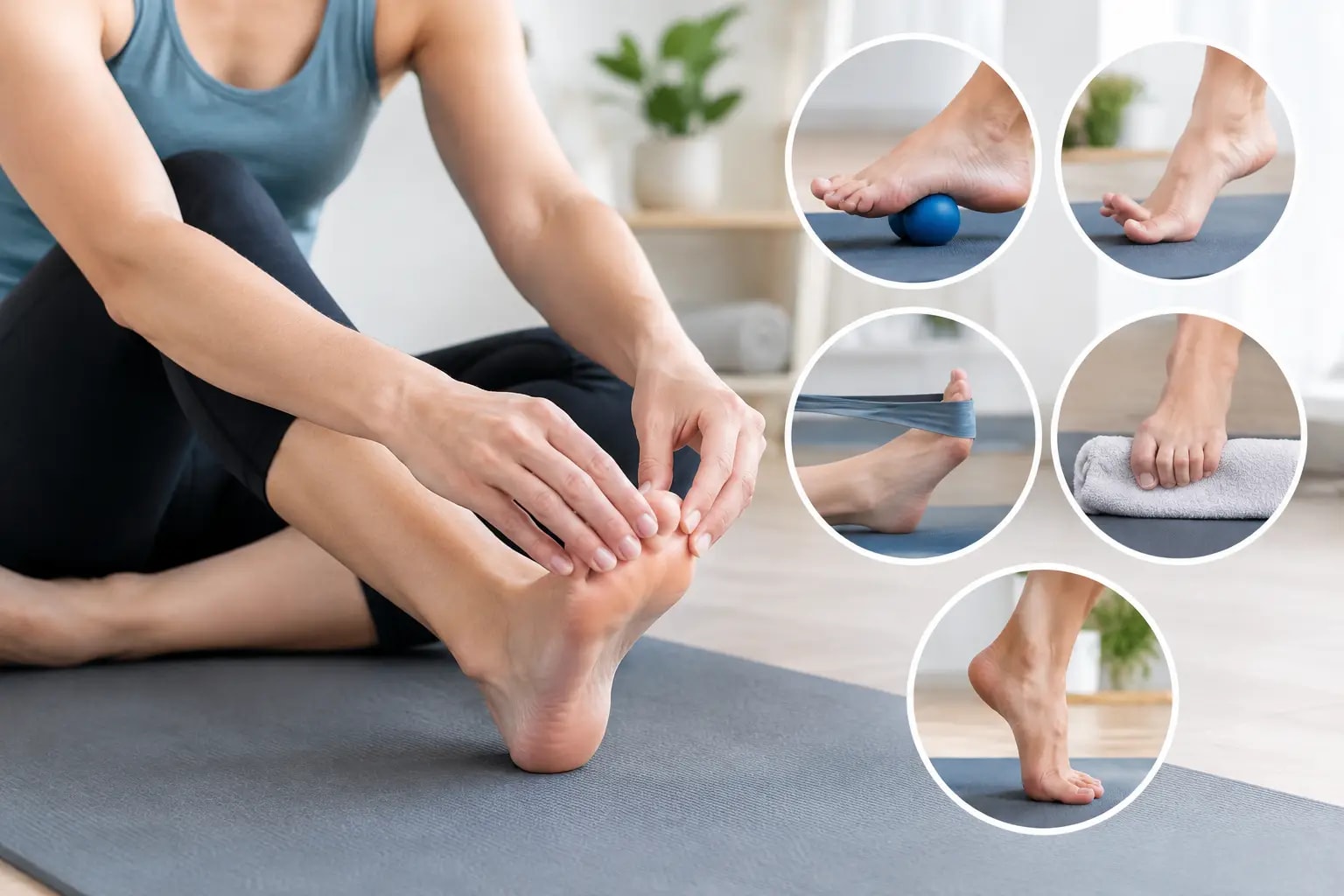
Toe stiffness can make ordinary movements surprisingly difficult. Pushing off while walking, climbing stairs, getting up on your toes or fitting comfortably into shoes may all become painful. The best exercises for toe stiffness can help maintain movement and improve comfort, but the right approach depends on whether stiffness is caused by joint wear, injury, footwear pressure, a toe deformity or another foot condition.
The big toe is particularly important. It needs to bend upwards as you walk, run and rise onto the ball of the foot. When this joint becomes restricted, the body often compensates by rolling to the outside of the foot, shortening the stride or avoiding activity altogether. A gentle, regular exercise program can be useful, especially alongside appropriate footwear, orthotics or other treatment recommended after assessment.
Before You Start Toe Stiffness Exercises
Exercises should create a mild stretching sensation or fatigue in the small muscles of the foot, not sharp pain. Start after a warm shower, or following five to 10 minutes of easy walking, when tissues are generally more flexible.
If your toe is visibly swollen, red, hot or bruised, avoid forcing it through movement. The same applies if pain started after a recent injury, if you have diabetes with reduced sensation, poor circulation, numbness, or a history of inflammatory arthritis such as gout. In these situations, an individual assessment is safer than self-treatment.
Stiffness at the big toe joint can be a sign of hallux rigidus, a form of arthritis affecting the joint at the base of the big toe. In its early stages, movement exercises may help preserve available range. In more advanced cases, repeatedly pushing hard into a blocked, painful joint can aggravate symptoms. This is why a clear diagnosis matters.
7 Best Exercises for Toe Stiffness
1. Gentle big toe joint mobilisation
Sit with the affected foot resting across the opposite knee. Hold the foot just behind the big toe joint with one hand, then use the other hand to gently guide the big toe upwards and downwards. Work only within a comfortable range and avoid twisting the toe.
Perform 10 slow repetitions in each direction, once or twice daily. This exercise is most helpful for stiffness around the big toe joint, particularly after resting or wearing firm shoes. The goal is controlled movement, not trying to force a click or gain a large range immediately.
2. Toe lifts and toe spreads
Place your bare foot flat on the floor. Keep the smaller toes down while lifting the big toe, then place the big toe down and lift the other four toes. If this feels difficult at first, use your fingers to position the toes, then try to hold the position independently.
Next, gently spread all toes apart, as though creating small gaps between them. Hold for three to five seconds and relax. Complete eight to 10 repetitions of each movement. Toe lifts and spreads improve awareness and control of the small muscles that support the toes and forefoot, which can be valuable when stiff toes are also crowding or clawing.
3. Towel scrunches
Sit on a chair with a small towel placed flat beneath your bare foot. Keeping the heel on the floor, use the toes to gather the towel towards you. Straighten the towel and repeat.
Aim for two rounds of 30 to 60 seconds. This is a simple strengthening exercise for the intrinsic foot muscles, which help control toe position during walking. It should feel like work through the sole of the foot, rather than cramping through the calf. If cramping occurs, take a break and reduce the effort.
4. Marble or object pickups
Place several small, stable objects such as marbles, cotton balls or a rolled-up sock on the floor. Pick up one item at a time with your toes and move it into a bowl or to one side. Keep the movement gentle and controlled.
This exercise combines toe flexion, coordination and foot strength. Ten to 15 pickups is generally enough. It can be useful for people recovering from a period of reduced foot use, although it may not suit a painful arthritic big toe if gripping increases joint discomfort.
5. Seated calf and plantar fascia stretch
Tight calves can contribute to increased pressure through the forefoot and toes. While seated, cross one leg over the other and pull the toes back gently until you feel a stretch along the sole of the foot and into the calf. Hold for 20 to 30 seconds, then release.
Repeat two or three times on each side. Keep the stretch comfortable. This is not about pulling the toes back as far as possible. A gradual stretch through the calf and arch may make toe movement feel easier, particularly first thing in the morning.
6. Standing calf stretch with controlled heel raises
Stand facing a wall, with one foot behind the other. Keep the back heel down and knee straight while leaning forward until you feel the stretch in the calf. Hold for 20 to 30 seconds, then repeat with the back knee slightly bent to target the deeper calf muscle.
After stretching, stand near a bench or wall for support and perform slow heel raises. Lift the heels only as far as the toes allow comfortably, then lower with control. Start with eight repetitions. Heel raises improve calf strength and help retrain a smoother push-off, but they should be modified or paused if the big toe joint becomes painful.
7. Foot rolling for soft-tissue comfort
Roll the sole of the foot over a firm massage ball or a chilled water bottle while seated. Use light to moderate pressure for one to two minutes, focusing on the arch and ball of the foot rather than pressing directly into a painful toe joint.
Foot rolling does not change arthritis or correct a deformity, but it may reduce tightness in the soft tissues around a stiff forefoot. It can be a useful preparation before mobility exercises or after time on your feet.
How Often Should You Exercise a Stiff Toe?
For most people, a short daily routine is more effective than one long session each week. Begin with five to 10 minutes, using two or three exercises that feel comfortable. Increase repetitions slowly over two to three weeks if pain does not worsen later that day or the following morning.
A useful guide is the 24-hour response. Mild discomfort during a new exercise can be acceptable, but symptoms should settle quickly and should not leave the toe more painful, swollen or stiff the next day. If they do, reduce the range, repetitions or frequency.
Consistency matters, but so does load management. Long walks on hard surfaces, steep hills, running, tight shoes and occupations that keep you standing for hours can all place extra demand on the toe joints. Exercise works best when those contributing factors are addressed as well.
Footwear Can Make Exercises More Effective
A shoe with adequate width through the toe box allows the toes to spread and move without constant compression. If the top of the shoe rubs against a hammer toe or prominent joint, changing the upper style can make a meaningful difference.
For a stiff, arthritic big toe, a shoe with a firmer sole or a gentle rocker shape may reduce the amount the joint must bend during walking. This is not the right solution for every person, however. The best shoe depends on the affected joint, your walking pattern, daily activities and any co-existing concerns such as bunions, flat feet or Morton’s neuroma.
Prescription orthotics may also be considered when foot mechanics are placing excessive pressure through the big toe or forefoot. They should be designed following a clinical assessment rather than selected as a one-size-fits-all insert.
When Toe Stiffness Needs Assessment
Arrange a podiatry assessment if stiffness persists for more than a few weeks, affects your walking, limits footwear choices or is becoming progressively worse. Assessment is particularly worthwhile when there is a hard lump around the big toe joint, a toe that is changing shape, repeated pain under the ball of the foot, or pain following a sprain or fracture.
Sudden severe pain, marked swelling, redness, heat or an inability to bear weight requires prompt medical attention. These symptoms may indicate infection, gout or a significant injury rather than ordinary stiffness.
At Manly Foot Clinic, assessment can identify whether the issue is related to hallux rigidus, a tendon problem, a toe deformity, footwear pressure or altered gait. Treatment may involve a targeted exercise plan, footwear advice, padding, orthotics, hands-on treatment or, where appropriate, discussion of further medical or surgical options.
A stiff toe does not need to dictate how far you walk or which activities you enjoy. Start gently, pay attention to your symptoms and seek a clear diagnosis when progress stalls, so your recovery plan matches the way your feet actually move.