
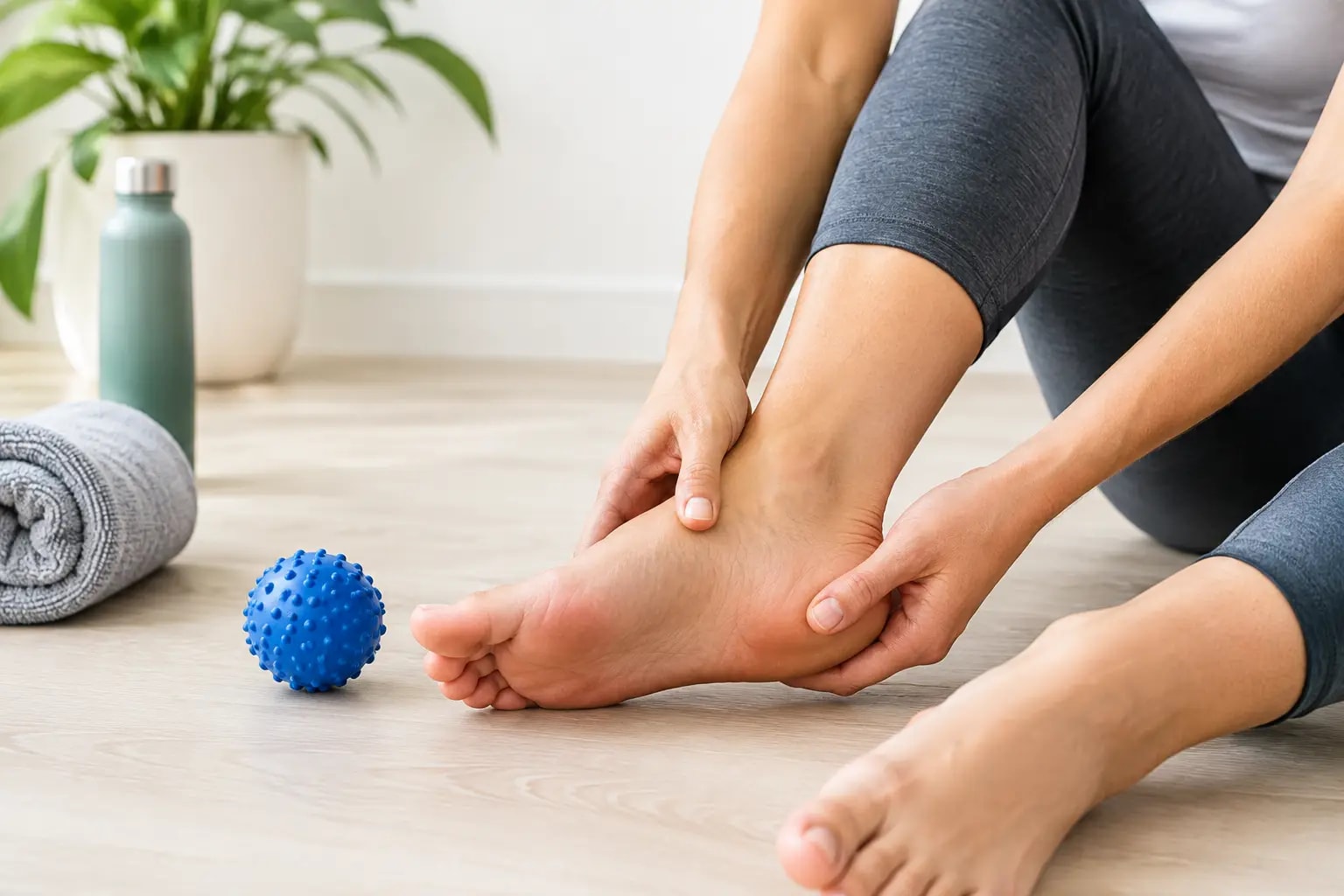
That sharp pain under the heel when you take your first few steps out of bed is a familiar sign of plantar fasciitis. It may ease once you start moving, then return after a long day on your feet or when you stand up after sitting. Knowing how to relieve plantar fasciitis starts with reducing the strain that is repeatedly irritating the tissue beneath your foot, rather than simply pushing through the pain.
The plantar fascia is a strong band of connective tissue running from the heel to the toes. It supports the arch and helps the foot absorb load as you walk, run and stand. When it is overloaded, small areas of irritation and tissue change can develop around its attachment to the heel. Despite its name, plantar fasciitis is not always driven by active inflammation, particularly when symptoms have been present for some time. That is why a targeted plan is usually more effective than rest alone.
How to relieve plantar fasciitis by reducing strain
In the early stages, modify the activities that reliably aggravate your heel. This does not necessarily mean complete rest. For many people, swapping running, hill walking, court sports or long walks for lower-impact activity such as cycling or swimming allows symptoms to settle while maintaining fitness.
Avoid walking barefoot on hard floors, especially first thing in the morning. Flat thongs, worn-out runners and unsupportive slippers can also increase tension through the plantar fascia. Keep a supportive shoe beside the bed and wear it before taking those first steps. A shoe with a stable heel counter, cushioning and enough room through the forefoot is often a better short-term choice than very flexible or minimal footwear.
If standing at work is unavoidable, try to break it up where practical. Short, regular movement breaks may be more helpful than waiting until the heel is very sore. A cold pack wrapped in a towel can reduce discomfort after activity. Apply it for around 10 to 15 minutes at a time, rather than directly placing ice on the skin.
Pain-relief medication may suit some people, but it is not appropriate for everyone. Speak with your GP or pharmacist before using anti-inflammatory medication, particularly if you have stomach, kidney, heart or blood pressure concerns, or take regular medication.
Stretch the calf and plantar fascia gently
Calf tightness is a common contributor to plantar heel pain. When the calf and Achilles tendon are stiff, the plantar fascia can be placed under greater tension with each step. Gentle, consistent stretching is usually more useful than an occasional forceful stretch.
For a straight-knee calf stretch, place your hands on a wall, step the sore side behind you and keep that heel on the ground. Lean forwards until you feel a stretch in the upper calf. Then repeat with the back knee slightly bent to target the deeper calf muscle. Hold each position for 20 to 30 seconds and repeat a few times, provided it does not create sharp pain.
A plantar fascia-specific stretch can be particularly useful before getting out of bed. While seated, cross the affected foot over the opposite knee. Pull the toes back gently until you feel tension through the arch, then massage the sole of the foot with your thumb. Rolling the foot over a firm ball or a chilled water bottle may also feel relieving, but keep the pressure comfortable. More force is not necessarily better, especially if the heel is very sensitive.
Stretches should create a mild pulling sensation, not pain that lingers for hours afterwards. If symptoms increase significantly, reduce the duration or intensity and seek advice. The right level depends on how irritable the condition is and how long it has been present.
Choose support that matches your foot and activity
Supportive footwear can make a meaningful difference, but there is no single shoe that works for every foot. People with flat feet may benefit from greater arch support and rearfoot stability, while someone with a high arch may need more cushioning and pressure distribution. The condition of the shoe matters as much as its original design. Once the midsole has compressed or the heel is worn unevenly, it may no longer provide the support you need.
Over-the-counter heel cushions or arch supports can provide temporary comfort for some people. However, they may not address the way your foot moves, the demands of your work or sport, or an underlying difference in leg and foot mechanics. Prescription orthotics are not required in every case, but they can be useful when symptoms persist, there is significant foot instability, or a specific gait pattern is contributing to repeated strain.
A podiatry assessment can include a detailed history, examination of the foot and ankle, and gait analysis. This helps identify whether calf restriction, foot posture, footwear, training load or another condition is playing a role. Heel pain is not always plantar fasciitis. Nerve irritation, a stress injury, arthritis, fat pad pain and other causes need different management.
Build back to walking and exercise gradually
As morning pain and day-to-day soreness improve, return to activity progressively. A common mistake is to feel better for a few days, then immediately resume the same running distance, beach walk or sport schedule that caused the problem. The tissue may be less painful, but not yet ready for that level of load.
Use your symptoms as a guide. Mild discomfort that settles quickly can be acceptable during recovery, but pain that becomes sharper, changes your walking pattern or is clearly worse the next morning suggests the activity was too much. Reduce the distance, pace, hills or frequency, then build back in smaller increments.
Strength work can also support recovery. Exercises that improve calf strength and control through the foot and ankle can help the lower limb tolerate walking and sport. These need to be selected carefully if pain is acute or if there are other issues, such as Achilles tendon pain, arthritis or balance concerns. A tailored rehabilitation plan is often more efficient than trying a collection of online exercises without knowing which ones apply to you.
When to seek treatment for persistent heel pain
Arrange a podiatry assessment if heel pain has not improved after a few weeks of sensible self-care, keeps returning, limits work or exercise, or causes you to limp. Earlier assessment is particularly worthwhile if you have diabetes, poor circulation, altered sensation in your feet, inflammatory arthritis or a history of stress fractures.
Seek prompt medical attention if pain follows a significant injury, you cannot bear weight, there is marked swelling or redness, you have fever, or you experience numbness, burning or pain that travels into the foot. These symptoms may indicate something other than straightforward plantar fasciitis.
Treatment may include footwear advice, activity modification, hands-on care, taping, targeted stretching and strengthening, shockwave therapy where clinically appropriate, or prescription orthotics based on a 3D foot scan and gait assessment. In persistent cases, imaging or further medical investigation may be recommended to confirm the diagnosis and rule out other causes. Surgery is rarely the first approach and is generally considered only after thorough conservative management.
At Manly Foot Clinic, treatment plans are built around the person behind the heel pain: their daily routine, work demands, activity goals, footwear and clinical findings. Whether you want to return to morning walks, junior sport, running or simply comfortable movement around the house, the aim is to reduce pain while addressing the reason it developed.
Heel pain can be frustrating, particularly when it disrupts the first steps of every day. With appropriate support, gradual loading and a clear diagnosis when symptoms persist, most people can move towards more comfortable, confident walking again.