
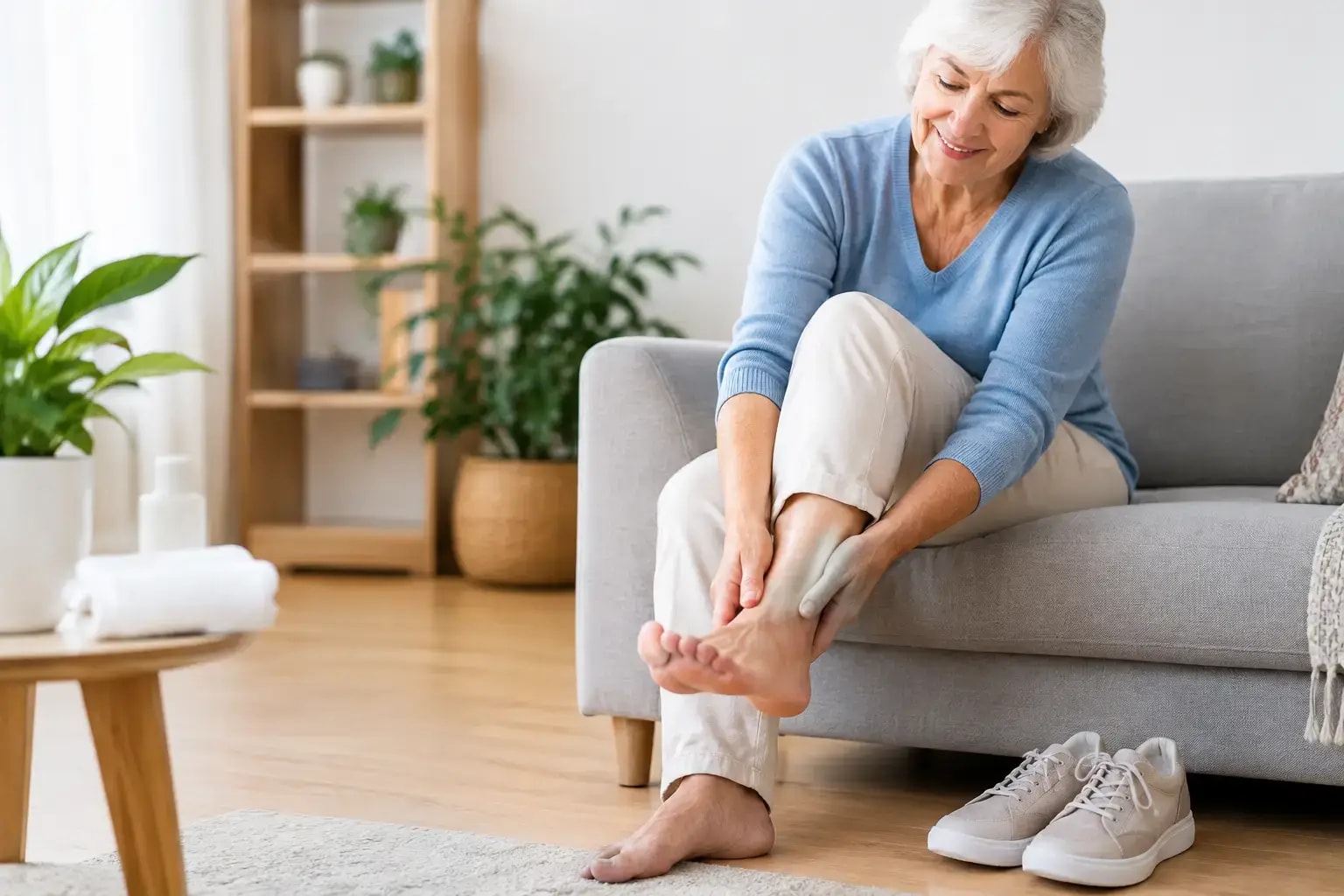
A small change in how your feet feel can change your whole day. Sore toes may make a walk to the shops feel less appealing, stiff joints can alter the way you move, and an unnoticed skin wound can become a more serious problem. This older adults foot health guide is designed to help you recognise common concerns early and make practical choices that support safe, comfortable movement.
Foot problems are not an unavoidable part of ageing. While skin, circulation, joint mobility and balance can change over time, many painful conditions can be managed effectively with the right diagnosis and a treatment plan suited to your needs.
Why foot health deserves attention as you age
Your feet carry your body weight with every step, while also helping you balance on uneven paths, stairs and polished floors. Years of loading, previous injuries, arthritis and changes in foot shape can gradually place more pressure on certain joints and areas of skin.
Health conditions can add another layer of risk. Diabetes may reduce sensation or delay healing. Poor circulation can make skin more vulnerable. Arthritis may limit your ability to reach your feet for nail care, while reduced vision can make it harder to notice a corn, cracked heel or small cut. Some medicines may also contribute to swelling or dizziness, affecting both footwear fit and stability.
The aim is not simply to keep feet looking tidy. Good foot care helps preserve mobility, confidence and independence. If pain is causing you to avoid walking, it is worth having assessed rather than accepting it as normal.
Foot health guidance for older adults
Check your feet every day
A brief daily check is one of the most useful habits for older feet, particularly for people with diabetes, reduced sensation or circulation concerns. Look over the tops, soles, heels and between the toes for redness, swelling, blisters, cracks, cuts, changes in nail colour or areas of rubbing.
Use a hand mirror if reaching your feet is difficult, or ask a family member or carer to assist. Pay attention to changes rather than waiting for severe pain. A numb foot may not provide the usual warning that a shoe is rubbing or that a wound has developed.
Wash and dry your feet carefully, especially between the toes. Moisturiser can help dry heels and soles, but avoid applying it between the toes, where excess moisture can encourage skin breakdown or infection.
Choose shoes for support, not just softness
Comfortable footwear should provide a stable base, enough room for the toes and a secure fastening. A shoe that is too narrow can aggravate bunions, hammer toes, corns and ingrown toenails. A loose slipper or worn shoe can increase the chance of slipping.
Look for a firm heel counter, a fastening such as laces, Velcro or a buckle, and a sole with reliable grip. The toe box should be deep and wide enough that toes are not pressed together or rubbing on the upper. Try shoes on later in the day, when feet may be slightly more swollen, and wear the socks you would normally use.
There is a trade-off with very soft shoes. They can feel pleasant initially but may provide little stability or protection. Conversely, a highly structured shoe may not suit every painful joint or foot shape. A podiatry assessment can help identify footwear features that match your gait, balance and condition.
Do not ignore changing foot shape
Feet can become broader or flatter over time, and arthritis may alter joint shape. A bunion may slowly push the big toe towards the second toe, while hammer toes can become increasingly fixed and painful in closed footwear. Hallux rigidus, or arthritis at the big toe joint, may cause stiffness and pain when pushing off during walking.
These conditions do not always require surgery. Early treatment may include footwear changes, pressure relief, strengthening advice, targeted therapies or prescription orthotics. Orthotics are not a one-size-fits-all insert. When clinically appropriate, they can be designed to redistribute pressure and support the way your foot moves.
Keep nail and skin care safe
Thickened, curved or fungal toenails can become difficult to cut and may press painfully into shoes. Reduced flexibility, poor eyesight or fragile skin can make home nail care risky. Avoid cutting deeply down the sides of nails or attempting to remove corns with blades, acid preparations or sharp tools.
A podiatrist can safely manage problematic nails, calluses and corns, while also identifying the reason they are recurring. For example, a corn may be a sign that a toe is rubbing because of a hammer toe, a bunion or poorly fitting footwear. Treating the pressure source is as important as treating the skin itself.
Common problems that should be assessed
Some foot changes respond well to simple care, but persistent symptoms deserve a clear diagnosis. Heel pain may be related to plantar fascia irritation, joint changes or nerve involvement. Burning, tingling or a feeling of a pebble under the forefoot can occur with Morton’s neuroma. Numbness or shooting pain may indicate nerve irritation, including tarsal tunnel pain.
Seek prompt podiatry or medical assessment if you notice any of the following:
- a wound, blister or crack that is not healing, particularly if you have diabetes
- redness, warmth, swelling, discharge or fever, which may indicate infection
- sudden severe pain, an inability to bear weight or a foot that has changed colour
- persistent numbness, burning, night pain or worsening balance
Do not wait for a routine appointment if a foot becomes cold, pale, blue or suddenly very swollen. These symptoms need urgent medical attention.
Support balance through the feet and lower limbs
Falls often have more than one cause, but foot pain, numbness, weak muscles and unstable shoes can all contribute. If you have begun holding furniture as you move around home, avoiding stairs or feeling uncertain on uneven ground, it is worth discussing this with a health professional.
A podiatry assessment may include observing your walking pattern, checking joint movement, testing areas of pressure and considering how your footwear is affecting stability. Gait analysis can be particularly useful when pain is causing you to compensate or when one side of the body is loading differently from the other.
Simple changes can make a real difference. Replace shoes with worn-down soles, keep walkways clear, ensure good lighting around steps and avoid walking in socks on smooth floors. If prescribed exercises or orthotics are part of your plan, use them consistently and report any new rubbing or discomfort. A device that is right in theory still needs to be comfortable in practice.
When diabetes or circulation issues are involved
People living with diabetes should treat foot care as part of their regular health routine. Reduced sensation can mean a small injury goes unnoticed, and circulation changes can slow healing. Even a minor blister, cut or ingrown toenail needs early attention.
Do not use heat packs or hot water bottles on numb feet, as burns can occur without being felt. Check the temperature of bath water with your hand or elbow first. Never walk barefoot outdoors, and inspect the inside of shoes before putting them on in case there is a rough seam, stone or other object inside.
Your podiatrist can advise how often your feet should be reviewed based on your individual risk factors. This may range from routine preventive care to more frequent monitoring where there is neuropathy, previous ulceration, significant deformity or reduced circulation.
A treatment plan should fit your life
Effective foot care is not about applying the same solution to every painful foot. A person who enjoys daily beach walks, someone managing arthritis and a person recovering from a fall may need very different advice. The right plan considers your diagnosis, activity level, medical history, footwear, goals and tolerance for treatment.
At Manly Foot Clinic, assessment can include a detailed examination, gait analysis and, where appropriate, 3D-scanned prescription orthotics or discussion of conservative and surgical treatment pathways. The focus is on finding a practical way to reduce pain, protect skin and help you move with greater comfort.
Your feet do a great deal for you every day. Giving them attention early can help keep a short walk, a favourite activity or a visit with family comfortably within reach.