
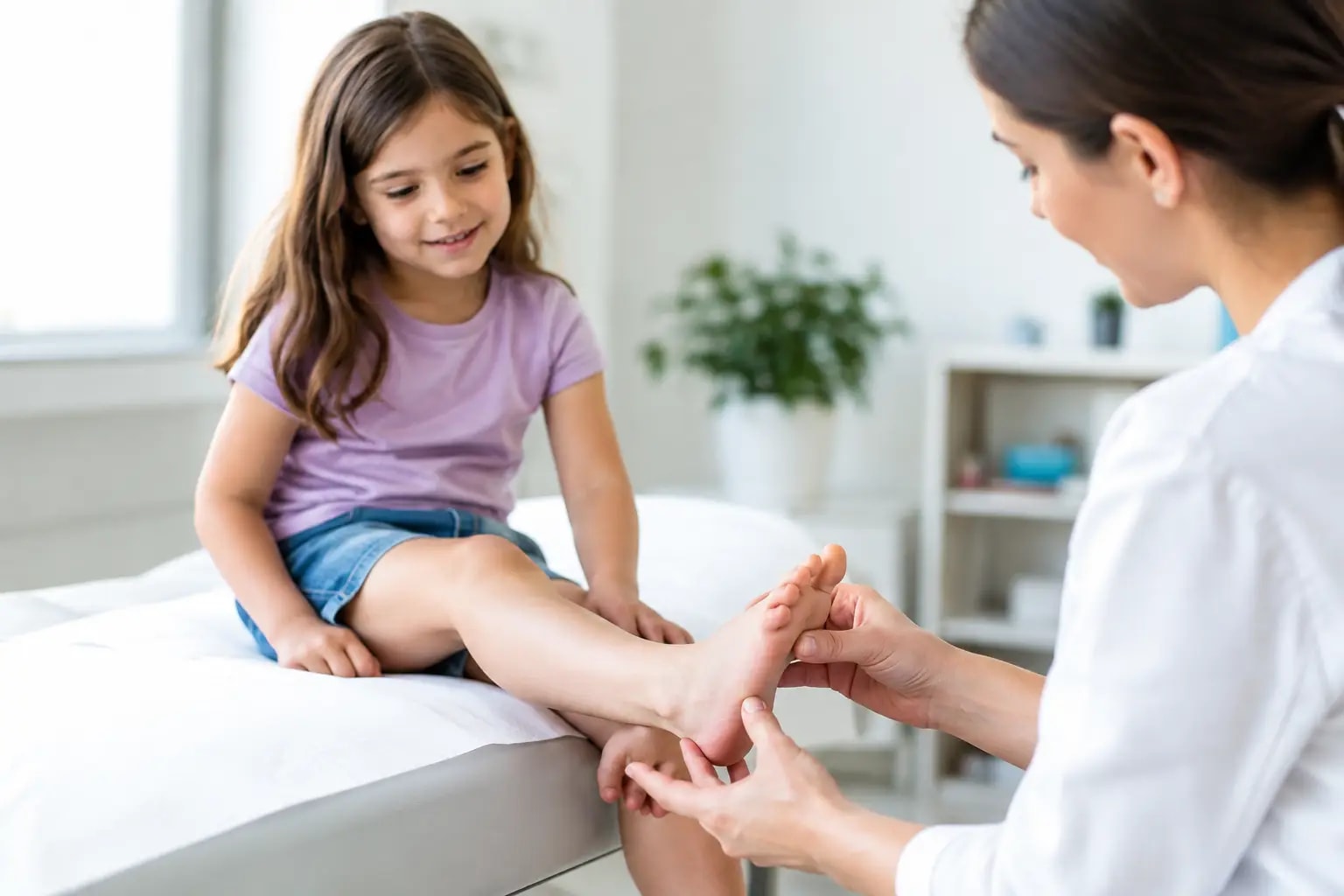
A child who suddenly avoids the playground, asks to be carried after a short walk or regularly comes home with sore feet is telling you something worth investigating. Knowing when children need podiatry can help parents separate normal stages of growth from pain, changes in walking or foot problems that need a professional assessment.
Children’s feet develop rapidly. Their bones, muscles, tendons and walking patterns change as they grow, so not every turned-in foot, flat-looking arch or clumsy phase signals a condition. However, pain is not something a child should simply have to put up with. Persistent symptoms, uneven movement or a foot that is limiting sport and everyday play deserve careful attention.
When children need podiatry assessment
A podiatry assessment can be helpful whenever a child has ongoing foot, heel, ankle or lower-leg discomfort, particularly if it affects their normal activities. Children do not always describe pain clearly. They may limp, stop enjoying sport, sit out at school, walk more slowly than usual or ask for different shoes because their current pair hurts.
Parents may also notice worn shoes, frequent tripping, feet pointing noticeably in or out, or one side of the body appearing to work harder than the other. These observations do not automatically mean there is a serious problem, but they give useful clues about how a child is moving.
Early assessment is especially worthwhile if symptoms have lasted more than a few days, keep returning, follow an injury, or are becoming more limiting. The aim is not to treat every variation in foot shape. It is to identify the source of discomfort, assess development and provide a practical plan where treatment is needed.
Foot, heel or ankle pain
Pain is the clearest reason to arrange an appointment. Growing children can experience pain from sporting loads, poorly fitting footwear, skin and nail problems, inflammation or structural foot issues. Heel pain is common in active children, particularly in the late primary school and early teenage years. It may be related to irritation around the growth plate at the back of the heel, often worsened by running and jumping sports.
A child may complain of pain during training but feel fine at rest, which can make the issue easy to overlook. Continuing to train through pain can change their gait and place extra strain on the knees, hips or other foot structures. A podiatrist can assess the painful area, ankle movement, muscle tightness, footwear and activity demands before recommending appropriate management.
An acute injury also needs attention if there is marked swelling, bruising, inability to bear weight, deformity or significant tenderness. These symptoms may require prompt medical assessment to rule out a fracture or more serious injury.
Changes in walking, running or balance
Children naturally develop different walking patterns at different ages. Toddlers often walk with feet turned slightly in or out as they gain coordination. Many younger children also have a wider stance and flatter-looking feet than adults. These patterns may resolve as strength and control improve.
What warrants closer assessment is a gait that is painful, worsening, very uneven or affecting confidence in movement. Frequent falls beyond what seems appropriate for the child’s age, toe walking that persists, limping, or one foot consistently pointing in a different direction can all be reasons to seek advice.
A gait assessment looks beyond the feet alone. It may include the way the child stands, walks and runs, joint range of motion, leg alignment, muscle function and how footwear is wearing. This broader view helps determine whether monitoring, targeted exercises, footwear advice, orthotic support or referral to another health professional is most appropriate.
Flat feet in children: when are they a concern?
Flat feet are one of the most common reasons parents ask when children need podiatry. For many children, flexible flat feet are a normal part of development. The arch can appear low when standing and reappear when the child is sitting or standing on tiptoes. If the child is pain-free, active and moving well, treatment may not be necessary.
Assessment is more useful when flat feet are associated with aching arches, heel or ankle pain, fatigue during walking, recurrent sprains, unusual shoe wear or reluctance to participate in sport. A rigid flat foot, where the arch does not change position, should also be assessed.
The right approach depends on the child, not the appearance of the foot alone. Some children benefit from changes to footwear, strengthening and activity guidance. Others may need prescription orthotics to improve comfort and support movement. Orthotics are not a one-size-fits-all solution, and they should be based on a detailed clinical assessment rather than a generic shoe insert.
Skin and nail problems that should not wait
Children can develop painful skin and nail conditions just as adults do. An ingrown toenail may cause redness, swelling, discharge and pain in enclosed school shoes or football boots. It is often tempting to cut deeply into the corner of the nail at home, but this can worsen irritation and increase the risk of infection.
Plantar warts can be another source of discomfort, especially when they sit on a weight-bearing area of the sole. A child may avoid placing pressure through part of their foot or mistake the lesion for a corn. A podiatrist can confirm the cause and discuss suitable treatment, taking the child’s age, comfort and activities into account.
Other reasons to arrange an appointment include persistent peeling or itchy skin, thickened or discoloured nails, recurring blisters and painful corns or calluses. While these conditions are often manageable, a clear diagnosis helps avoid unnecessary treatments and ongoing discomfort.
Sport, growth and overuse injuries
The Northern Beaches has no shortage of active children involved in football, netball, dance, athletics, surfing and weekend sport. Regular movement is excellent for health, but rapid growth combined with a busy training schedule can increase the likelihood of overuse pain.
A child who has recently had a growth spurt may have tighter calf muscles and a temporary change in coordination. Add multiple training sessions, hard playing surfaces or worn-out shoes, and the feet and lower legs can become overloaded. Pain around the heel, arch, shin, forefoot or ankle should be assessed if it continues despite a short reduction in activity.
A podiatry consultation can identify contributing factors such as limited ankle motion, footwear that no longer fits, training load, poor shock absorption or a change in running technique. Management may include a temporary modification to activity, rehabilitation exercises, taping, footwear recommendations or custom orthotics where clinically indicated. The goal is a safe return to the activities a child enjoys, rather than unnecessarily keeping them out of sport.
What happens at a children’s podiatry appointment?
A good assessment begins with listening. Parents can explain when symptoms began, which activities bring them on, any recent injury or growth spurt, and what footwear the child wears for school and sport. The child’s own description matters too, even if it is as simple as pointing to where it hurts.
The podiatrist will examine the feet, ankles and lower limbs, then observe standing, walking and, where appropriate, running. At Manly Foot Clinic, this may include gait analysis and a detailed assessment of foot function. If orthotic support is suitable, 3D scanning can assist in creating a prescription device designed around the child’s needs.
Treatment should be proportionate. Many children require reassurance, monitoring and straightforward advice rather than intensive intervention. Where there is a clear condition causing pain or reduced function, a structured plan can address symptoms while supporting comfortable movement through growth.
Signs that call for timely care
Book an assessment promptly if your child has any of the following:
- persistent pain in the foot, heel, ankle or lower leg
- a limp, refusal to bear weight or a noticeable change in walking
- swelling, bruising, deformity or pain after an injury
- an ingrown toenail with increasing redness, discharge or severe tenderness
- pain that prevents sport, school activities or normal play
- frequent ankle sprains, repeated tripping or worsening balance concerns.
If your child has a fever, rapidly spreading redness, a significant open wound, severe injury or cannot bear weight after trauma, seek urgent medical care.
Children are remarkably adaptable, which can mean they keep playing despite pain or quietly avoid the activities that hurt. A timely podiatry assessment gives you clearer answers and gives them the best chance to keep moving with comfort and confidence.