
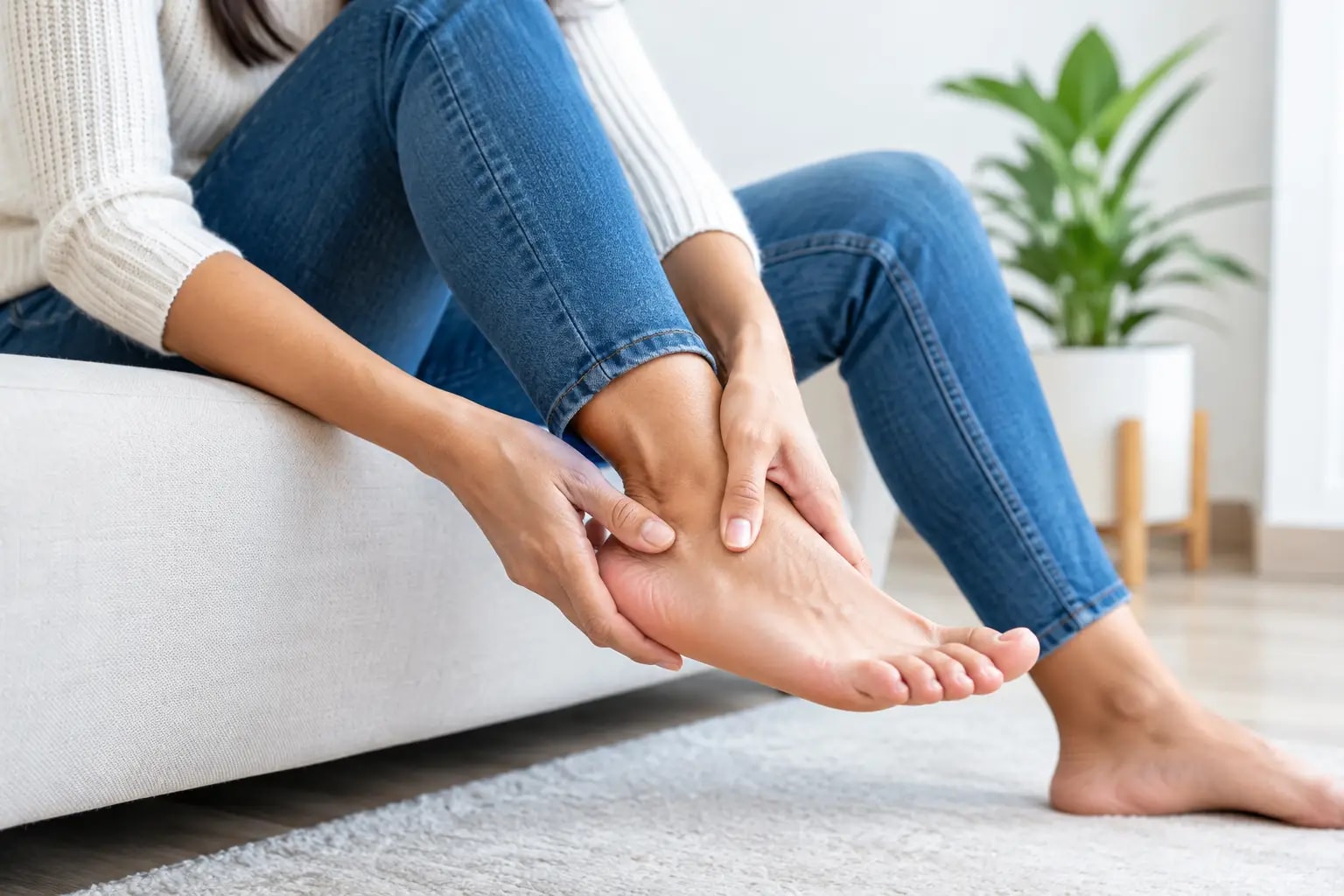
A long shift on your feet, a run along the foreshore or even a quiet day at home can leave you wondering, why do my feet ache? Foot pain is common, but it is not always simply a sign that you have done too much. The location, timing and type of discomfort can provide useful clues about what is placing stress on your feet.
Aching may settle after rest, or it may gradually become part of your daily routine. When pain keeps returning, affects how you walk or stops you enjoying exercise, it is worth having it assessed. The feet contain 26 bones, numerous joints, ligaments, tendons, nerves and soft tissues. A problem in any one of these structures can change the way the whole foot feels and functions.
Why Do My Feet Ache After Standing or Walking?
The simplest explanation is often overload. Your feet absorb force with every step, so a sudden increase in walking, standing, running or court sport can irritate tissues that have not had time to adapt. This commonly happens after returning to exercise, starting a job that involves prolonged standing, travelling, or spending a busy weekend on your feet.
Footwear can make this worse. Shoes that are worn out, too narrow, overly flexible or poorly suited to your activity may not provide enough support or cushioning. Conversely, very stiff shoes can place pressure on particular joints or bony areas. The right shoe depends on your foot shape, activity and any existing condition, so there is no single style that suits everyone.
Aching that develops towards the end of the day may also be related to the way your feet load the ground. Flat feet, high arches, reduced ankle movement and changes in leg alignment can all alter pressure through the sole, heel, forefoot and toes. Gait assessment can help identify these patterns rather than relying on guesswork.
Common Causes of Aching Feet
Heel and arch pain
Pain beneath the heel or through the arch is often linked to irritation of the plantar fascia, the strong band of tissue running along the sole of the foot. Plantar heel pain can be particularly noticeable with the first steps in the morning or after sitting, then ease as you move before returning later in the day.
Tight calf muscles, a rapid increase in activity, unsupportive footwear and altered foot mechanics can all contribute. Rest alone may reduce symptoms temporarily, but addressing the factors that keep loading the area is usually more helpful for a lasting recovery.
Forefoot pressure and toe problems
An ache under the ball of the foot may occur when excessive pressure is concentrated beneath the metatarsal bones. This can be associated with thin-soled shoes, high activity levels, changes in foot shape or toe deformities such as hammer toes and bunions.
If the pain feels burning, tingling or as though there is a small stone in your shoe, a nerve may be involved. Morton’s neuroma is a common example, where tissue around a nerve between the toes becomes irritated. It often flares in narrow footwear and can cause pain that spreads into the toes.
Arthritis and joint stiffness
A dull, deep ache and stiffness around a joint can point to arthritis or joint degeneration. Hallux rigidus, arthritis affecting the big toe joint, can make pushing off during walking uncomfortable and may lead you to roll onto the outside of your foot without realising it.
Arthritis is more likely with age, previous injury or long-term joint stress, but it is not restricted to older people. Early management may include footwear changes, activity modification, targeted exercises, padding, orthotic support or other treatments based on the severity of the joint changes.
Tendon and soft-tissue strain
Tendons connect muscle to bone and can become painful when they are overloaded. Achilles tendon pain is felt at the back of the heel or lower leg, while posterior tibial tendon problems may cause aching along the inside of the ankle and arch. Peroneal tendon pain is more commonly felt on the outside of the foot or ankle.
These conditions need a considered approach. Continuing to push through pain can aggravate a tendon, yet complete inactivity can reduce strength and capacity. A structured plan helps you return to walking or sport at an appropriate pace.
Other Reasons Feet Can Feel Achy
Swelling can make shoes feel tight and create a general sense of heaviness or discomfort. Warm weather, long periods sitting or standing, some medications and circulation issues can all contribute. Pregnancy can also change foot loading and shoe fit through weight changes, fluid retention and ligament laxity.
Skin and nail conditions may be less obvious causes of foot pain. Corns, calluses, cracked heels, ingrown toenails and fungal nail changes can make each step uncomfortable, particularly when there is added pressure from footwear. These conditions are often treatable, but cutting or digging at them at home can create further injury or infection.
Pain can occasionally be referred from elsewhere. Lower back conditions, nerve irritation around the ankle such as tarsal tunnel syndrome, and problems higher up the leg can produce burning, tingling, numbness or aching in the foot. This is one reason an accurate assessment considers more than the sore spot alone.
What Can You Do for Aching Feet at Home?
If the pain is mild and clearly followed an unusual increase in activity, temporarily reducing the aggravating activity is sensible. Choose comfortable, supportive shoes with enough room through the toes, and avoid walking barefoot on hard floors if this increases symptoms. A cool pack wrapped in a cloth for short periods may help settle soreness after activity.
Gentle calf and foot mobility work can be useful for some people, especially when stiffness is contributing to heel or arch symptoms. However, exercises are not appropriate for every cause of pain. Stretching aggressively into sharp pain, or copying an exercise programme that does not match your condition, can delay recovery.
Take note of patterns for a few days. Consider where the ache begins, whether it is worse in the morning or evening, which shoes trigger it, and whether there is swelling, numbness or pain in one specific joint. This information is valuable during a podiatry consultation.
Custom prescription orthotics can be beneficial when foot mechanics are contributing to recurring overload, but they are not a universal fix. They should be based on a clinical examination, your symptoms, footwear and activity needs. At Manly Foot Clinic, 3D scanning and gait assessment can be used as part of a personalised plan where orthotic treatment is appropriate.
When Foot Pain Needs Prompt Attention
Arrange professional assessment if pain persists beyond a week or two despite reducing aggravating activity, keeps returning, changes your walking pattern or prevents you from doing normal daily tasks. Early care is particularly useful for sports injuries, progressive deformities, ongoing heel pain and nerve-type symptoms.
Seek urgent medical attention for severe pain after an injury, an inability to bear weight, a visibly deformed foot, rapidly increasing swelling, or a foot that is hot, red and painful. Prompt review is also important if you have diabetes, poor circulation or reduced sensation and notice a wound, blister, colour change or signs of infection. These situations should not be managed by waiting to see if they settle.
Feet work hard enough without asking you to ignore persistent discomfort. A careful diagnosis can clarify whether you need simple footwear advice, a rehabilitation plan, orthotic support or more targeted treatment, so you can get back to comfortable movement with confidence.