
FOOT SURGERY
Our Senior Podiatrist is trained in traditional (‘open’) foot and ankle surgery and utilizes these techniques in combination with minimally invasive surgical procedures. Minimally invasive foot and ankle surgery refers to
A major factor in recovery time and discomfort is the amount of tissue that has been involved by the incision. With minimally invasive foot surgery, a small incision is made in the patients’ skin and a specially designed instrument is inserted into this opening. The entire procedure is performed through this tiny opening. At the conclusion of the surgery, a small bandage protects the area. The condition has been corrected, the patient remains ambulatory and discomfort and prolonged disability have been avoided.
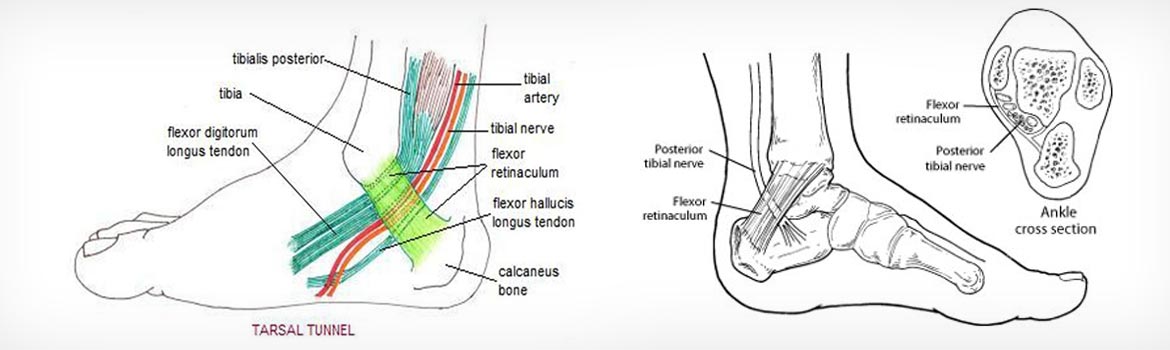
- Tarsal Tunnel Pain
- Flat Foot
- Bunion Surgery
- Hammer Toe
- Morton's Neuroma
- Heel Pain
- Ingrown Toenail
- Haglunds Deformity
Retrocalcaneal Pain – Haglund’s Deformity
What Is Haglund’s Deformity?
Haglund’s deformity is a bony enlargement on the back of the heel. The soft tissue near the Achilles tendon becomes irritated when the bony enlargement rubs against shoes. This often leads to painful bursitis, which is an inflammation of the bursa (a fluid-filled sac between the tendon and bone).
Causes
Haglund’s deformity is often called “pump bump” because the rigid backs of pump-style shoes can create pressure that aggravates the enlargement when walking. In fact, any shoes with a rigid back, such as ice skates, men’s dress shoes, or women’s pumps, can cause this irritation.To some extent, heredity plays a role in Haglund’s deformity. Inherited foot structures that can make one prone to developing this condition include:
- A high-arched foot
- A tight Achilles tendon
- A tendency to walk on the outside of the heel.
Symptoms
Haglund’s deformity can occur in one or both feet. The symptoms include:
- A noticeable bump on the back of the heel
- Pain in the area where the Achilles tendon attaches to the heel
- Swelling in the back of the heel
- Redness near the inflamed tissue
Diagnosis
After evaluating the patient’s symptoms, Ozan Amir will examine the foot. In addition, x-rays will be ordered to
Non-Surgical Treatment
Non-surgical treatment of Haglund’s deformity is aimed at reducing the inflammation of the bursa. While these approaches can resolve the pain and inflammation, they will not shrink the bony protrusion. Non-surgical treatment can include one or more of the following:
- Medication. Oral nonsteroidal anti-inflammatory drugs (NSAIDs), such as ibuprofen, may be recommended to reduce the pain and inflammation
- Ice.To reduce swelling, apply an ice pack to the inflamed area, placing a thin towel between the ice and the skin. Use ice for 20 minutes and then wait at least 40 minutes before icing again
- Exercises. Stretching exercises help relieve tension from the Achilles tendon. These exercises are especially important for the patient who has a tight heel cord
- Heel lifts. Patients with high arches may find that heel lifts placed inside the shoe decrease the pressure on the heel
- Heel pads. Pads placed inside the shoe cushion the heel and may help reduce irritation when walking
- Shoe modification. Backless or soft backed shoes help avoid or minimize irritation
- Physical therapy. Physical therapy modalities, such as ultrasound, can help to reduce inflammation
- Orthotic devices. Custom arch supports control the motion in the foot
- Immobilization. In some cases, casting may be necessary
When Is Surgery Needed?
If non-surgical treatment fails to provide adequate pain relief, surgery may be needed. Ozan will determine the procedure that is best suited to your case.
Our Senior Podiatrist is trained in traditional (‘open’) foot and ankle surgery and utilizes these techniques in combination with minimally invasive surgical procedures. Minimally invasive foot and ankle surgery refers to treatment of bone and soft tissue injuries without the need for traditional open incisions.
A major factor in recovery time and discomfort is the amount of tissue that has been involved by the incision. With minimally invasive foot surgery, a small incision is made in the patients’ skin and a specially designed instrument is inserted into this opening. The entire procedure is performed through this tiny opening. At the conclusion of the surgery, a small bandage protects the area. The condition has been corrected, the patient remains ambulatory and discomfort and prolonged disability have been avoided.
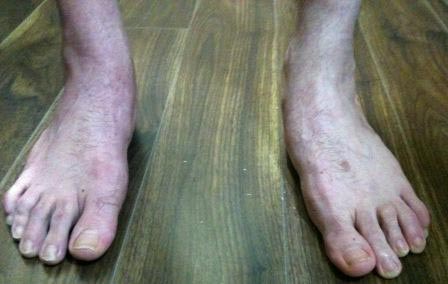
Flatfeet can be broadly classified into flexible and rigid in nature. The type of flatfoot is determined through clinical testing. Most

In a minority of cases, conservative care does not alleviate the symptoms that can be associated with
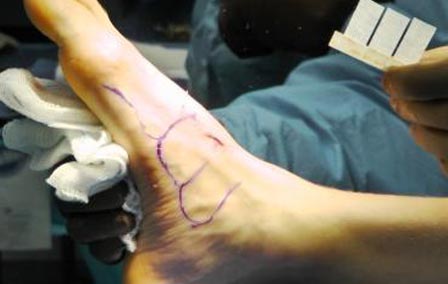
There are a number of surgical procedures available to correct and restore the alignment of the flatfoot,
Bunions
What Is A Bunion?
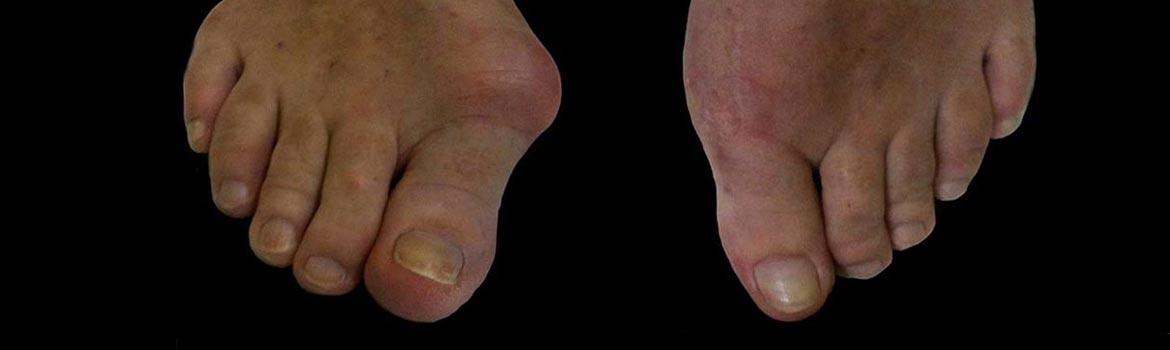
A bunion is
Bunions are
Causes
Bunions are most often caused by an inherited faulty mechanical structure of the foot. It is not the bunion itself that is inherited, but certain foot types that make a person prone to
When Is Surgery Needed?
If non-surgical treatments fail to relieve bunion pain and when the pain of a bunion interferes with daily activities. The goal of surgery is the reduction of pain.A variety of surgical procedures is available to treat bunions. In selecting the procedure or combination of procedures for your particular case, Mr. Ozan Amir will take into consideration the extent of your deformity based on the x-ray findings, your age, your activity level, and other factors.

Hammer Toe
What Is Hammertoe?
Hammertoe is a bending of one or both joints of the second, third, fourth, or fifth (little) toes. This abnormal bending can put pressure on the toe when wearing shoes, causing problems to develop.
Hammertoes usually start out as mild deformities and get progressively worse over time. In the earlier stages, hammertoes are flexible and the symptoms can often be managed with non-surgical measures. But if left untreated, hammertoes can become more rigid and will not respond to non-surgical treatment.
Hammertoes are progressive – they don’t go away by themselves and usually they will get worse over time. However, not all cases are alike – some hammertoes progress more rapidly than others.
Common Causes
The most common cause of hammertoe is a muscle/tendon imbalance. This imbalance, which leads to a bending of the toe, results from mechanical (structural) changes in the foot that occur over time in some people.
Hammertoes may be aggravated by shoes that don’t fit properly. A hammertoe may result if a toe is too long and is forced into a cramped position when a tight shoe is worn. Occasionally, hammertoe is the result of an earlier trauma to the toe. In some people, hammertoes are inherited.
Your Diagnosis
Ozan will obtain a thorough history and physical examination of your foot. During the physical examination, Ozan will evaluate the cause and extent of the contracture of the toes and will correlate the finding s with x- rays.
When Is Surgery Needed?
In some cases, usually when the hammertoe has become more rigid and painful, or when an open sore has developed, surgery is needed. Often patients with hammertoe have bunions or other foot deformities corrected at the same time.
In selecting the procedure or combination of procedures for your particular case, Ozan will take into consideration the extent of your deformity, the number of toes involved, your age, your activity level, and other factors. The length of the recovery period will vary, depending on the procedure or procedures performed.

Interdigital Neuroma (Perineural Fibrosis)
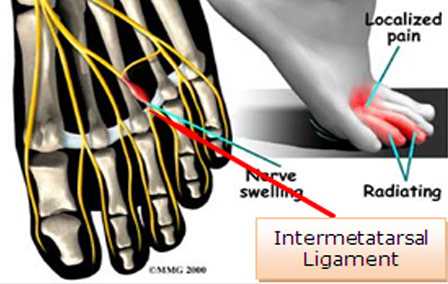
Interdigital neuroma (Morton’s Neuroma) of the foot includes common, paroxysmal, neuralgia affecting the web spaces of the toes. It involves entrapment neuropathy (nerve compression) of the common digital nerve below and between the metatarsal heads, typically between the third and the fourth metatarsal heads. The pain is most commonly felt between the third and fourth toes but can also occur in the area between the second and third toes.
Symptoms of interdigital neuroma typically manifest as a sharp, burning or tingling sensation in the forefoot. The pain radiates toward the lesser toes and is aggravated by shoe wear. The pain is relieved when the shoe is removed and the forefoot is massaged. Sometimes the symptoms involve specific toes. The cause of this problem is often due to impingement of the plantar nerve fibres between the metatarsal heads and the intermetatarsal ligament. It is entirely a biomechanical phenomenon. Differential diagnoses include stress fracture, capsulitis, bursitis or ligament injury at the metatarsal-phalangeal joint, a tendon sheath ganglion, foreign-body reaction and nerve-sheath tumour.
Diagnostic Procedures For Interdigital Neuroma
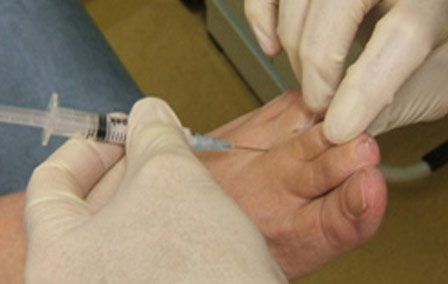
The commonest reason for this is de to natural substances present in between the metatarsal heads and between the fat pad and the intermetatarsal ligament. These natural substances i.e. bursa, fat, capsular thickening and even bony growths, can all be a factor in the impingement process and may need to be surgically cleared
Treatment
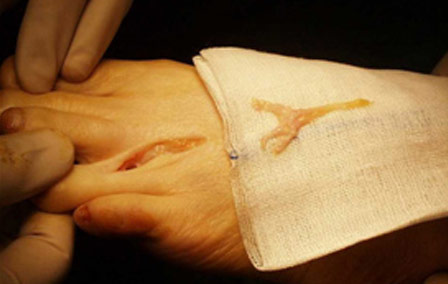
Surgery
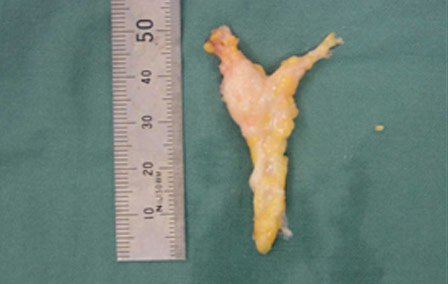
Various surgical techniques are described, essentially
What Is Involved In Neuroma Surgery?
Surgery to excise the neuroma is usually performed under general anaesthetic in a day surgery facility. After surgery you will have to keep your foot dry for two weeks. Generally neuroma surgery allows for early weight bearing and protection in some type of
Interdigital neurectomy (removal of the diseased nerve) in right hands, should give satisfactory results almost all the time. Some of the reasons behind failure is when not enough nerve is dissected, mistakes in initial diagnosis, or bad handling of adjacent nerves, tendons and joint capsules during the operation. It is very common and acceptable to have some numbness in the area where the nerve used to be. This never causes any discomfort and often gets better in few years.
It is crucial to address the biomechanical pathologies underlying the impingement of the nerve during and after the surgery. Ozan will work closely with your Podiatrist in providing appropriate orthotic therapy to address these biomechanical issues.
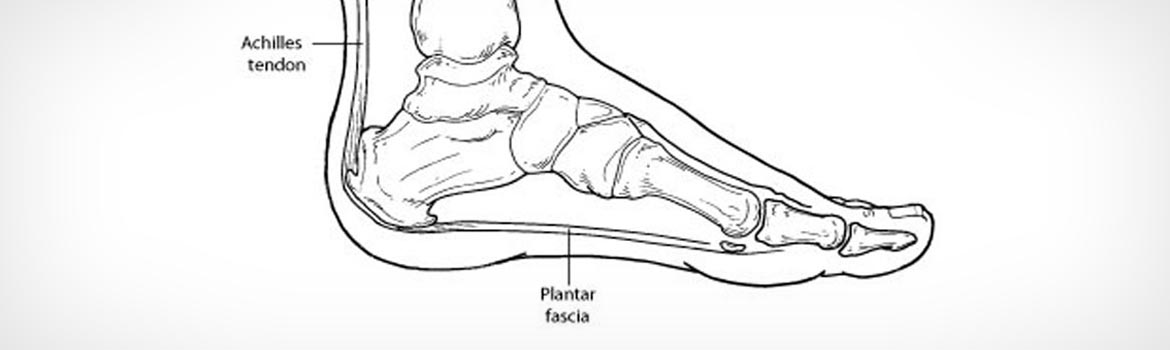
Heel Pain (Plantar Fasciosis/Fasciitis)
What Is Plantar Fasciosis?
Plantar
Causes
The most common cause of plantar
Symptoms
The symptoms of plantar fasciitis are:
- Pain
on the bottom of the heel - Pain that is usually worse upon arising
- Pain that increases over a period of months
People with plantar
Diagnosis
To arrive at a diagnosis, Ozan Amir will obtain your medical history and examine your foot. Throughout this
Non-Surgical Treatment
Initially see your local podiatrist, who may add one or more of these treatment approaches:
- Padding and strapping. Placing
pads in the shoe softens the impact of walking. Strapping helps support the foot and reduce strain on the fascia - Orthotic devices. Custom orthotic devices that fit into your shoe help correct the underlying structural abnormalities causing the plantar fasciitis
- Injection therapy. In some cases, corticosteroid injections are used to help reduce the inflammation and relieve pain
- Removable walking cast. A removable walking cast may be used to keep your foot immobile for a few weeks to allow it to rest and heal
- Night
splint . Wearing a night splint allows you to maintain an extended stretch of the plantar fascia while sleeping. This may help reduce the morning pain experienced by some patients - Physical therapy. Exercises and other physical therapy measures may be used to help provide relief
When Is Surgery Needed?
Although most patients with plantar
Ingrown Toenail
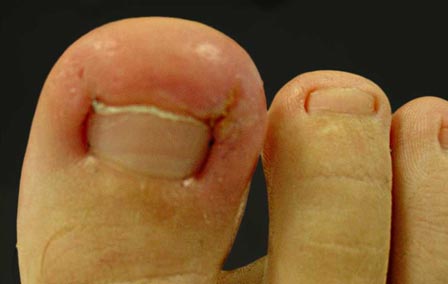
What Is An Ingrown Toenail?
When a toenail is ingrown, it is curved and grows into the skin, usually at the nail borders (the sides of the nail). This “digging in” of the nail irritates the skin, often creating pain, redness, swelling, and warmth in the toe.
If an ingrown nail causes a break in the skin, bacteria may enter and cause an infection in the area, which is often marked by drainage and a foul
Podiatry Care
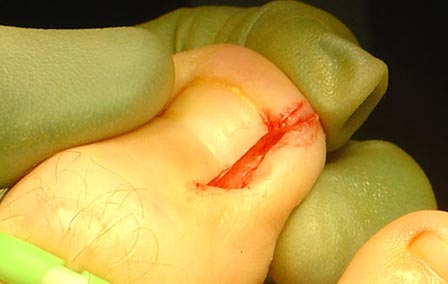
Some nails may become ingrown again, requiring removal of the nail root. Following the
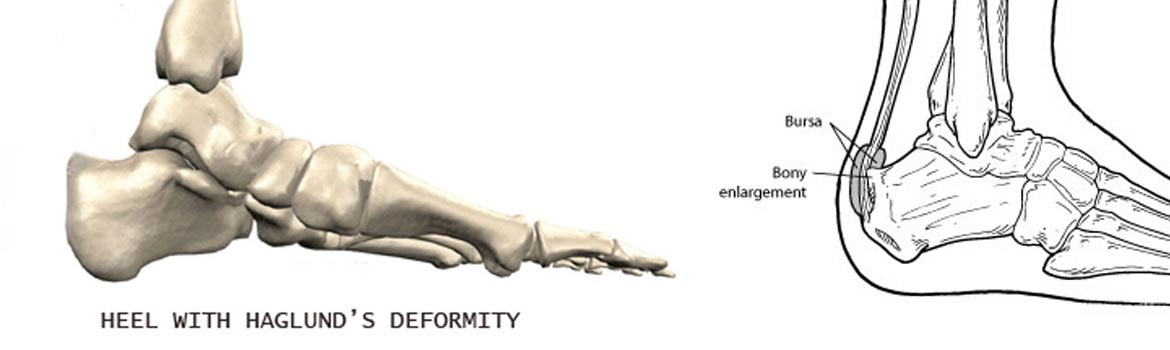
Retrocalcaneal Pain – Haglund’s Deformity
What Is Haglund’s Deformity?
Haglund’s deformity is a bony enlargement on the back of the heel. The soft tissue near the Achilles tendon becomes irritated when the bony enlargement rubs against shoes. This often leads to painful bursitis, which is an inflammation of the bursa (a fluid-filled sac between the tendon and bone).
Causes
Haglund’s deformity is often called “pump bump” because the rigid backs of pump-style shoes can create pressure that aggravates the enlargement when walking. In fact, any shoes with a rigid back, such as ice skates, men’s dress shoes, or women’s pumps, can cause this irritation.To some extent, heredity plays a role in Haglund’s deformity. Inherited foot structures that can make one prone to developing this condition include:
- A high-arched foot
- A tight Achilles tendon
- A tendency to walk on the outside of the heel.
Symptoms
Haglund’s deformity can occur in one or both feet. The symptoms include:
- A noticeable bump on the back of the heel
- Pain in the area where the Achilles tendon attaches to the heel
- Swelling in the back of the heel
- Redness near the inflamed tissue
Diagnosis
After evaluating the patient’s symptoms, Ozan Amir will examine the foot. In addition, x-rays will be ordered to
Non-Surgical Treatment
Non-surgical treatment of Haglund’s deformity is aimed at reducing the inflammation of the bursa. While these approaches can resolve the pain and inflammation, they will not shrink the bony protrusion. Non-surgical treatment can include one or more of the following:
- Medication. Oral nonsteroidal anti-inflammatory drugs (NSAIDs), such as ibuprofen, may be recommended to reduce the pain and inflammation
- Ice.To reduce swelling, apply an ice pack to the inflamed area, placing a thin towel between the ice and the skin. Use ice for 20 minutes and then wait at least 40 minutes before icing again
- Exercises. Stretching exercises help relieve tension from the Achilles tendon. These exercises are especially important for the patient who has a tight heel cord
- Heel lifts. Patients with high arches may find that heel lifts placed inside the shoe decrease the pressure on the heel
- Heel pads. Pads placed inside the shoe cushion the heel and may help reduce irritation when walking
- Shoe modification. Backless or soft backed shoes help avoid or minimize irritation
- Physical therapy. Physical therapy modalities, such as ultrasound, can help to reduce inflammation
- Orthotic devices. Custom arch supports
control the motionin the foot - Immobilization. In some cases, casting may be necessary
When Is Surgery Needed?
If non-surgical treatment fails to provide adequate pain relief, surgery may be needed. Ozan will determine the procedure that is best suited to your case.

Manly Foot Clinic associates provide expert care, diagnosis and treatment of ankle and foot disorders for children, adults, and seniors. The Manly Foot Clinic has been serving the Northern Beaches since 1989.