
What is heel pain?
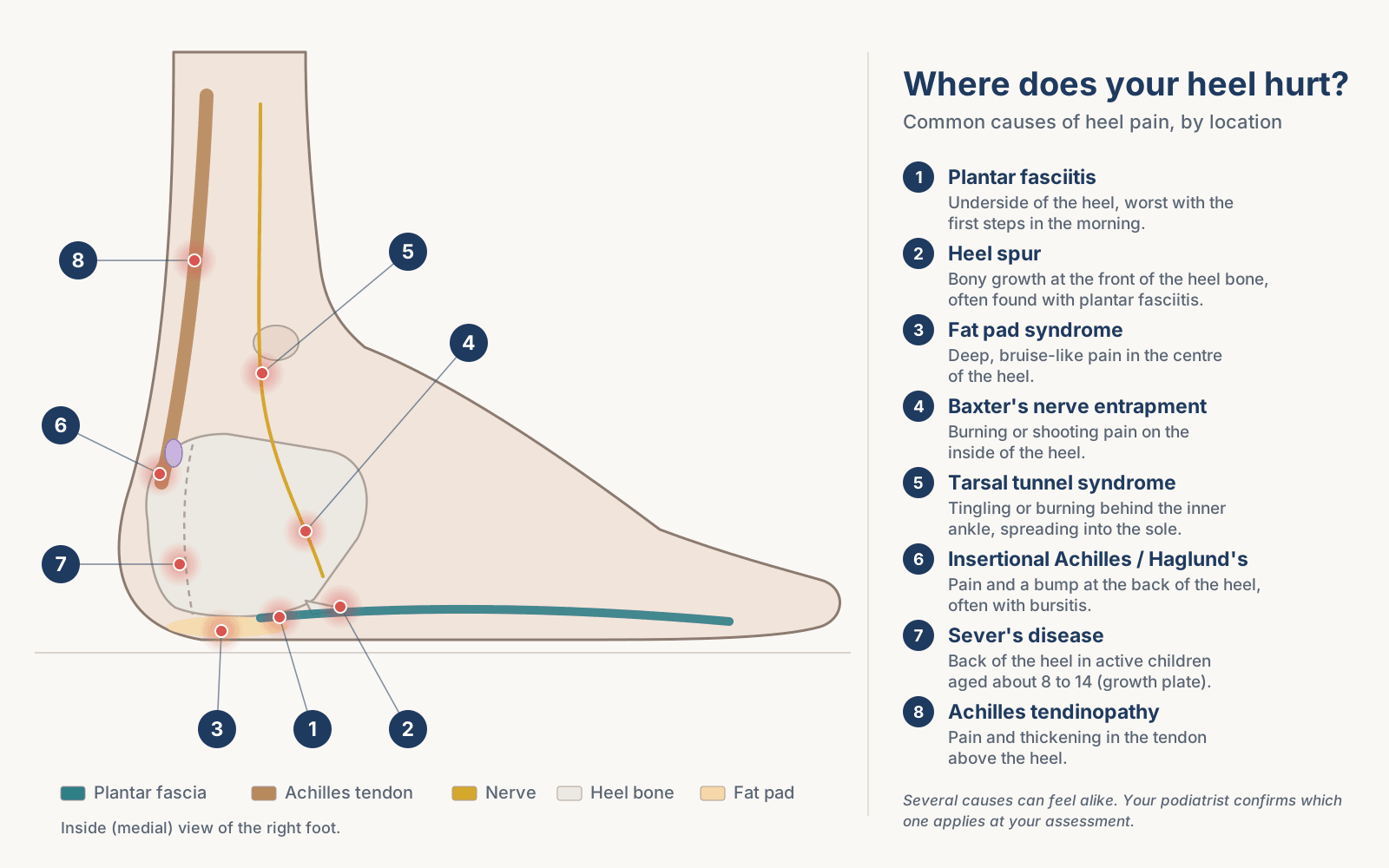
Heel pain isn’t a single condition. It’s a symptom with several possible causes, and where it hurts is often the best clue to which one it is.
Under the heel
- Plantar fasciitis: the most common cause. Pain under the heel, worst with the first steps in the morning or after sitting.
- Heel spur: a bony growth at the front of the heel bone. It’s often found on X-ray alongside plantar fasciitis, but is rarely the cause of the pain itself.
- Fat pad syndrome: a deep, bruise-like ache in the centre of the heel, where the natural cushioning has thinned or been bruised.
Inside of the heel
- Baxter’s nerve entrapment: a small nerve trapped near the heel bone, causing burning or shooting pain that’s easily mistaken for plantar fasciitis.
- Tarsal tunnel syndrome: compression of the main nerve behind the inner ankle, causing tingling, burning or numbness that spreads into the sole.
Back of the heel
- Insertional Achilles tendinopathy and Haglund’s deformity: pain where the Achilles tendon attaches, often with a bony bump and an inflamed bursa.
- Achilles tendinopathy: pain and thickening in the tendon just above the heel.
- Sever’s disease: heel pain in active children aged around 8 to 14, caused by irritation of the growth plate.
Less commonly, heel pain can come from a stress fracture, arthritis or, rarely, a cyst. That’s why a proper assessment comes before any treatment.
Plantar fasciitis or plantar fasciosis?
The plantar fascia is a thick band of tissue running from the heel to the toes, supporting the arch. Although the condition is usually called plantar fasciitis, long-standing cases are often degeneration of the tissue (fasciosis) rather than inflammation. That difference matters for treatment: anti-inflammatories alone often don’t fix it, and treatments that stimulate healing and reduce load on the tissue tend to work better.
What causes heel pain?
- Foot structure. Flat feet or high arches change how load passes through the heel and plantar fascia.
- Footwear and surfaces. Unsupportive shoes, thongs and long hours standing or walking on hard floors.
- A change in activity. Starting a new sport, increasing running distance or a new job on your feet.
- Tight calf muscles. A tight calf and Achilles increase the strain on the plantar fascia with every step.
- Body weight. Extra load through the heels can contribute.
- Age. The heel’s fat pad naturally thins with age, reducing cushioning.
Symptoms to look out for
- Pain under the heel with the first steps in the morning or after sitting
- Pain that eases after walking for a few minutes, then returns after long periods on your feet
- Burning, tingling or shooting pain, which may point to a nerve
- A painful bump at the back of the heel, or pain rubbing on shoes
- Heel pain in a child after sport
See your podiatrist or GP promptly if your heel is red, hot and swollen, you can’t put weight on it, the pain followed a fall or injury, or you have diabetes and notice any change in your feet.
How is heel pain diagnosed?
Your assessment starts with a detailed history: where it hurts, when it started, what makes it better or worse, and what you’ve already tried. Your podiatrist then examines the foot to pinpoint the painful structure, and assesses your foot structure, calf flexibility and how you walk. Where it would help, we arrange an X-ray or ultrasound to confirm the diagnosis and rule out a stress fracture or other causes. You’ll leave knowing what’s causing your pain and what the plan is.
Non-surgical treatment
Most heel pain improves with non-surgical treatment, although plantar fasciitis can take several months to settle fully. Treatment is matched to the cause, and often combines several of these:
- Load management and footwear advice. Changing how much and how you load the heel while it heals, and choosing shoes that support it.
- Strapping and padding. Low-Dye taping and heel padding to offload the plantar fascia and give quick relief.
- Stretching and strengthening. A targeted program for the calf, plantar fascia and foot muscles. Strengthening is one of the most effective long-term treatments for plantar fasciitis.
- Custom orthotics. Made from a 3D scan of your feet after a biomechanical assessment, to reduce strain on the painful tissue.
- Shockwave therapy. Non-invasive acoustic pulses that stimulate healing in stubborn plantar fasciitis and Achilles tendinopathy, usually over a course of 3 to 5 weekly sessions.
- Ultrasound-guided corticosteroid injections. For persistent pain, Dr Rohan Amir provides corticosteroid injections under ultrasound guidance, so the medication is placed precisely where it’s needed. Injections are used selectively, as part of a wider plan.
- Prolotherapy. An ultrasound-guided dextrose injection that aims to stimulate healing in long-standing plantar fasciitis and tendon pain, usually given as a short course.
- Night splints and walking boots. A night splint keeps the plantar fascia gently stretched overnight, and a removable walking boot can rest a severely painful heel.
When is surgery needed?
Surgery is only considered when heel pain hasn’t improved after several months of thorough non-surgical treatment. Dr Ozan Amir, Surgical Podiatrist, will review your treatment so far and confirm the diagnosis, usually with imaging, before discussing surgery. Depending on the cause, options may include:
- Partial plantar fascia release. Releasing part of the tight, damaged plantar fascia.
- Gastrocnemius recession. Lengthening a tight calf muscle to reduce strain on the heel.
- Nerve release. Freeing a trapped nerve, such as Baxter’s nerve or the tibial nerve in the tarsal tunnel.
- Haglund’s deformity correction. Removing the bony bump at the back of the heel and, where needed, repairing the Achilles tendon.
Minor procedures are performed at the clinic, and more complex surgery in a day surgery hospital. Before anything is booked, Ozan explains what the procedure involves, the expected recovery and the risks.
Heel pain in children and teenagers
Heel pain in active children aged around 8 to 14 is most often Sever’s disease (calcaneal apophysitis), irritation of the growth plate at the back of the heel bone. It’s different from plantar fasciitis and is managed differently. Assessment includes how your child walks and runs, their muscle strength and flexibility, and their footwear. Treatment may include heel raises or orthoses, stretching, footwear advice and guidance on managing sport, rather than stopping altogether.
Watch Dr Ozan Amir explain
Plantar Heel Pain (Part 1) – Anatomy
Plantar Heel Pain (Part 2) – The Heel Spur and the Nerve
Central Band of the Plantar Fascia – Anatomy and Surgical Release
Distal Gastrocnemius Recession – Anatomy and Surgical Procedure
Surgical Correction of Haglund’s Deformity
My 10 Year Old Has Sever’s Disease
Heel Pain FAQs
Usually not. Heel spurs are common, and many people have one without any pain. When a spur shows up on X-ray, the pain usually comes from the plantar fascia attached nearby, and treating that is what helps.
Often, yes. Custom orthotics can reduce strain on the plantar fascia and other painful structures. They work best as part of a plan that also includes stretching, strengthening and footwear changes.
It depends on the cause and how long you’ve had it. Many people notice improvement within a few weeks of starting treatment, but long-standing plantar fasciitis can take several months to settle fully. The sooner it’s treated, the easier it usually is to fix.
An ultrasound-guided corticosteroid injection can settle stubborn pain and help you progress with your rehabilitation. We use injections selectively and discuss the benefits and risks with you first.
Podiatry is covered under extras cover, and all major private health funds recognise the clinic. Bring your health fund card and we can process your claim on the spot, so you only pay the gap.
No, you can book directly. If your appointment is through a Medicare care plan, DVA or another funded program, you’ll need a referral, so check with us when you book.
Serving Manly and the Northern Beaches.
Manly Foot Clinic is at Shop 3/3 Corrie Rd, North Manly NSW 2100. We see patients from Manly, Balgowlah, Freshwater, Dee Why and Brookvale through to Mosman, Neutral Bay, Chatswood and the wider North Shore.