
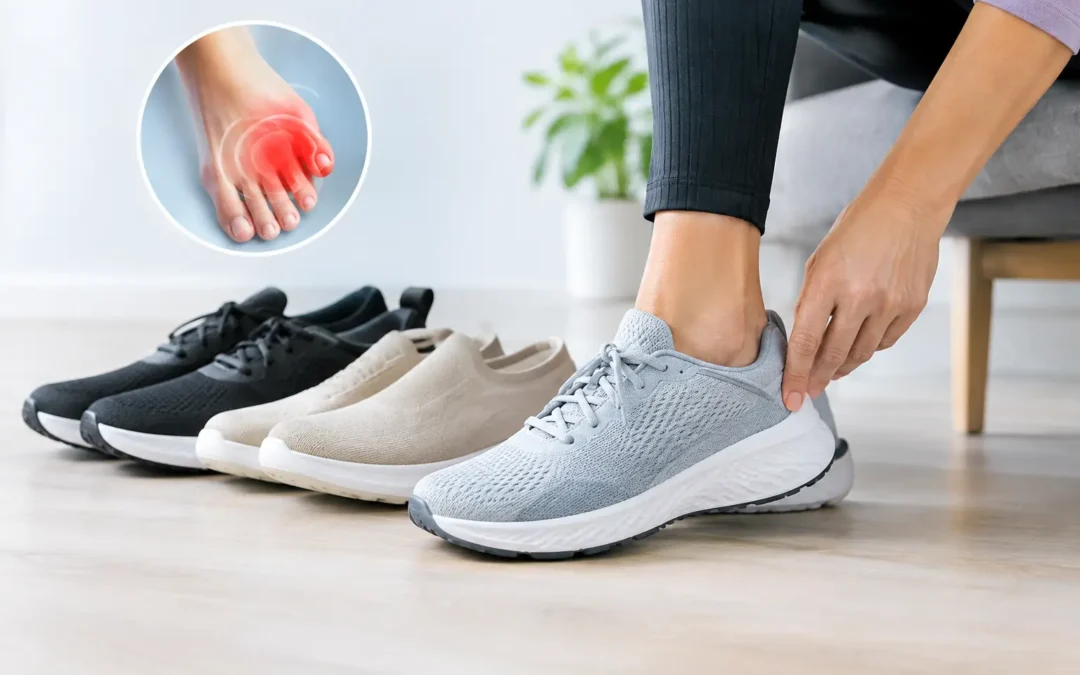
Metatarsalgia can make an ordinary walk from the car park, along the footpath or around the house feel like you are stepping on a stone. Finding the best shoes for metatarsalgia is often one of the most effective ways to reduce pressure through the ball of the foot, but the right choice is not simply the softest or most expensive shoe. It needs to suit the cause of your pain, your foot shape, your daily activity and any underlying conditions.
Metatarsalgia is a general term for pain and inflammation around the metatarsal heads – the bones at the base of the toes. It commonly causes a burning, aching or sharp sensation under the forefoot, often becoming worse with prolonged standing, walking, running or wearing narrow shoes. Some people also feel as though there is a pebble or a crease in their sock beneath the foot.
A well-fitted shoe cannot correct every cause of forefoot pain, but it can reduce the load on irritated tissues while treatment takes effect. If pain is persistent, worsening or associated with numbness, swelling or a change in foot shape, a podiatry assessment is the sensible next step.
What the best shoes for metatarsalgia should do
The main job of a suitable shoe is to spread pressure more evenly across the foot and limit excessive stress at the ball of the foot. For many people, this means choosing a shoe with sufficient cushioning, a stable base and enough room for the toes to sit naturally.
Look first at the toe box. It should be deep and wide enough that your toes are not compressed from the sides or pressed against the top of the shoe. Pointed styles and shoes that taper sharply at the front may concentrate pressure under the forefoot and aggravate symptoms, particularly if you have bunions, hammer toes or toe deformities.
Cushioning through the forefoot can make a meaningful difference, especially on hard surfaces. However, very soft shoes are not always the answer. If the midsole is overly flexible or unstable, the foot may work harder and load can still shift towards the metatarsal heads. Aim for cushioning combined with a supportive, stable sole.
A moderate heel-to-toe drop is often more comfortable than a high heel, as elevated heels push body weight forward onto the ball of the foot. A low, broad heel or a relatively flat shoe is usually preferable for day-to-day wear. This does not mean every flat shoe is appropriate: thin-soled ballet flats, sandals and casual canvas shoes often provide too little cushioning and support.
Features that can reduce forefoot pressure
A rocker sole is one feature that can be particularly helpful. This sole has a curved profile that assists the foot in rolling forward during walking, reducing the need for the forefoot to bend as much at push-off. It may be useful where metatarsalgia occurs alongside hallux rigidus, arthritis at the big toe joint or limited toe movement.
A firm heel counter is also worth checking. This is the structured section around the back of the heel. When it is reasonably supportive, it can help control excessive foot movement and create a more stable platform for walking. The shoe should bend mainly near the toes, rather than twisting easily through the middle.
Removable insoles are practical because they create space for a prescription orthotic or a cushioned insole if required. An orthotic is not necessary for everyone, but it can be valuable when foot mechanics, high arches, flat feet, a long second toe, toe deformities or reduced fat padding are contributing to repeated forefoot overload.
A metatarsal pad may also be prescribed. Despite its name, it is not placed directly under the painful spot. It sits just behind the metatarsal heads to help redistribute pressure away from the sensitive area. Positioning matters greatly. A pad in the wrong location can feel uncomfortable or worsen symptoms, so it is best fitted as part of an individual plan.
Choosing shoes for work, exercise and everyday wear
The best shoe category depends on how you use it. A supportive walking or running shoe is often a good starting point for people who spend long hours on their feet, as these styles commonly offer forefoot cushioning, a wider base and removable liners. Take the time to try on several styles rather than relying on the size printed on the box. Sizing varies between manufacturers, and feet can change over time.
For exercise, choose a shoe designed for the activity. A running shoe may not provide the side-to-side stability needed for court sports, while a heavily cushioned running shoe may feel unsuitable for gym-based strength training. If metatarsalgia begins during sport, a gait assessment can help identify whether training load, footwear wear patterns or foot mechanics are involved.
Work footwear deserves just as much attention. Safety boots should have adequate width and depth, a cushioned insole and a sole that does not force the foot to bend sharply at the ball. Dress shoes can be more difficult, particularly when a workplace requires a formal appearance. Seek styles with a rounder toe shape, a lower heel, a stable sole and enough internal depth for an insole where needed.
Sandals are not automatically off limits, but flimsy thongs and flat fashion sandals rarely offer enough protection for ongoing forefoot pain. A more structured sandal with adjustable straps, a contoured footbed and a cushioned sole can be a more comfortable warm-weather option.
How to check the fit in store
Try shoes on later in the day, when your feet are more likely to be slightly swollen. Wear the socks you would normally use, and bring your orthotics if you have them. Both feet should be measured, as one foot is often longer or wider than the other. Fit the larger foot.
When standing, you should have roughly a thumb-width of room in front of the longest toe. Your heel should feel secure without rubbing, while the forefoot should not feel squeezed. Walk around the store for several minutes. Pay attention to any burning, pressure or slipping under the ball of the foot rather than assuming the shoe will stretch enough with wear.
Do not judge a shoe by its first few steps alone. A shoe that feels soft but makes the forefoot work harder can become uncomfortable after an hour. Equally, a supportive shoe may need a short period of gradual wear-in. Start with shorter walks and increase use over several days, provided it does not provoke pain.
Shoes and conditions that can mimic metatarsalgia
Not all pain beneath the ball of the foot is straightforward metatarsalgia. Morton’s neuroma can cause burning, tingling or numbness that radiates into the toes, often made worse by narrow shoes. A stress fracture may cause more localised pain and tenderness, while plantar plate injury can lead to pain beneath a toe joint and a toe that begins to lift or drift.
Calluses are another clue. They often form where pressure is repeatedly concentrated, but removing the hard skin alone does not address why it is returning. Changes in foot structure, arthritis, diabetes-related changes in sensation, inflammatory conditions and reduced fatty padding can all influence footwear needs.
This is why a shoe recommendation should not be treated as a diagnosis. If symptoms continue despite changing footwear, a podiatrist can assess your gait, joint movement, footwear, pressure areas and any need for imaging or customised offloading. At Manly Foot Clinic, this assessment can also guide whether conservative care, prescription orthotics or another treatment pathway is most appropriate.
When it is time to seek care
Arrange an assessment if forefoot pain lasts more than a couple of weeks, limits your usual walking or exercise, wakes you at night, or is accompanied by numbness, marked swelling or skin colour changes. People with diabetes, poor circulation or reduced sensation should seek advice promptly for any new foot pain or skin breakdown.
The right shoe should make movement feel easier, not force you to tolerate pain. A careful fit, adequate forefoot room and support matched to your feet can give irritated tissues a better chance to settle and help you return to comfortable daily activity.