
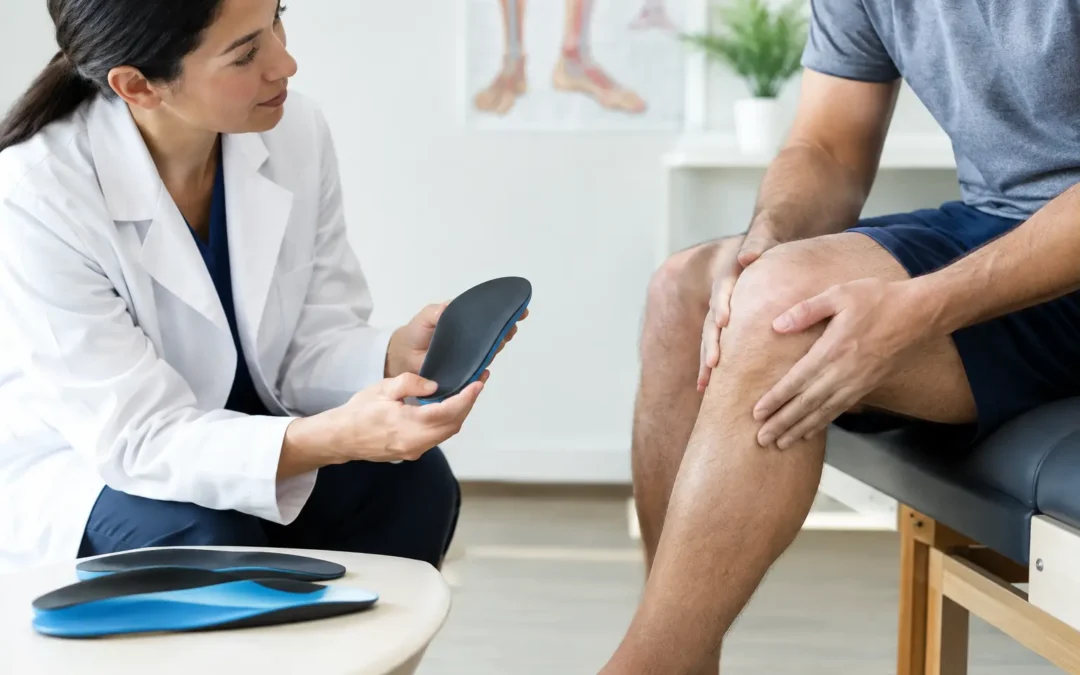
A knee that aches on stairs, after a beach walk or halfway through a run is not always a knee-only problem. The way your feet contact the ground influences how force travels through your ankles, knees, hips and lower back. So, can orthotics help knees? For some people, yes – particularly when foot posture, footwear or walking mechanics are adding unnecessary strain. They are not a universal cure, however, and the right answer starts with a proper assessment.
Can Orthotics Help Knees?
Orthotics are inserts worn inside shoes to support, cushion or guide the feet. They can help knee pain when they improve the way force is distributed through the lower limb during standing, walking, running or sport.
For example, a foot that rolls inwards excessively may contribute to the knee moving or rotating in a way that irritates tissues around the kneecap. A very high-arched or rigid foot may not absorb impact effectively, transferring more load upwards. In these situations, an orthotic may help create a more stable and comfortable base for movement.
The goal is not to force every foot into one ‘ideal’ position. Feet vary considerably, and many people with flat feet or high arches have no pain at all. Orthotic treatment is most useful when the foot mechanics identified on examination match a person’s symptoms, activity demands and footwear.
How Foot Mechanics Can Affect the Knee
Each step involves a coordinated chain of movement. As the foot lands, it needs enough flexibility to absorb shock, then enough stability to help propel the body forward. If that process is poorly controlled, the knee may have to compensate.
Excessive pronation, often described as the foot rolling in, can be associated with inward rotation of the shin and changes in knee alignment. This may contribute to patellofemoral pain – pain at or around the kneecap – especially during running, squatting, stair climbing and prolonged sitting with bent knees. It can also aggravate symptoms in some people with tendon irritation or early joint wear.
Conversely, a stiff foot with limited shock absorption can increase impact loading. Restricted movement at the big toe, including hallux rigidus, may also alter the way a person pushes off and shifts weight through the leg. A limp caused by heel pain, a bunion, Morton’s neuroma or ankle stiffness can have a similar knock-on effect.
This does not mean every knee problem begins at the foot. Knee osteoarthritis, ligament injuries, meniscal tears, hip weakness and training errors all require their own consideration. A podiatrist’s role is to identify whether the foot and ankle are contributing factors that can be treated conservatively as part of a broader plan.
Knee Problems That May Respond to Orthotics
Orthotics may be considered for people with patellofemoral pain, some forms of overuse-related knee pain, and knee discomfort linked to flat feet, high arches or uneven loading. They are also sometimes used for people with mild to moderate knee osteoarthritis, particularly where an individual’s gait or leg alignment suggests that redistributing load could improve comfort.
For runners and field-sport athletes, symptoms often appear after a sudden change in training volume, hills, footwear or playing surface. An orthotic may reduce strain, but it should sit alongside sensible load management and a graded return to activity. Continuing to run through escalating pain because an insert has been fitted is unlikely to produce a good outcome.
For older adults, an orthotic may make walking more comfortable by improving foot support and reducing stress from painful foot conditions. The benefit may be less about correcting a knee and more about helping the whole lower limb move with greater confidence and less discomfort.
Results vary. Some people notice a clear change within the first few weeks, while others need adjustments to the device, their footwear, their exercise routine or all three. If knee pain is caused by a significant joint injury or advanced arthritis, an orthotic alone may offer only limited relief.
What a Podiatry Assessment Looks For
An effective orthotic is prescribed after assessment, not selected simply because it looks supportive. At Manly Foot Clinic, this process considers the symptoms themselves, as well as the movements and daily activities that bring them on.
A podiatry assessment may include a discussion about the location and pattern of knee pain, previous injuries, sport, work demands and footwear. Your podiatrist examines foot posture, ankle mobility, strength, joint movement and areas of tenderness. Watching you walk, and where appropriate run, helps identify how the feet and legs work together under load.
Gait analysis and 3D foot scanning can provide useful information when prescription orthotics are indicated. The final device is then designed around your foot shape, shoe type and clinical needs. A person who spends the day in safety boots, for instance, needs a different solution from someone training for a fun run or managing knee pain in casual shoes.
Prescription Orthotics Versus Shop-Bought Inserts
Over-the-counter inserts can be a reasonable starting point for mild symptoms, particularly if they fit comfortably in supportive shoes and offer enough cushioning or arch support. They are readily available and cost less than a prescription device.
Their limitation is that they are not made for your specific foot shape, gait or diagnosis. A generic arch can feel uncomfortable, sit in the wrong position or take up too much room in the shoe. A heavily cushioned insert may feel pleasant initially but may not provide the support needed for a foot that is collapsing under load.
Prescription orthotics are tailored to the person rather than the label on the package. They can be made with firmer control, targeted cushioning, heel support or specific modifications to address particular loading patterns. They are especially worth considering when symptoms are persistent, when there is a known foot deformity, or when previous standard inserts have not helped.
Custom does not automatically mean better for every person. The most appropriate option is the one that suits the diagnosis, footwear and lifestyle, and that you can wear consistently without creating new discomfort.
Orthotics Work Best With the Right Plan
An orthotic changes the interface between your foot and shoe, but it does not replace strength, mobility and appropriate activity progression. Knee pain often improves more reliably when several contributing factors are addressed together.
Supportive, well-fitting footwear gives an orthotic a stable platform. Shoes that are worn down on one edge, overly flexible or too narrow can reduce its benefit. Your podiatrist may also recommend exercises to improve calf flexibility, foot control, hip strength or quadriceps function, depending on your assessment.
Training load matters as well. A rapid jump in kilometres, gym sessions, court sport or hill walking is a common reason knee pain persists. Reducing aggravating activity temporarily and rebuilding gradually can give irritated tissues time to settle while the body adapts to changes in support.
It is normal to have a short adjustment period with new orthotics. They are often introduced gradually, beginning with shorter periods of wear. Ongoing or worsening pain in the foot, knee, hip or back should be reviewed rather than pushed through. Small changes to the orthotic or shoe can make a meaningful difference.
When Knee Pain Needs Further Assessment
Seek prompt medical assessment for a knee that is significantly swollen, hot, locked, unstable or unable to take weight. A sudden injury with a popping sensation, major loss of movement, fever, calf swelling or unexplained night pain also needs timely attention.
Persistent knee pain deserves assessment even if it is not severe. The earlier the contributing factors are identified, the easier it is to build a treatment plan that protects comfortable movement. Depending on the findings, this may involve podiatry care, physiotherapy, your GP or an orthopaedic specialist.
If your knee is asking you to change the way you walk, do not ignore what your feet may be contributing. A considered gait and footwear assessment can clarify whether orthotics are likely to help and provide a practical path back to walking, work, sport and daily activity with greater comfort.