
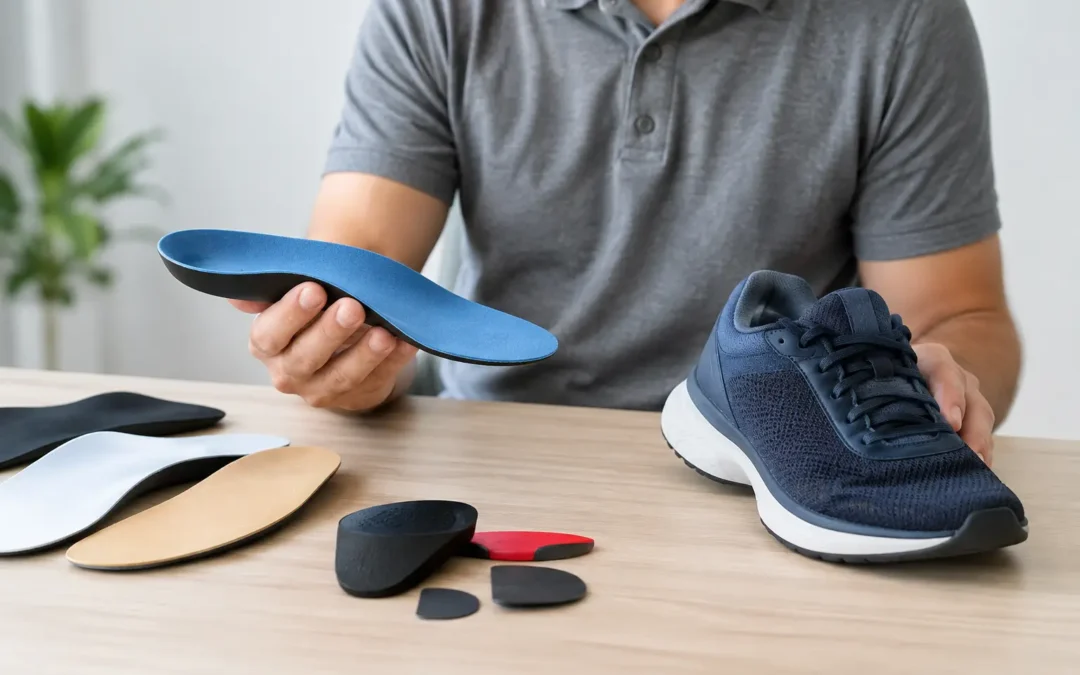
A shoe that is too narrow through the forefoot can make a bunion ache within minutes. A supportive running shoe may settle heel pain on a long walk, while another person needs an in-shoe device to control a specific movement problem. Orthotics versus footwear modification is not simply a choice between two products. It is a clinical decision based on your diagnosis, daily activity, foot shape, walking pattern and the shoes you are realistically able to wear.
Both approaches can reduce pain and improve comfort, but they do different jobs. Understanding that difference helps avoid spending money on footwear or inserts that do not address the cause of your symptoms.
What orthotics are designed to do
Orthotics are devices worn inside the shoe to support, cushion or redistribute pressure beneath the foot. They may be prefabricated, meaning made in standard sizes and shapes, or custom prescribed after a detailed podiatry assessment. At Manly Foot Clinic, prescription orthotics can be supported by 3D scanning and gait analysis, allowing the device to be designed around the individual foot and the way it functions.
An orthotic may help guide excessive foot motion, improve load distribution or accommodate a prominent area that is sore under pressure. It can also reduce strain on particular tissues. For example, an orthotic may be considered for plantar heel pain, shin pain related to running, flat feet causing fatigue, Morton’s neuroma, forefoot pain or certain tendon conditions.
Custom orthotics are not necessarily rigid. Materials range from firmer shells that provide greater control to softer cushioning layers that suit sensitive feet, arthritis or reduced padding under the sole. The best design depends on what needs to be changed. A highly controlling device can be useful for one patient and uncomfortable or unnecessary for another.
When an orthotic may be the stronger option
Orthotics are particularly useful when the concern is related to how the foot loads or moves rather than the shoe alone. Someone with recurrent pain during sport, marked pronation, a leg-length difference, persistent pressure under one metatarsal or symptoms that return across several pairs of shoes may benefit from an orthotic assessment.
They can also be helpful where a patient needs support without changing every aspect of their footwear. A well-designed device may move between suitable work shoes, walking shoes and trainers, although it will not fit every style. The shoe still needs enough depth, width and a removable insole to accommodate it properly.
What footwear modification means
Footwear modification changes the shoe itself to reduce stress on a painful area, improve stability or make walking more efficient. Some modifications are built into commercially available footwear, while others are added by a footwear technician or orthotist.
Common examples include a wider and deeper toe box, a firm heel counter, a rocker sole, a stiffened sole, a heel lift, a sole flare or extra cushioning. These features are not cosmetic. They can alter the forces acting through the foot and ankle with every step.
A rocker sole, for instance, helps the body move forward with less bending through the forefoot or big toe. This can be valuable for hallux rigidus, where arthritis makes big-toe movement painful. A shoe with more depth and a broad toe box may be more appropriate for bunions, hammer toes or toes affected by corns and pressure lesions. In these situations, simply adding an orthotic to a narrow shoe can make symptoms worse by reducing the available room.
When modifying footwear may matter more
Footwear modification is often the priority when the condition is localised and the shoe is directly irritating it. Haglund’s deformity, for example, can be aggravated by a stiff heel counter rubbing the back of the heel. Changing the heel design or reducing pressure in that area may be more useful than an orthotic alone.
Footwear is also central for people with degenerative joint conditions, significant toe deformity, reduced balance or limited ankle motion. A stable sole and secure fastening can make walking feel safer. For older adults, this may mean choosing a shoe that is easier to put on, remains secure on the foot and has enough depth for swelling or an orthotic if required.
For children, footwear should allow normal development and suit their activity, rather than attempting to correct every variation in foot posture. A podiatrist will consider pain, function, frequent tripping, fatigue and gait changes before recommending an insert or a different shoe.
Orthotics versus footwear modification: the key differences
The simplest distinction is that orthotics work from inside the shoe, while footwear modification changes the platform beneath and around the foot. Orthotics can target pressure and foot mechanics with precision. Footwear changes can reduce bending, friction, instability and pressure generated by the shoe itself.
Neither option is automatically better. A runner with Achilles tendon pain may need an appropriate heel lift and a structured shoe, alongside a progressive strengthening program. A person with painful hallux rigidus may gain more from a rocker sole and stiff forefoot than from a highly corrective orthotic. Someone with Morton’s neuroma may require both: footwear wide enough to avoid compressing the forefoot, plus an orthotic with a metatarsal pad positioned to redistribute pressure.
The condition, not the latest footwear trend, should guide the decision. Minimalist shoes, heavily cushioned trainers and motion-control styles all have a place for some people, but they are not universal solutions.
Why the shoe and orthotic must work together
An orthotic is only as effective as the shoe that contains it. If it rocks inside the shoe, crowds the toes, lifts the heel too high or changes the fit around the midfoot, it can create new discomfort. This is why a podiatry appointment may include discussion about your work shoes, school shoes, sports footwear and what you wear around the house.
Bring the shoes you use most often to an assessment if possible. Wear patterns under the sole, compression inside the heel and creasing across the upper can provide useful clues about loading and fit. Your podiatrist can check whether the shoe has enough volume for an orthotic and whether its construction supports the treatment plan.
It is also common to need an adjustment period. A new orthotic should generally be introduced gradually, especially if it changes the way your foot is supported. Mild awareness of the device can be normal at first. Increasing pain, rubbing, numbness or a change in balance should be reviewed rather than pushed through.
Assessment prevents guesswork
Persistent foot or ankle pain deserves more than a quick purchase based on a friend’s recommendation. A thorough assessment considers where the pain occurs, what brings it on, your medical history, joint movement, muscle strength, footwear, skin condition and gait. Imaging or further investigation may be appropriate where a stress injury, arthritis, nerve problem or significant tendon condition is suspected.
This process matters because similar symptoms can have different causes. Heel pain may involve the plantar fascia, Achilles tendon, a nerve or a bony condition. Forefoot pain could reflect a neuroma, joint inflammation, a stress reaction or pressure from footwear. Treating the wrong problem with an insert or a shoe change can delay recovery.
Orthotics and footwear modifications are often one part of a broader plan. Depending on the diagnosis, treatment may also involve exercises, activity changes, padding, hands-on care, footwear advice, anti-inflammatory strategies discussed with your doctor, or surgical opinion where conservative treatment has not provided sufficient relief.
The most useful choice is the one that fits your feet, your condition and your life. If walking, work, sport or everyday comfort is being limited, a professional assessment can clarify whether support inside the shoe, changes to the shoe itself, or a combination of both will help you move with greater confidence.