
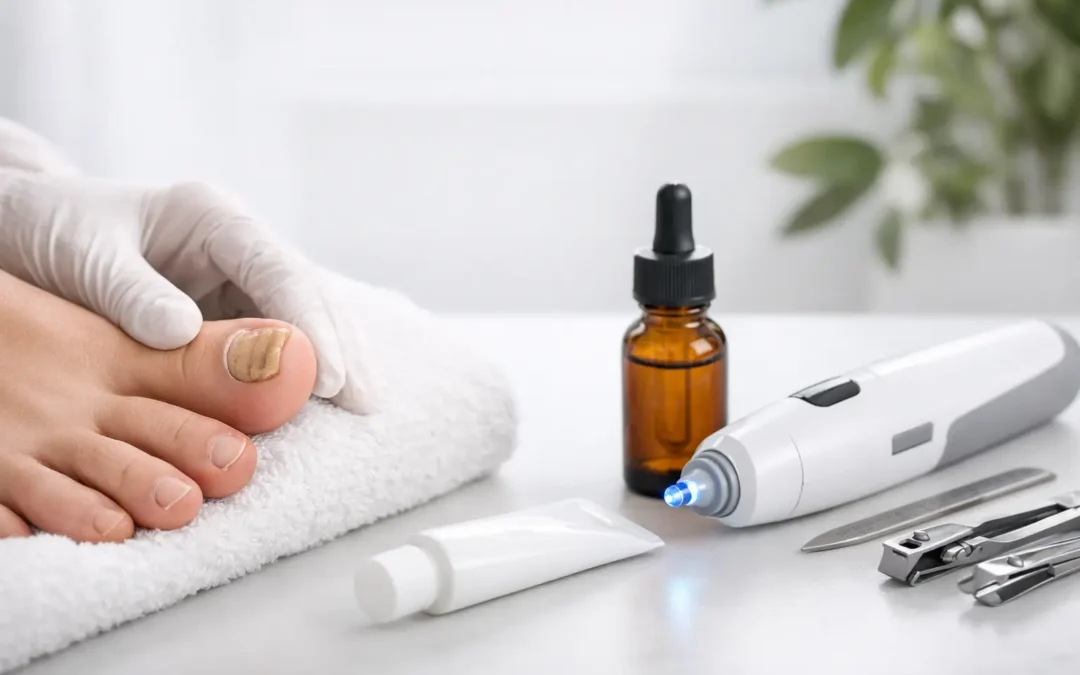
A thick, yellow or brittle toenail can seem like a cosmetic concern at first. But fungal toenail treatment is often about far more than appearance. As the infection progresses, the nail may become uncomfortable in shoes, difficult to trim and more likely to crack, lift or press into the surrounding skin. For people who walk, exercise or spend long days on their feet, that discomfort can quickly affect everyday movement.
Fungal nail infections are common, particularly as we get older, after repeated exposure to damp environments, or when nail trauma has damaged the nail plate. They are also persistent. The visible nail has already grown out from the nail-producing area beneath the skin, so meaningful improvement relies on treating the infection while allowing a healthy new nail to grow.
Why an accurate diagnosis comes first
Not every discoloured or thickened toenail is caused by fungus. Nail trauma from running or tight footwear, psoriasis, eczema, bacterial infection and age-related nail changes can all look similar. Treating the wrong condition with an antifungal product can delay appropriate care and leave the nail unchanged.
A podiatry assessment considers the appearance of the nail, how long the change has been present, any pain or pressure, footwear habits, medical history and whether other skin changes are present. Where the diagnosis is uncertain, a nail sample may be sent for laboratory testing. This can identify whether fungus is present and help guide treatment rather than relying on guesswork.
This is particularly worthwhile when a single nail has changed suddenly, the nail is painful, there is redness or discharge around it, or you have diabetes, poor circulation, reduced sensation or an immune condition. These factors can change both the risk of complications and the safest treatment plan.
What fungal toenail treatment involves
The best approach depends on the severity of the infection, the number of nails involved, the thickness of the nail and your overall health. There is rarely a one-size-fits-all answer. A practical plan may combine nail reduction with topical medication, or involve discussion with your GP about oral medication when the infection is more extensive.
Reducing thickness and pressure
A fungal nail often becomes thick, rough and packed with crumbly debris beneath the nail plate. Professional reduction and debridement carefully removes excess thickness and loose material. This can make footwear immediately more comfortable, reduce pressure on the nail bed and help a topical treatment reach the affected area more effectively.
It is not simply a cosmetic trim. Safe nail care matters, especially when nails are very thick, curved, tender or difficult to reach. Trying to cut deeply into a hard nail at home can cause skin injury or leave sharp edges that catch on socks and shoes.
Topical antifungal treatment
Antifungal nail solutions and medicated lacquers can be suitable for mild or early infections, particularly when only part of one or two nails is affected. They need regular, careful application for a prolonged period. A toenail grows slowly, and the old infected section will not become clear overnight.
Topical treatment works best when the nail is kept short and thin, and when application instructions are followed consistently. It may be less successful if the infection involves the base of the nail, several nails are affected, or the nail plate is markedly thickened. In these situations, combining topical treatment with podiatry care may still help, but expectations should be realistic.
Oral antifungal medication
For more established infections, oral antifungal medication prescribed by a doctor can be more effective because it reaches the nail through the bloodstream as new nail grows. It is not appropriate for everyone. Your doctor will consider your medical history, current medicines and, in some cases, blood tests to assess liver function before and during treatment.
Oral medication can offer a stronger option, but it also requires commitment and medical oversight. It is important not to use leftover medication or online products without a proper diagnosis and prescription advice.
Managing associated skin infection
Fungal toenails often occur alongside tinea, commonly called athlete’s foot. Peeling, itching or scaling between the toes can act as a continuing source of fungal spores, allowing a treated nail to become reinfected. Treating the surrounding skin, keeping feet dry and changing socks after exercise are therefore part of a complete plan, not an optional extra.
Why treatment takes time
The fungus may be controlled well before the nail looks normal. A healthy nail must gradually grow forward from the base, pushing out the damaged section. For a big toenail, this can take 12 months or longer. Growth may be slower in older adults or where circulation is reduced.
This timeline can feel frustrating, but it is a useful way to judge progress. Early signs of improvement include a clearer band of nail appearing near the cuticle, less debris beneath the nail and a reduction in thickness. The damaged end of the nail will still need to grow out and be trimmed away.
Regular reviews can help track whether the plan is working. If there is no sign of healthy growth after an appropriate period, the diagnosis, treatment adherence or treatment choice may need to be reassessed.
Preventing the infection from returning
Fungal infections thrive in warm, moist conditions. Prevention is not about achieving perfectly sterile feet. It is about reducing the conditions that allow fungus to persist and spread.
Dry carefully between the toes after bathing, and change socks daily or after sport. Choose breathable shoes where possible and allow pairs to dry fully before wearing them again. In shared change rooms, pool areas and public showers, thongs can limit contact with contaminated surfaces. Avoid sharing nail clippers, files, socks or shoes, and clean any tools used on affected nails.
Footwear also deserves attention. Shoes that repeatedly compress the toes can damage nails and create small openings where infection is more likely to establish. A podiatrist can assess whether toe pressure, foot shape, activity demands or a thickened nail is contributing to ongoing trauma.
When professional care is especially helpful
Arrange an assessment if a nail is painful, increasingly thick, lifting, ingrown or difficult to manage safely. Prompt care is also sensible if several nails are involved, the nail has failed to improve with pharmacy treatment, or the appearance is changing in an unusual way.
People with diabetes, peripheral vascular disease, neuropathy or reduced immune function should not attempt aggressive home nail trimming or ignore skin breaks around a fungal nail. What begins as minor pressure can become a wound or infection more quickly when healing and sensation are affected.
At Manly Foot Clinic, fungal nail care is planned around the condition of your nails, your health and the activities you want to return to comfortably. That may mean regular conservative nail management, coordination with your GP regarding medication, practical footwear advice, or a combination of these measures.
A clearer nail is a reasonable goal, but comfort and safe, confident movement matter just as much. If a thickened or discoloured toenail is getting in the way of walking, sport or simply putting on shoes, an assessment can provide a clear next step and a treatment plan you can realistically maintain.