
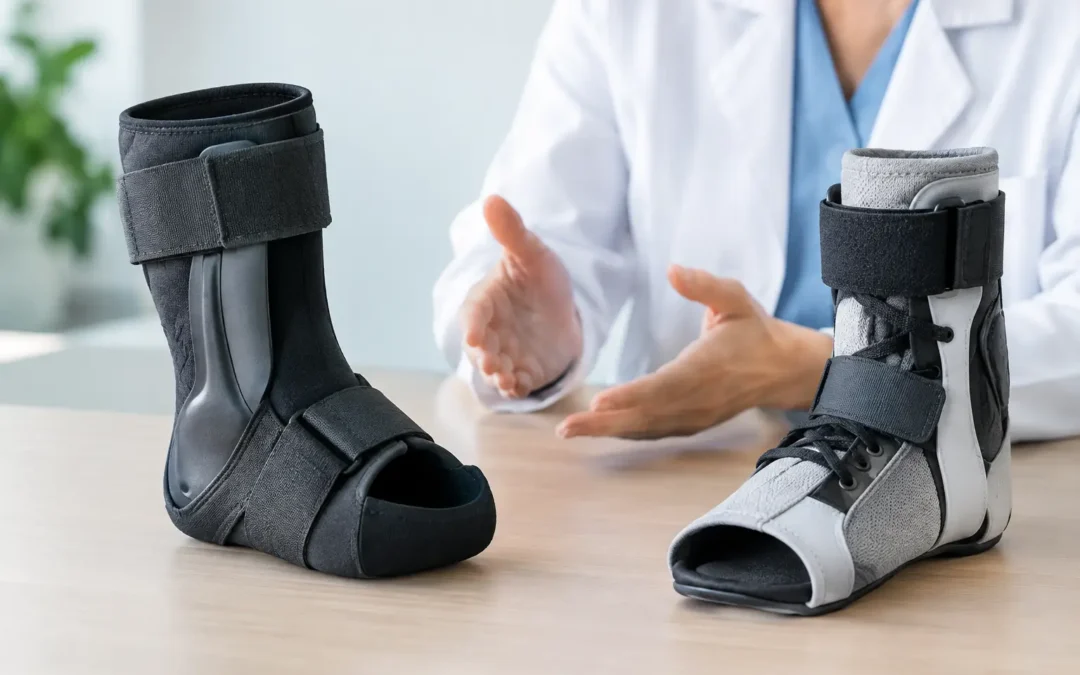
A pair of orthoses can look simple, but the right choice depends on much more than the shape of the arch. In the discussion of prefabricated versus prescribed orthoses, the useful question is not which option is universally better. It is which option suits your foot structure, symptoms, footwear, activity and goals.
For some people, an off-the-shelf device provides comfortable short-term support. For others, particularly those with persistent pain, a diagnosed foot condition or a significant gait issue, a prescribed orthosis may be a more appropriate part of treatment. A podiatry assessment helps separate these situations and avoids spending money on support that does not address the cause of the problem.
What are prefabricated orthoses?
Prefabricated orthoses are ready-made shoe inserts available in pharmacies, shoe stores and sports retailers. They are manufactured in standard shapes and sizes, commonly with cushioning, arch support, a heel cup or a combination of these features. They may be described as insoles, arch supports or orthotic inserts.
A quality prefabricated orthosis can be useful when the fit is appropriate and the concern is relatively straightforward. For example, a person whose feet become tired during a holiday involving more walking than usual may find a supportive, cushioned insert more comfortable than a thin standard shoe liner. They can also offer an affordable starting point while minor symptoms settle.
However, ready-made devices are not designed around an individual foot. Even people who wear the same shoe size can have very different arch heights, heel widths, joint movement and walking patterns. One insert may feel supportive to one person and uncomfortable, overly firm or ineffective for another.
What are prescribed orthoses?
Prescribed orthoses are made following a clinical assessment by a podiatrist. They are designed to address identified needs, which may include reducing pressure on a painful area, supporting or accommodating a foot shape, improving how forces move through the foot and ankle, or making walking and sport more comfortable.
The word “prescribed” does not mean every orthosis is rigid or bulky. The design is selected for the person and their purpose. A device for a runner with recurrent shin pain may differ considerably from one for an older adult with arthritis in the big toe joint, or a child with pain during sport. Materials, shape, depth, cushioning and correction are considered alongside the shoes the orthoses will need to fit into.
At Manly Foot Clinic, prescription orthotics are supported by 3D scanning and gait assessment where clinically appropriate. This provides detailed information about foot shape and movement, but technology is only one part of the process. Your symptoms, examination findings, medical history, activity level and footwear all matter when deciding whether orthoses are likely to help.
Prefabricated versus prescribed orthoses: the practical differences
The main difference is not simply that one is bought from a shelf and the other is made for you. It is the level of assessment, individual adjustment and clinical purpose behind the device.
A prefabricated orthosis is generally best suited to broad support and comfort needs. It comes in limited sizes and designs, and its effectiveness relies on how closely its shape happens to match your foot. It may be an appropriate option for temporary fatigue, mild discomfort or a person who has not previously tried any form of shoe support.
A prescribed orthosis is designed in response to a diagnosis and treatment plan. It can be shaped to accommodate a bunion, offload a painful forefoot, support a markedly flat foot, reduce strain through particular tissues or work around restricted joint movement. It can also be adjusted after fitting if comfort or function needs refinement.
This does not make prescription orthoses necessary for everyone. A simple issue does not always require a custom device, and an expensive orthosis is not automatically the right one. Good podiatric care is about selecting the least complicated effective option, then reviewing how you respond.
When an off-the-shelf option may be reasonable
A prefabricated orthosis may be worth considering if your symptoms are mild, recent and clearly linked to an increase in standing, walking or exercise. It can also be useful when your footwear has little cushioning or support and you need a practical improvement for everyday comfort.
Fit remains important. The insert should sit flat in the shoe without crowding the toes or lifting the heel excessively. Remove the original liner if the shoe allows it, rather than stacking layers and making the shoe too tight. Wear the orthoses gradually over several days, especially if they are firmer than your usual footwear.
If the device causes rubbing, numbness, new pain or altered balance, stop using it and seek advice. A shoe insert should not force you to tolerate ongoing discomfort in the hope that your feet will eventually adjust.
When prescribed orthoses may be more appropriate
Persistent or recurring pain deserves assessment rather than repeated trial and error with retail inserts. Prescribed orthoses may be considered where there is plantar heel pain, forefoot overload, Morton’s neuroma, tendon pain, significant flat feet, high-arched feet, bunion-related pressure or pain from hallux rigidus, the arthritic stiffening of the big toe joint.
They can also form part of management for sports injuries where running mechanics, training load and footwear are contributing factors. An orthosis is not a replacement for rehabilitation, strength work, appropriate footwear or sensible training progression. It may, however, help reduce aggravating forces while these other areas are addressed.
For children, orthoses should be recommended carefully. Many children have flexible flat-looking feet without pain and do not require treatment. Assessment is more useful when there is pain, frequent tripping, reduced participation, uneven shoe wear, an unusual gait or concern about development. The aim is to support comfortable, confident movement, not to treat a foot shape that is functioning normally.
Older adults may benefit from an individual approach when arthritis, reduced cushioning under the foot, diabetes-related risks, balance concerns or changes in mobility are present. In these cases, the fit of both footwear and orthoses can be particularly important for preventing pressure areas and maintaining comfort.
The role of footwear and gait assessment
Even a well-designed orthosis cannot perform properly in an unsuitable shoe. A narrow dress shoe, worn-out runner or loose sandal may not have enough depth, stability or fastening to hold the device and foot securely. Sometimes a change in footwear provides as much benefit as the orthosis itself.
During a podiatry assessment, your clinician may examine joint movement, muscle strength, foot posture, areas of tenderness and the way you stand or walk. Gait analysis can help identify patterns that may contribute to symptoms, but it is interpreted alongside the clinical examination. A variation in gait is not automatically a problem – it becomes relevant when it helps explain pain, reduced function or repeated injury.
The best plan may include advice about shoes, activity modification, stretching or strengthening, treatment for the painful tissue, and orthoses only where they have a clear role. This approach keeps care focused on recovery rather than relying on a device as a stand-alone answer.
How long should orthoses last?
Lifespan varies with the material, your body weight, activity level, footwear and how often the orthoses are worn. Prefabricated inserts may compress or lose structure relatively quickly, particularly with regular sport. Prescribed orthoses are usually more durable, though covers, cushioning and other components can still wear over time.
Review is worthwhile if pain returns, your shoes no longer fit comfortably around the devices, the orthoses show visible damage or your activity and health needs have changed. Children may need more frequent review as their feet grow, while adults may need adjustments after injury, surgery or a change in work demands.
There is no prize for persisting with an insert that is not helping. Whether you begin with a prefabricated option or require a prescribed device, the goal is straightforward: less pain, more comfortable movement and a plan that fits your life.