
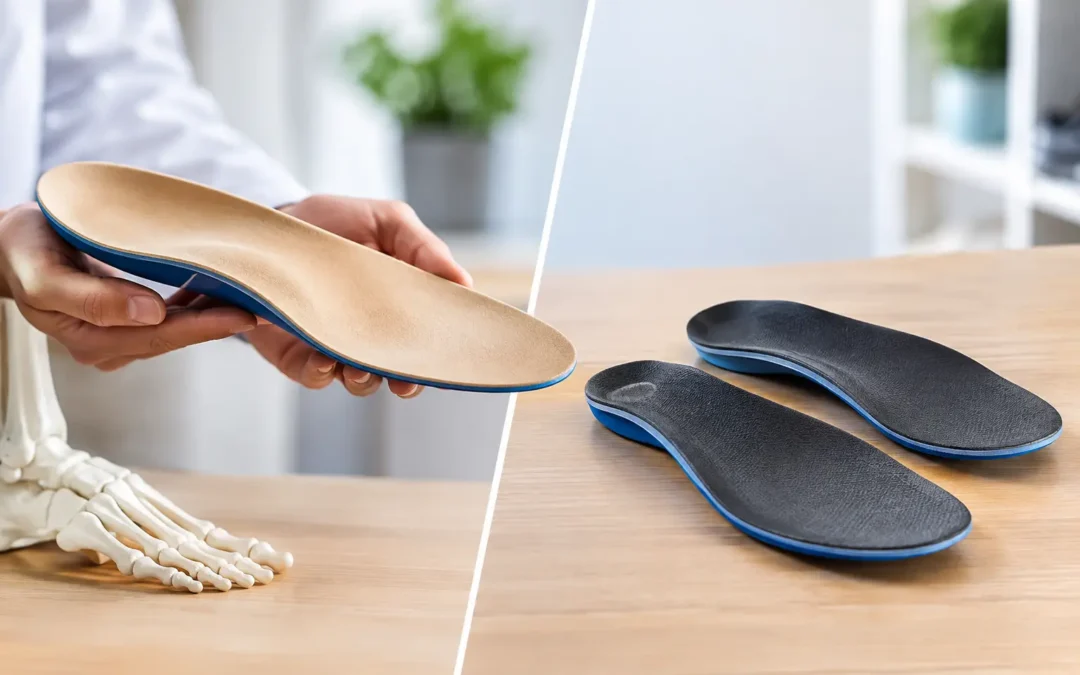
A pair of insoles can look like a simple answer to sore feet. Yet the difference between custom orthotics versus store insoles becomes clear when pain keeps returning, shoes wear unevenly, or an injury is affecting the way you walk, run or stand. The right choice depends on what is causing the problem, how long it has been present and what your feet need to do each day.
Store-bought insoles can provide worthwhile comfort for some people. Custom orthotics, however, are prescribed after a clinical assessment and made to address the way an individual foot functions. Neither option is automatically right for everyone. A podiatrist can help determine whether extra cushioning is enough or whether targeted support is needed to reduce strain and improve comfortable movement.
What store insoles are designed to do
Store insoles are pre-made inserts available in pharmacies, shoe stores and sporting retailers. They are commonly made from foam, gel, cork or firmer moulded materials. Most are designed around broad categories such as arch support, heel cushioning, work footwear or running.
For short-term comfort, they can be a practical starting point. A cushioned heel insert may make a hard work boot more comfortable, while a simple arch-support insole may help a person whose shoes have little structure. They are also readily available and generally less expensive than prescription devices.
The limitation is that a store insole is not made for the shape, pressure pattern or movement of your particular feet. Two people with flat-looking feet may have very different needs. One may have flexible feet that roll in excessively during walking, while another may have stiff feet, arthritis or a painful tendon that needs a different approach altogether.
A generic insole can also take up too much room in a shoe, place pressure on a prominent area, or provide support in the wrong location. If symptoms increase after starting an insole, it is sensible to stop using it and arrange an assessment rather than trying to push through discomfort.
How custom orthotics differ from store insoles
Custom orthotics are prescription devices made following a podiatry assessment. The process usually considers your symptoms, medical history, footwear, activity levels and the way you stand and walk. It may include gait analysis, joint and muscle testing, and a detailed examination of areas under pressure. At Manly Foot Clinic, 3D scanning can be used to capture an accurate model of the foot for orthotic design.
The orthotic is then prescribed with a specific purpose. It may redistribute pressure away from a painful forefoot, support a collapsing arch, improve control through the heel, accommodate a deformity, or reduce stress on an irritated tendon or joint. The materials and shape can be selected to suit the condition and the footwear it needs to fit into.
This does not mean custom orthotics must feel hard or restrictive. Many are designed to work subtly within a supportive shoe. Some require an adjustment period as the body adapts to a change in support, but ongoing discomfort should be reviewed. A properly managed prescription includes checking fit, comfort and symptom response, not simply handing over an insert.
A device should match the diagnosis
Heel pain is a good example of why diagnosis matters. Plantar heel pain may respond to a combination of load management, stretching, supportive footwear and orthotic support. But heel pain can also relate to a nerve problem, a stress injury, fat pad irritation or referred pain from elsewhere. An insole chosen without assessment may not address the source.
The same applies to Morton’s neuroma, bunions, hallux rigidus and metatarsalgia. These conditions can each create pain in the forefoot, but they often require different pressure-relieving features. For someone with hallux rigidus, a stiff and painful big-toe joint, an orthotic may be designed to reduce joint motion and improve comfort during push-off. For a person with Morton’s neuroma, support may be positioned to reduce compression across the affected nerve.
When a store insole may be enough
A quality off-the-shelf insole can be reasonable for mild, occasional discomfort, particularly when it is paired with appropriate footwear. For example, someone spending a weekend walking around the Northern Beaches in worn casual shoes may benefit from a cushioned insole while they replace those shoes with a more supportive pair.
It may also suit people with no persistent pain who simply want modest extra cushioning in sports shoes, work shoes or school shoes. In this situation, comfort, shoe fit and the response over the following days matter more than marketing claims about correcting posture or preventing every injury.
Choose an insole that sits flat in the shoe and does not crowd the toes or lift the heel out of the heel counter. Remove the original liner if the shoe allows it. If the insert causes rubbing, numbness, new knee or hip discomfort, or worsened foot pain, it is unlikely to be the right solution.
When custom orthotics are worth considering
Custom orthotics are generally more appropriate when symptoms are ongoing, recur with activity, or affect work, sport or day-to-day mobility. They may also be useful when there is a diagnosed foot or ankle condition, visible deformity, uneven loading, or a history of repeated injury.
A podiatry assessment is particularly worthwhile if you have persistent heel pain, Achilles or posterior tibial tendon pain, recurrent shin pain, flat feet with fatigue, painful bunions, arthritis, diabetic foot risk, or pain beneath the ball of the foot. For active people, an assessment can identify whether training changes, footwear, strength work or recovery strategies are also needed. Orthotics are often one part of a broader treatment plan rather than the only treatment.
Children should not be fitted with orthotics simply because their feet look flat. Many children have flexible flat feet without pain and need reassurance, appropriate footwear and monitoring rather than intervention. Assessment is more important when a child has pain, frequent tripping, unusual wear on shoes, limited activity, a rigid foot shape or concerns about walking development.
For older adults, custom devices can be helpful where joint stiffness, arthritis, reduced cushioning under the foot or balance changes are affecting confidence and mobility. The design should be practical for the shoes they can safely wear and easy to manage each day.
Cost, durability and expectations
Store insoles cost less upfront, which makes them attractive when the problem is minor or temporary. Their lifespan varies considerably. Soft foam and gel products may compress quickly, especially with regular use or higher body weight. Once an insole has flattened, cracked or lost its shape, it may no longer provide meaningful support.
Custom orthotics involve a higher initial investment because they include assessment, prescription, manufacture and, where needed, review. They are usually made from more durable materials and can sometimes be adjusted as symptoms, footwear or activity needs change. Durability still depends on the device material, how often it is worn and the demands placed on it.
The most cost-effective option is not always the cheapest insert. It is the option that suits the diagnosis, fits the footwear and helps you stay comfortably active without delaying appropriate care. If an over-the-counter insole is working well, there may be no reason to replace it with a custom device. If you are repeatedly buying new inserts while pain persists, a professional assessment may save time and frustration.
Getting the most from any insole
Even an excellent orthotic cannot compensate for a poorly fitting shoe. Footwear should have enough depth for the insert, a stable heel counter, suitable width through the forefoot and a fastening that holds the foot securely. The best shoe will differ for a runner, a tradie, a school-aged child and an older person managing arthritis.
It is also important to introduce a new device gradually if advised by your podiatrist. Start with shorter periods of wear and build up as comfort allows. Keep track of where pain occurs, what activities bring it on and whether symptoms settle afterwards. This information helps guide adjustments and other treatment decisions.
Comfortable movement starts with understanding why your feet hurt. If pain is limiting your work, sport or everyday walking, an individual assessment can provide a clearer path forward than trialling one more insole from the shelf.