
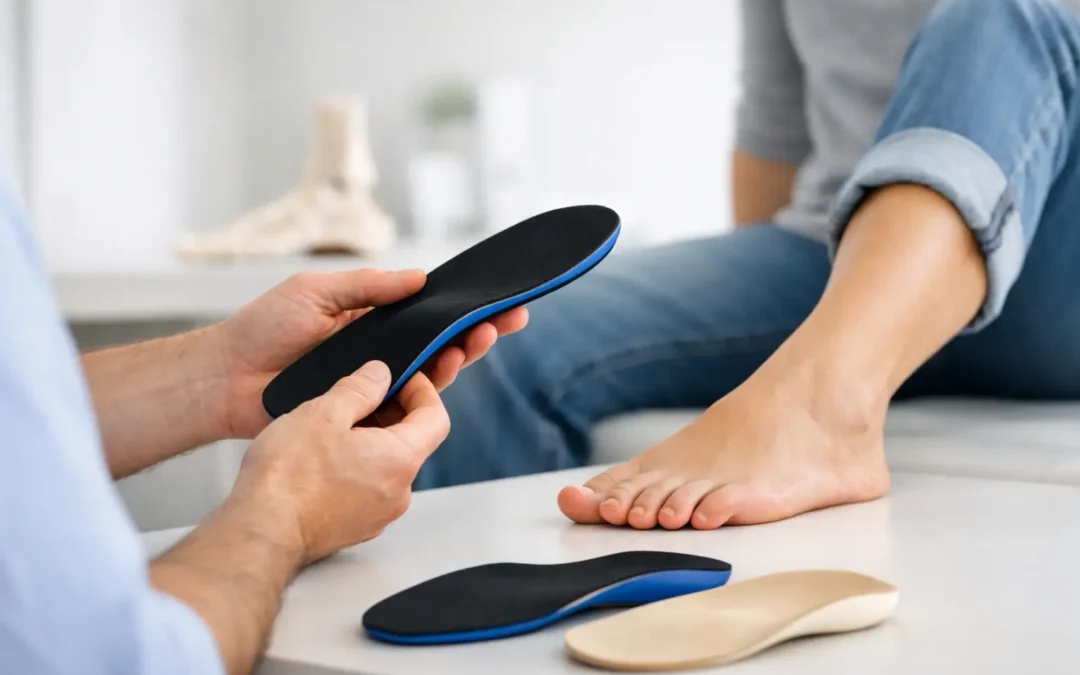
A long walk along the Manly foreshore, a full shift on your feet or a return to running can expose a problem that has been quietly building for years. Flat feet orthotics for adults may help when fallen arches are linked with pain, fatigue or changes in the way you walk – but they are not automatically necessary for every low arch.
Many adults have naturally flat feet and remain comfortable and active. Others develop symptoms after an injury, a change in activity, weight gain, pregnancy, ageing or wear within the tendons and joints that support the arch. The useful question is not simply whether your feet look flat. It is whether the position and movement of your feet are placing too much strain on surrounding structures.
What flat feet can mean in adulthood
Flat feet, also called pes planus, occur when the arch on the inside of the foot is low or makes contact with the ground while standing. In flexible flat feet, an arch may reappear when you are sitting or standing on tiptoes. In more rigid cases, the foot remains flat and may be less mobile.
As the arch lowers, the heel can roll inwards and the foot may rotate excessively during walking. This is often described as overpronation. Some pronation is normal and helps absorb load. Problems arise when the movement is excessive, poorly controlled or paired with reduced strength, limited joint movement or unsuitable footwear.
Symptoms are not always limited to the arch. Adults may notice aching through the inside of the ankle, heel pain, pain beneath the ball of the foot, shin discomfort, knee pain or fatigue after standing. Shoes may wear unevenly, especially on the inside edge of the heel, and one foot may feel more troublesome than the other.
A newer or worsening flat foot on one side deserves particular attention. Pain and swelling along the inside of the ankle can indicate stress or dysfunction of the posterior tibial tendon, which plays a key role in supporting the arch. Early assessment can help guide treatment before the foot becomes more fixed or painful.
How orthotics can help flat feet
Orthotics are devices worn inside shoes to improve comfort, redistribute pressure and influence how the foot functions under load. For adults with symptomatic flat feet, they may support the arch and heel, reduce strain on irritated tissues and make walking, work or sport more comfortable.
The aim is not to force every foot into a high arch or to permanently change its shape. A well-designed orthotic is used to manage the individual mechanics and symptoms in front of the clinician. For one person, that may mean reducing pressure under the forefoot. For another, it may mean improving heel control or supporting a painful posterior tibial tendon.
Orthotics can be particularly useful for people experiencing plantar heel pain, recurrent shin pain, forefoot overload, Achilles tendon symptoms or discomfort associated with long periods on hard surfaces. They may also be part of a broader plan for knee, hip or lower-back symptoms when foot mechanics are contributing, though those areas should be assessed in their own right.
Relief is usually gradual rather than immediate. Some people feel a difference within days, while others need several weeks of consistent use, footwear changes and strengthening before symptoms settle. The correct fit inside the shoe matters as much as the device itself.
Are off-the-shelf or custom orthotics better?
This depends on the cause and severity of your symptoms, your footwear and what you need your feet to do each day. A quality prefabricated insert can be a sensible starting point for mild, general discomfort. It may provide cushioning and a modest degree of arch or heel support at a lower cost.
Custom prescription orthotics are designed around a detailed assessment of your foot shape, joint movement, walking pattern, symptoms and activity demands. They can be more appropriate when pain is persistent, the feet function differently from each other, there is a structural deformity, or a person needs support tailored to work boots, running shoes or dress footwear.
Custom does not automatically mean better in every situation. An orthotic must be clinically appropriate, comfortable and able to fit the shoes you genuinely wear. A highly supportive device that stays in the cupboard will not improve mobility. In some cases, a simpler device combined with the right shoe and exercise programme is the most practical solution.
A proper assessment comes before a prescription
Flat feet have several possible causes, and treatment should not be based on footprint shape alone. A podiatry assessment considers where the pain occurs, how long it has been present, past injuries, health conditions, footwear, work demands and sporting goals.
The examination may include checking the feet and ankles while sitting, standing and walking; assessing joint range, muscle strength and tendon tenderness; and observing alignment through the legs. Gait analysis helps identify how the foot behaves from heel strike through to push-off. Where needed, 3D scanning can capture the foot accurately for a prescription orthotic.
This process also helps identify situations in which orthotics alone are unlikely to be enough. Marked stiffness, joint arthritis, tendon tears, nerve symptoms or a significant change in foot shape may need imaging, immobilisation, targeted rehabilitation, medication advice from your doctor or other treatment. Good care avoids both under-treating a significant problem and prescribing an unnecessary device.
Footwear and exercises are part of the result
Orthotics work inside a shoe, not independently of it. A worn-out runner with a soft, collapsing heel counter may not provide enough structure to hold an orthotic in the right position. For day-to-day walking, look for footwear with a firm heel, adequate depth, a secure fastening and enough room for the toes. The best choice also needs to suit your occupation and activity.
Very flat, flexible shoes can aggravate symptoms for some people, particularly during a flare-up. That does not mean everyone needs a stiff shoe at all times. Footwear should be selected around comfort, stability and the demands placed on your body rather than fashion labels or broad claims about “arch support”.
Strength and mobility work can also make a meaningful difference. Calf tightness can increase load through the foot, while weakness in the calf, intrinsic foot muscles, hips or posterior tibial tendon can reduce control during walking. A podiatrist may prescribe a gradual exercise programme that matches your diagnosis and current tolerance. Exercises should not sharply increase pain, especially if there is swelling or tenderness around the inner ankle.
Getting used to new orthotics
Even a carefully prescribed orthotic can feel unfamiliar at first. Most adults benefit from a gradual wearing-in period, beginning with short periods at home or during low-demand activity and increasing as comfort allows. Your podiatrist will provide specific guidance based on the device and your condition.
Mild awareness under the arch can be normal initially. Ongoing pain, numbness, rubbing, blisters or new pain in the knees, hips or back is not something to push through. A review may be needed to adjust the orthotic, reassess your footwear or check whether another issue is contributing.
Orthotics also need maintenance. Materials compress and footwear changes shape over time, particularly when devices are used daily for work or sport. Regular review helps ensure they still suit your feet, symptoms and activity level.
When to seek assessment promptly
Arrange a podiatry appointment if flat feet are associated with persistent pain, swelling, difficulty walking, repeated ankle sprains or pain that limits work, exercise or daily activities. Seek earlier assessment if one arch has suddenly dropped, the foot has become stiff, or pain and swelling are developing along the inside of the ankle.
People with diabetes, reduced circulation, neuropathy or inflammatory arthritis should also have new foot symptoms assessed rather than relying on a retail insert. These conditions can change how pressure, skin injury and healing need to be managed.
At Manly Foot Clinic, an orthotic prescription is considered within a full treatment plan, with the focus on helping you move with greater comfort and confidence. The right support should fit your life as well as your shoes, so you can get back to the walks, work and activities that matter to you.