
A child’s walk can change quickly as they grow. One week they may seem to trip often, and the next they may be running comfortably at the park. However, persistent limping, frequent falls, pain, unusual shoe wear or a gait that looks markedly different from other children of a similar age can warrant a paediatric gait assessment.
The aim is not to make every variation in walking a problem. Children develop at different rates, and many gait features settle naturally as strength, coordination and bone alignment mature. A careful assessment helps distinguish a normal developmental stage from an issue that may benefit from treatment, monitoring or further medical investigation.
What is a paediatric gait assessment?
A paediatric gait assessment is a detailed examination of how a child stands, walks, runs and moves through everyday activities. It considers the feet and ankles, but also the knees, hips, legs, posture, balance, muscle strength and joint movement. The child is assessed as a whole, because the cause of an altered walking pattern is not always located in the foot.
At Manly Foot Clinic, the assessment begins by listening to parents and, where appropriate, the child. Details such as when the concern was first noticed, whether there has been an injury, what activities are difficult and whether pain occurs during or after exercise all help form a clearer clinical picture.
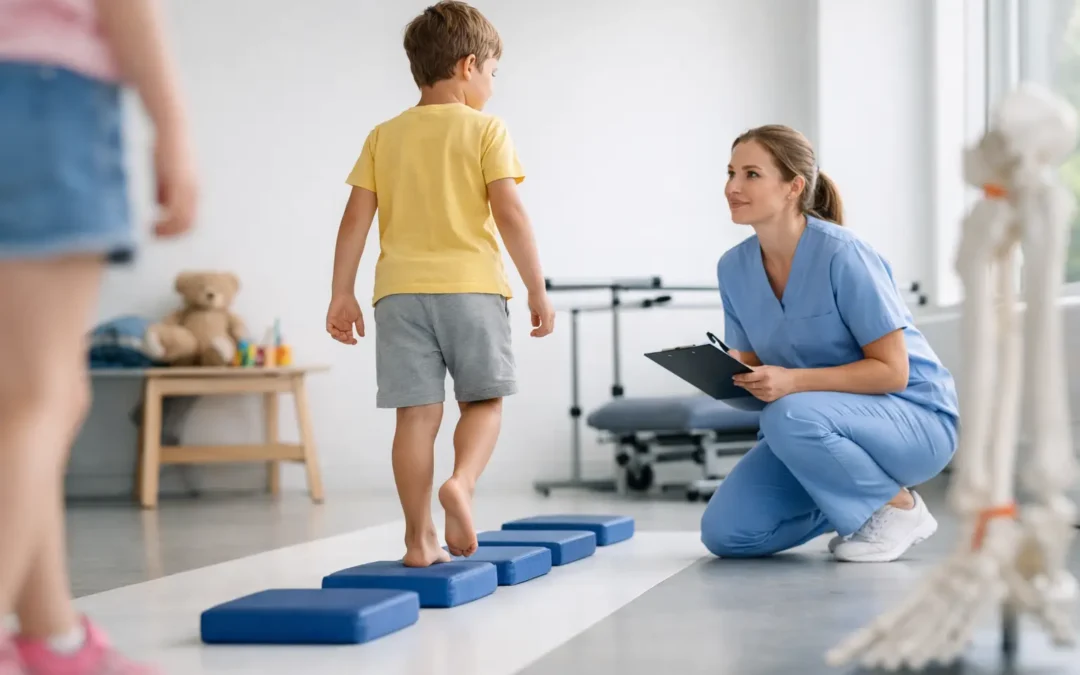
The podiatrist may observe your child walking barefoot and in their usual shoes, then assess running, hopping, squatting, stair use or other movements relevant to their age and activity level. Foot posture, leg alignment, joint range, muscle function and balance are examined. Where required, gait-analysis technology and 3D scanning can provide useful information for treatment planning, including prescription orthotics.
When should parents arrange an assessment?
Many parents notice subtle changes long before a child can explain how they feel. A child may avoid sport, ask to be carried on longer walks, sit out of play or become upset when putting on shoes. These signs deserve attention, particularly when they are recurring rather than occasional.
A paediatric gait assessment may be useful when a child has persistent toe walking, in-toeing or out-toeing, flat feet associated with pain or fatigue, frequent tripping, an obvious limp, uneven wear on shoes or complaints of foot, ankle, knee or leg pain. It is also sensible to seek advice after a significant injury or when one foot appears to function differently from the other.
Some signs need more prompt assessment. Sudden limping without a clear cause, an inability to bear weight, marked swelling, fever, night pain or pain that wakes a child should be medically reviewed without delay. These symptoms can have causes beyond the scope of routine gait care and may require urgent assessment by a GP or hospital service.
Common walking patterns seen in children
Children are not simply smaller adults. Their gait changes considerably from toddlerhood through to adolescence, so the child’s age, physical development and symptoms matter as much as the appearance of their walk.
Toe walking
Toe walking is common when young children are first learning to walk. Some children continue to walk on their toes intermittently, especially when excited or moving quickly. If toe walking persists, is one-sided, causes calf tightness, affects balance or makes it difficult for the child to place their heels down, assessment is worthwhile.
Treatment depends on the underlying reason and the child’s range of movement. It may involve footwear guidance, stretching and strengthening, orthotic support, monitoring or referral for further investigation. The goal is to maintain comfortable, functional movement rather than apply a one-size-fits-all solution.
In-toeing and out-toeing
In-toeing is where the feet point inward while walking. It can arise from the foot itself, the lower leg or hip rotation. Out-toeing is the opposite pattern, with the feet pointing outward. Both can be part of normal development, particularly when the child has no pain and keeps up easily with their peers.
Assessment becomes more useful when the pattern is pronounced, worsening, asymmetrical, associated with tripping or linked to pain. Understanding where the rotation originates helps determine whether reassurance and review are appropriate or whether treatment is likely to improve comfort and function.
Flat feet and tired legs
Flexible flat feet are very common in children. Often, an arch is visible when the child sits or stands on tiptoes but appears flatter when weight-bearing. If the child is pain-free and active, treatment may not be needed.
Flat feet should be assessed when they are painful, stiff, causing frequent fatigue, contributing to heel or ankle discomfort, or limiting sport and play. Supportive shoes, activity-specific advice, exercises and prescription orthotics may help in selected cases. Orthotics are not prescribed simply because a foot looks flat – they are considered when clinical findings and symptoms show that support could improve function.
Limping, pain and reduced participation
A limp is a change in gait, not a diagnosis. A child may limp because of a minor blister, a sprain, growth-related pain, muscle tightness or a problem involving the foot, knee or hip. The important question is why the limp is happening and whether it is resolving.
Pain should never be dismissed as an inevitable part of growing. While children can experience temporary aches during active growth, repeated pain, swelling, reduced movement or withdrawal from favourite activities needs a proper examination. Early care can reduce the risk of compensation patterns that place extra strain on other joints.
What happens after the assessment?
The findings are discussed in clear terms, including what appears normal, what may be contributing to the concern and whether treatment is needed now. Some children need only reassurance and a planned review as they grow. Others benefit from a conservative care plan tailored to their walking pattern, symptoms and daily activities.
This plan may include advice on suitable school, sport or everyday footwear; strengthening and mobility exercises; activity modification while pain settles; treatment for a specific injury; or prescription orthotics. Orthotics can assist with alignment, pressure distribution and comfort in the right circumstances, but they are only one part of care. A child’s comfort, strength, coordination and capacity to participate matter more than chasing a perfectly symmetrical gait.
Where assessment suggests a condition requiring input from another health professional, referral may be recommended. Collaboration with a GP, physiotherapist, paediatric specialist or other clinician ensures the child receives the most appropriate care.
How to prepare your child for an appointment
There is no need for extensive preparation. Bringing the shoes your child wears most often, including school and sport shoes where relevant, can be helpful. If they use orthotics, bring these as well. Parents may also find it useful to note when the walking concern occurs: after sport, at the end of the day, only in certain shoes, or all the time.
For younger children, a relaxed explanation usually works best. Let them know the podiatrist will watch them walk and play some simple movement games. Comfortable clothing that allows the knees and legs to be examined makes the appointment easier.
A gait assessment is most valuable when it gives families practical direction. Whether your child needs reassurance, simple support or a structured treatment plan, the focus should remain on comfortable movement, confidence and the freedom to join in with everyday childhood.