
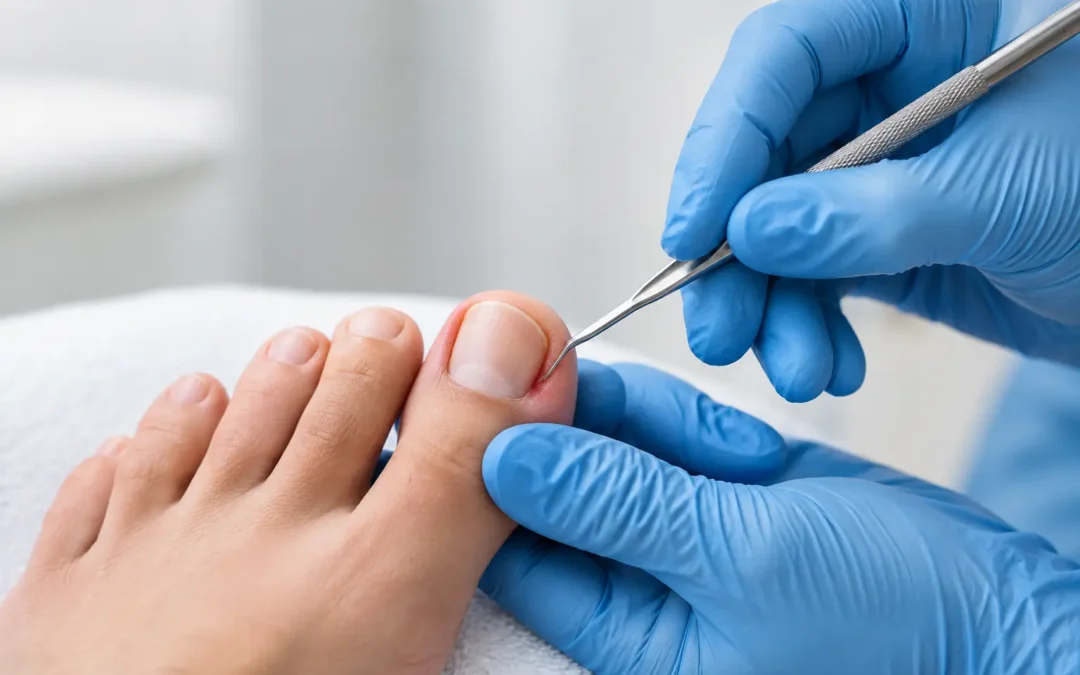
A sore, swollen toenail can make a walk along the beach, a run, or simply wearing work shoes far more difficult than it should be. For people with a recurring ingrown toenail, nail surgery is often a straightforward, long-term treatment that removes the painful edge of nail while preserving most of the toenail.
An ingrown toenail occurs when the side of the nail presses into or grows into the surrounding skin. It commonly affects the big toe and can lead to redness, swelling, tenderness and infection. While early or mild cases may respond to conservative podiatry treatment, repeated inflammation or infection needs a more lasting plan.
When is nail surgery recommended?
Nail surgery is not usually the first option for every ingrown toenail. A podiatrist will first assess the nail, the surrounding skin and the factors that may be causing the problem. Tight footwear, curved or thickened nails, trauma, incorrect nail cutting, excessive sweating and inherited nail shape can all contribute.
Conservative care may be appropriate when symptoms are mild and the nail has not repeatedly broken the skin. This can include carefully removing the offending nail edge, reducing thickened nail, treating the skin, placing a small splint or packing beside the nail, and advising on footwear and nail care. If there is infection, treatment is guided by its severity and your overall health.
Nail surgery is generally considered when the problem keeps returning, there is persistent pain or infection, the nail shape makes recurrence likely, or previous conservative treatment has not provided reliable relief. It can also be a sensible option for people who need to stay mobile for work, sport or family commitments and are tired of repeated flare-ups.
The decision is individual. A child, an active adult and an older person with diabetes or circulation concerns may each need a different approach. A thorough assessment helps ensure surgery is suitable and that recovery planning is safe.
What happens during nail surgery?
For an ingrown toenail, the most common procedure is a partial nail avulsion. This means the podiatrist removes only the narrow side section of nail that is causing pain, rather than the whole toenail. The central portion remains, so the nail generally continues to look much the same once it has healed.
A local anaesthetic is used to numb the toe. You may feel the initial injection, but you should not feel pain during the procedure itself. Once the toe is numb, the affected nail border is removed with sterile instruments. In many cases, a chemical called phenol is applied to the nail matrix, the area that produces nail, to prevent that troublesome side from growing back.
This is called a partial nail avulsion with matrixectomy. Preventing regrowth of the offending edge is an important part of achieving a lasting result for recurrent ingrown nails. If both sides are problematic, both borders can sometimes be treated. Complete nail removal is less common and is reserved for particular clinical situations, such as severely damaged or persistently diseased nails.
The procedure is usually performed in the clinic. Your toe is dressed afterwards, and you will receive clear written instructions for care at home. It is helpful to wear open footwear or bring a roomy shoe to the appointment, as the dressing can make a closed shoe feel tight initially.
Does it hurt?
The local anaesthetic is designed to keep you comfortable during treatment. When the numbness wears off later that day, the toe may feel tender or throb mildly. Most people manage this with rest, elevation, suitable over-the-counter pain relief if they can take it, and following the dressing instructions provided.
Pain that becomes severe, spreads beyond the toe, or is accompanied by feeling unwell should be assessed promptly. People with diabetes, reduced circulation, neuropathy, immune conditions or a history of poor wound healing should always discuss this before any procedure, as their care plan may need closer monitoring.
Recovery after nail surgery
Recovery is usually very manageable, but it does require attention. The first day is best kept quiet. Elevating the foot can help limit discomfort and bleeding through the dressing. Depending on the procedure and your work, you may be able to return to usual activities quickly, although high-impact exercise, swimming and tight footwear may need to wait until the toe is healing well.
A treated nail border often produces some clear or lightly coloured drainage while the area heals. This can be normal, particularly after phenol has been used. The key is that the toe should gradually become less sore and less inflamed, not more so.
Your podiatrist will advise when to change the dressing and arrange review appointments where needed. Keep the area clean and dry as instructed, avoid picking at the nail or surrounding skin, and choose footwear that does not compress the toe. For many patients, a wide toe box makes a meaningful difference both during recovery and in preventing future irritation.
Healing times vary. The size of the treatment area, whether there was infection beforehand, your activity level and your general health all play a part. It is wise to plan around important events, long walks, sport or holidays if you can. Although many people are comfortable in their normal daily routine relatively soon, the skin at the nail edge needs time to fully settle.
Signs you should contact your podiatrist
Some redness and tenderness can be expected early in recovery, but increasing pain, spreading redness, worsening swelling, pus-like discharge, an unpleasant smell, excessive bleeding or fever are reasons to seek advice. Do not assume a worsening toe will settle on its own, particularly if you have diabetes or circulation problems.
Prompt review allows the cause to be identified. Sometimes a dressing needs changing, footwear needs adjusting, or an infection needs specific treatment. Early care is generally simpler and more comfortable than waiting for symptoms to progress.
Can an ingrown toenail return after surgery?
No procedure can remove every possible risk of future nail problems, but a partial nail avulsion with matrixectomy is designed to stop the treated nail edge from regrowing. For people whose pain is caused by a repeatedly curved or penetrating nail border, this offers a much more dependable solution than repeated trimming alone.
An ingrown nail can still develop on the untreated side, or another toenail may become troublesome. Ongoing nail care and properly fitting shoes remain useful. Cut toenails reasonably straight across rather than digging down the sides, but do not attempt to cut out a deeply embedded nail corner yourself. This often leaves a sharp fragment behind and can make inflammation worse.
Fungal or thickened nails may also need separate treatment. Removing an ingrown edge relieves the mechanical pressure, but it does not necessarily address nail fungus, trauma-related thickening or other skin conditions. A podiatry assessment can distinguish these issues and create a practical treatment plan.
Choosing the right treatment plan
The best outcome starts with an accurate diagnosis. A painful nail is not always an ingrown nail. Corns in the nail groove, trauma, infections around the nail, nail deformity and skin conditions can cause similar discomfort. Examining the toe closely helps avoid treatment that does not address the actual cause.
At Manly Foot Clinic, nail treatment is planned around the person as well as the toe. That means considering your symptoms, work and activity demands, footwear, medical history and the likelihood of recurrence. When nail surgery is appropriate, the focus is on a comfortable procedure, careful aftercare and helping you return to walking without the constant anticipation of pain.
If a toenail is repeatedly sore, swollen or infected, it is worth arranging an assessment before another flare-up limits your movement. The right treatment can turn a small but persistent problem into one less thing you need to think about with every step.