
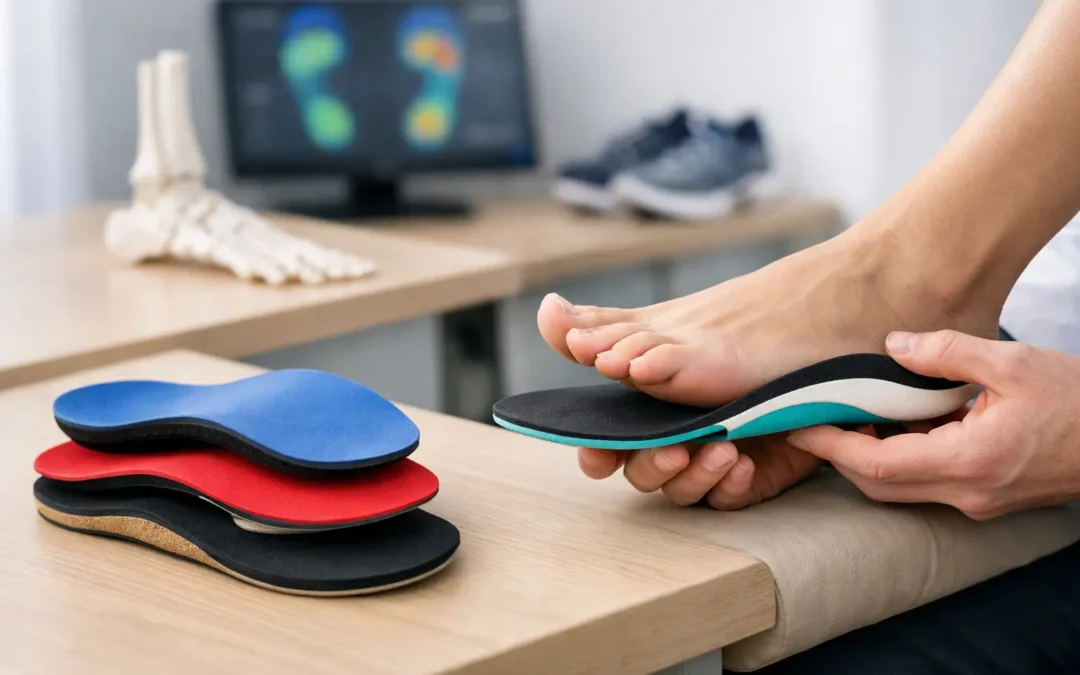
A pair of orthotics can feel excellent in the shop and still be wrong for the way you walk, the shoes you wear or the source of your pain. Knowing how to choose orthotics starts with a simple principle: the device should support a specific clinical need, not just make a shoe feel softer for five minutes.
Orthotics are shoe inserts designed to alter pressure, support the foot or improve how the foot and lower limb move during standing, walking and sport. They can be useful for problems such as plantar heel pain, flat feet, bunions, Morton’s neuroma, forefoot pain and some knee, shin or Achilles complaints. However, the best choice depends on your symptoms, foot shape, activity and footwear.
Start with the problem, not the product
Before looking at inserts, consider when and where your symptoms occur. Pain under the heel with the first steps in the morning is different from burning between the toes in narrow shoes. An arch that feels tired after a long walk needs a different approach from pain at the big-toe joint caused by hallux rigidus.
Orthotics do not cure every foot complaint. A sore tendon may also need changes to training load, footwear, strength and mobility work. A painful corn, ingrown toenail or fungal nail will not improve because of an arch support. When pain is persistent, recurrent or limiting your normal activity, a podiatry assessment is the sensible starting point.
A clinician will assess your symptoms, footwear, joint movement, muscle strength and walking pattern. This helps identify whether an orthotic is likely to reduce strain or pressure, and whether another treatment should come first.
How to choose orthotics for your condition
The right level of support is not always the firmest option. Orthotics work by changing force and foot position in a controlled way. Too much correction can be uncomfortable, particularly if you have a stiff foot, arthritis or are not used to supportive footwear.
Heel pain and plantar fasciitis
For plantar heel pain, an orthotic may cushion the heel and support the arch to reduce stress through the plantar fascia. Look for a stable heel cup and support that feels comfortable rather than aggressively hard beneath the arch. The orthotic should sit flat in the shoe and leave enough room for your heel.
If heel pain has lasted more than a few weeks, is worsening or is causing you to limp, an assessment can rule out other causes and guide treatment. Stretching, load management and appropriate shoes are often part of recovery as well.
Flat feet and tired arches
Flat feet are not automatically a problem. Many people have low arches and no pain at all. Orthotics are more likely to help when flat feet are associated with aching through the arch, ankle or shin, reduced walking tolerance, repeated injuries or a foot that rolls in excessively during activity.
A firmer device may provide stability, but it needs to match your flexibility. A highly flexible foot may benefit from more structured support, while a stiff flat foot may need accommodation and pressure relief instead. Children should be assessed individually, as foot development, symptoms and walking pattern matter more than the appearance of the arch alone.
Forefoot pain, bunions and Morton’s neuroma
Pain in the ball of the foot is often linked to concentrated pressure. In these cases, an orthotic may include a metatarsal pad or dome positioned behind the painful area to spread load more evenly. Placement is crucial. A pad that is too far forward can increase discomfort rather than relieve it.
For bunions, orthotics can help manage contributing foot mechanics and redistribute pressure, but they will not straighten the toe or reverse the deformity. With Morton’s neuroma, wider footwear and avoiding compression through the forefoot are equally important. An orthotic must work with the shoe, not fight against it.
Sport and repetitive injuries
Runners, walkers and field-sport athletes often seek orthotics after recurring shin pain, knee discomfort, Achilles pain or stress-related symptoms. A sports orthotic should suit the demands of the activity and the shoe being used. A slim running shoe, football boot and work boot each have different volume, heel height and stability.
It is also worth addressing sudden increases in distance, hills, speed work or training frequency. Orthotics can assist load management, but they cannot compensate for a training programme that is progressing too quickly.
Consider the footwear first
Even a well-made orthotic will perform poorly in unsuitable footwear. Bring the shoes you wear most often to an appointment, especially your walking shoes, runners, work shoes or school shoes. The clinic can check whether there is enough depth and width, whether the heel counter is stable and whether the shoe is worn unevenly.
In general, the shoe should have a removable insole, a secure heel and enough room for the orthotic without crowding the toes. If your toes become numb, the top of the foot feels compressed or the heel lifts out of the shoe, there may not be enough volume.
Thongs, ballet flats and very narrow dress shoes usually cannot accommodate a structured orthotic. That does not mean you must wear bulky shoes all the time. It may mean having a slimmer device for selected footwear and a more supportive option for walking, work or exercise.
Over-the-counter or custom orthotics?
Over-the-counter orthotics can be a reasonable first option for mild, recent symptoms or general comfort. Choose a reputable device that fits the shoe, supports the area that needs help and does not cause new pressure points. Avoid cutting or heavily modifying an insert unless advised, as this can change how it functions.
Custom prescription orthotics are designed following a clinical assessment. They may be appropriate when symptoms are persistent, there is a significant deformity, previous options have failed, one foot needs different support from the other, or the orthotic must fit specific work or sporting footwear. At Manly Foot Clinic, prescription orthotics can be supported by 3D scanning and gait analysis, allowing the device to be planned around your foot shape, movement and treatment goals.
Custom does not automatically mean better for every person. The value comes from accurate diagnosis, thoughtful design, suitable materials and review. A custom device that is too rigid, too high or poorly matched to your shoes can still be uncomfortable.
Pay attention to material and design
Soft, cushioned orthotics are often useful when pressure relief and comfort are the main aims, including for some arthritic feet or prominent bony areas. Semi-rigid devices can provide a balance of support and comfort for walking and many recreational activities. Firmer materials may be used when greater control or durability is required.
The top cover also matters. A durable cover may suit regular sport, while a softer cover can improve comfort for sensitive skin or forefoot pain. If you have diabetes, reduced sensation, poor circulation or a history of ulcers, do not self-prescribe an orthotic. These conditions require careful assessment of pressure, fit and skin safety.
Give your feet time to adjust
Orthotics should usually be introduced gradually. Start by wearing them for a short period at home or during low-demand activity, then build up over several days as comfort allows. Mild awareness of support can be normal at first. Sharp pain, numbness, rubbing, blisters or worsening symptoms are not signs that you should simply push through.
Children, older adults and people returning to activity after injury may need a slower transition. Review is valuable because feet, shoes and activity levels change. An orthotic may need adjustment if it begins to wear, if your pain moves to a different area or if you buy new footwear.
When to arrange a podiatry assessment
Seek advice promptly if foot pain follows an injury, causes marked swelling, affects sleep, produces numbness or weakness, or makes it difficult to bear weight. Persistent pain that has not settled with sensible footwear changes also deserves assessment, particularly for people with diabetes, inflammatory arthritis or circulation concerns.
The most useful orthotic is one that makes walking, working or exercising more comfortable without creating new problems. A careful assessment gives you a clearer path than choosing an insert by arch height alone, and it keeps the focus where it belongs: comfortable movement and a practical recovery plan.