
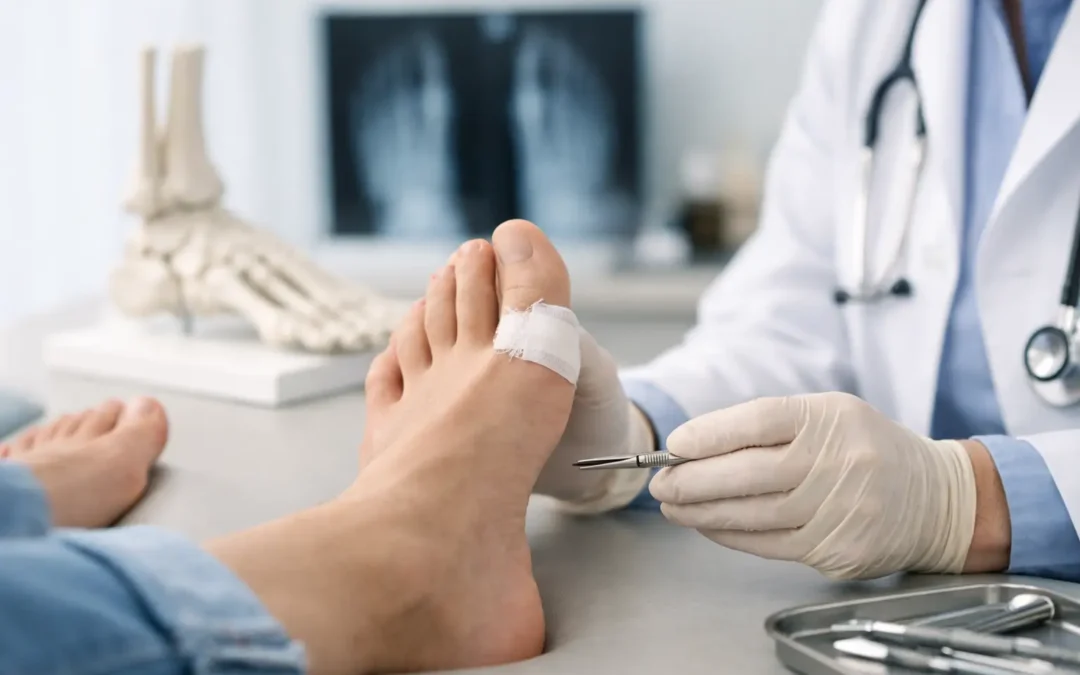
A painful toenail that catches on socks, a lump beneath the forefoot that makes every walk uncomfortable, or a toe that increasingly rubs in shoes can all reach a point where conservative care is no longer enough. Understanding the types of minor foot surgery available can make the next step feel much clearer. These procedures are designed to address a defined problem, reduce pain and help restore comfortable movement, often without the lengthy recovery associated with major surgery.
Minor does not mean insignificant. Any procedure on the foot needs thoughtful planning because the feet carry body weight, fit inside footwear and play a central role in balance. The right option depends on the diagnosis, your activity level, general health, footwear demands and how well non-surgical treatment has worked.
What is considered minor foot surgery?
Minor foot surgery usually refers to procedures performed on the toes, nails, skin, soft tissues or small bony prominences of the foot. Many can be completed in a clinic procedure room or day surgery setting using local anaesthetic, sometimes with additional sedation where appropriate.
The aim is generally focused: remove a troublesome nail edge, release or remove irritated tissue, correct a painful toe position, or reduce pressure caused by a small bony prominence. Depending on the procedure, patients may go home on the same day in a surgical shoe or roomy sandal, with a clear plan for wound care and follow-up.
Before surgery is considered, a podiatrist will assess the condition carefully. This may include examining footwear and gait, checking circulation and nerve function, reviewing imaging, and discussing medical history and medications. For many conditions, options such as nail care, padding, orthotics, footwear changes, exercises or anti-inflammatory treatment remain effective first-line care.
Common types of minor foot surgery
Ingrown toenail surgery
Ingrown toenails are one of the most common reasons patients consider a minor procedure. The edge of the nail presses into the surrounding skin, causing redness, swelling and pain. If infection is present, there may be drainage or overgrown tissue beside the nail.
When an ingrown nail keeps returning despite careful trimming and conservative treatment, a partial nail avulsion may be recommended. Under local anaesthetic, the problematic side of the nail is removed. A procedure to prevent that narrow section growing back may also be performed, while the healthy central portion of the nail remains.
For a severely damaged, thickened or repeatedly infected nail, full nail removal is occasionally considered. This is less common and should be based on the condition of the nail, skin and underlying cause. Recovery involves keeping the toe clean and protected while the area heals. Most patients can wear open or roomy footwear initially, although sport, swimming and tightly fitting shoes may need to wait.
Removal of painful skin lesions or soft tissue masses
Some painful lesions need more than routine skin care. Examples include persistent soft tissue growths, certain cysts, foreign-body reactions or lesions that require biopsy to establish a diagnosis. A specialist in podiatric surgery may remove the tissue under local anaesthetic and send it for pathology if clinically indicated.
Not every lump or skin change needs surgery, and a lesion should never be assumed to be a corn or wart without assessment. Changes in colour, shape, bleeding, rapid growth or a wound that does not heal deserve prompt professional review. The priority is an accurate diagnosis before deciding on treatment.
Morton’s neuroma surgery
Morton’s neuroma involves irritation and thickening of a nerve, most often between the third and fourth toes. It can feel like burning, tingling or a sharp ache in the ball of the foot, sometimes described as walking on a pebble or having a sock bunched under the forefoot.
Wide footwear, offloading pads, activity changes and prescription orthotics often help by reducing pressure through the forefoot. If symptoms remain significant after a suitable period of conservative management, surgery may be considered. Depending on the individual case, the procedure may involve releasing tight structures around the nerve or removing the affected nerve segment.
The trade-off is that removing a nerve can leave lasting numbness in part of the toes. For some patients, that is preferable to ongoing pain; for others, conservative management remains the better choice. A detailed discussion of symptoms, imaging and expected outcomes is essential.
Hammer toe and claw toe correction
Hammer toes and claw toes occur when one or more smaller toes become bent at the joints. Early, flexible deformities may respond well to footwear changes, toe padding, exercises and orthotics. Once a toe becomes rigid, it can repeatedly rub against the shoe, form corns and become painful with walking.
Minor surgical correction can involve releasing or lengthening a tight tendon, removing a small piece of bone, or straightening and stabilising the toe. The exact method depends on whether the deformity is flexible, which joint is affected and whether there are contributing issues such as bunions, flat feet or arthritis.
Patients should be aware that toe surgery often involves a period in a post-operative shoe and activity modification. Swelling can take longer to settle than expected, particularly in the forefoot. Choosing shoes with sufficient depth and width remains part of protecting the result after healing.
Bunion and small bony prominence procedures
A bunion is a prominence at the base of the big toe, usually associated with the big toe drifting towards the smaller toes. It can become painful because of pressure from footwear, inflammation around the joint or progressive changes in foot mechanics. Some smaller bony prominences, including a tailor’s bunion near the little toe, can cause similar shoe pressure problems.
Surgery is not based on how a bunion looks. It is considered when pain, footwear restriction or reduced walking ability persists despite appropriate conservative care. Depending on the severity and the joint alignment, treatment may range from a relatively limited procedure to more involved correction of the bone and soft tissues. Minimally invasive techniques may be suitable for selected cases, but they are not automatically the best choice for every foot shape or deformity.
This area requires realistic expectations. Bunion correction can improve pain and alignment, but it involves more recovery planning than a nail procedure. Your work, home set-up, transport, sports and ability to keep weight off the foot where needed should all be considered beforehand.
Hallux rigidus procedures
Hallux rigidus is arthritis of the big toe joint. It can cause stiffness, swelling and pain when pushing off while walking, climbing stairs or playing sport. In earlier stages, a procedure to remove painful bone spurs around the joint may improve movement and reduce shoe pressure.
When arthritis is more advanced, the appropriate surgical pathway may be more substantial than what most people would call minor surgery. This is why a proper clinical examination and X-ray assessment matter. The procedure should match the stage of joint degeneration, rather than simply targeting the visible bump or the area that hurts most on a particular day.
Preparing safely for a foot procedure
A good surgical plan starts well before the day of treatment. Your clinician should know about diabetes, circulation problems, nerve changes, allergies, previous blood clots, smoking or vaping, and medicines such as blood thinners. These factors do not always prevent surgery, but they can affect the safest technique, healing time and aftercare.
It also helps to plan the practical side. Arrange transport home if advised, prepare a place to elevate the foot, and make sure you have suitable footwear. Ask when you can drive, return to work, shower normally, exercise and resume beach or pool swimming. The answer varies considerably between a small nail procedure and surgery involving a toe joint or bone.
Recovery: what influences healing?
Recovery is not identical for everyone. The procedure itself matters, but so do circulation, age, infection risk, swelling, nutrition, medical conditions and how closely aftercare instructions are followed. Keeping dressings dry, attending reviews and avoiding early pressure from unsuitable shoes can make a meaningful difference.
Pain is commonly managed with local anaesthetic at the time of surgery, prescribed or over-the-counter medication where suitable, elevation and temporary changes to activity. Increasing redness, heat, swelling, discharge, fever, worsening pain or numbness should be reported promptly rather than managed at home.
At Manly Foot Clinic, surgical care is considered as part of a broader treatment plan, not as a default answer. The most useful next step is a careful assessment of what is causing your pain and whether a less invasive option can still get you back to comfortable movement. When surgery is the right choice, understanding the procedure and planning recovery properly gives your foot the best possible start.