
A toe that starts rubbing against the top of a shoe can quickly become more than a minor nuisance. Corns, painful skin, nail pressure and a feeling that there is never enough room in the toe box can make walking, exercising and standing uncomfortable. Hammer toe treatment is most effective when it is matched to the stage of the deformity, the cause of the pressure and the way you use your feet each day.
A hammer toe occurs when one of the smaller toes bends abnormally at its middle joint, creating a raised knuckle. It most often affects the second, third or fourth toe. In the early stages, the toe may still be flexible and able to straighten with gentle pressure. Over time, the tendons and joint can tighten, making the toe rigid and the deformity more difficult to manage without surgery.
When a hammer toe needs assessment
Not every bent toe is painful, and not every hammer toe needs immediate intervention. However, it is worth arranging a podiatry assessment when the toe is becoming sore, repeatedly rubbing in shoes, developing corns or calluses, or affecting how you walk. Early care can reduce pressure and slow the progression of a flexible deformity.
Pain is not always felt directly at the bent joint. Some people develop a hard corn on top of the toe, while others feel burning or aching under the ball of the foot as they shift their weight away from the painful area. A toenail may thicken or become tender after ongoing pressure from the shoe. In more advanced cases, the tip of the toe can press into the ground and develop a callus underneath.
A prompt assessment is particularly sensible if there is broken skin, redness, swelling or discharge around a corn. People living with diabetes, poor circulation, neuropathy or reduced sensation in their feet should not attempt to cut corns themselves. Even a small wound can require careful clinical management.
Why hammer toes develop
Hammer toes rarely have one single cause. They often develop from an imbalance between the muscles and tendons that control the toes. Foot shape, inherited joint mechanics and the position of the big toe can all influence how much load the smaller toes must carry.
A bunion is a common contributor. As the big toe moves towards the smaller toes, it can reduce available space and place extra pressure on the second toe. Flat feet, high arches, arthritis, previous injury and tight calf muscles may also alter the way the foot functions during walking.
Shoes do not usually create a hammer toe on their own, but narrow, pointed or shallow footwear can aggravate an existing tendency. This is why symptoms may appear most strongly in work shoes, dress shoes, football boots or other footwear with a low toe box. The best treatment is not simply to buy a larger size – shoe length, width, depth and the shape across the front of the shoe all matter.
Hammer toe treatment starts with the cause
A thorough consultation examines the toe itself as well as the broader mechanics of the foot and ankle. Your podiatrist will assess whether the toe is flexible or fixed, identify pressure areas, check joint movement and consider the contribution of conditions such as bunions or arthritis. Gait assessment may be useful where abnormal loading, sport or prolonged standing is making symptoms worse.
This approach matters because a corn is a result of pressure, not the underlying problem. Removing painful hard skin can provide welcome relief, but it will return if the same part of the toe continues to rub against footwear or bear excess load. A treatment plan should address both the immediate discomfort and the reason it developed.
Footwear changes and pressure relief
For many people with a flexible or mildly symptomatic hammer toe, footwear is the first practical change. Shoes with a wider, deeper toe box allow the raised joint to sit without rubbing. A supportive shoe with adequate depth is generally more useful than a soft shoe that still compresses the toes.
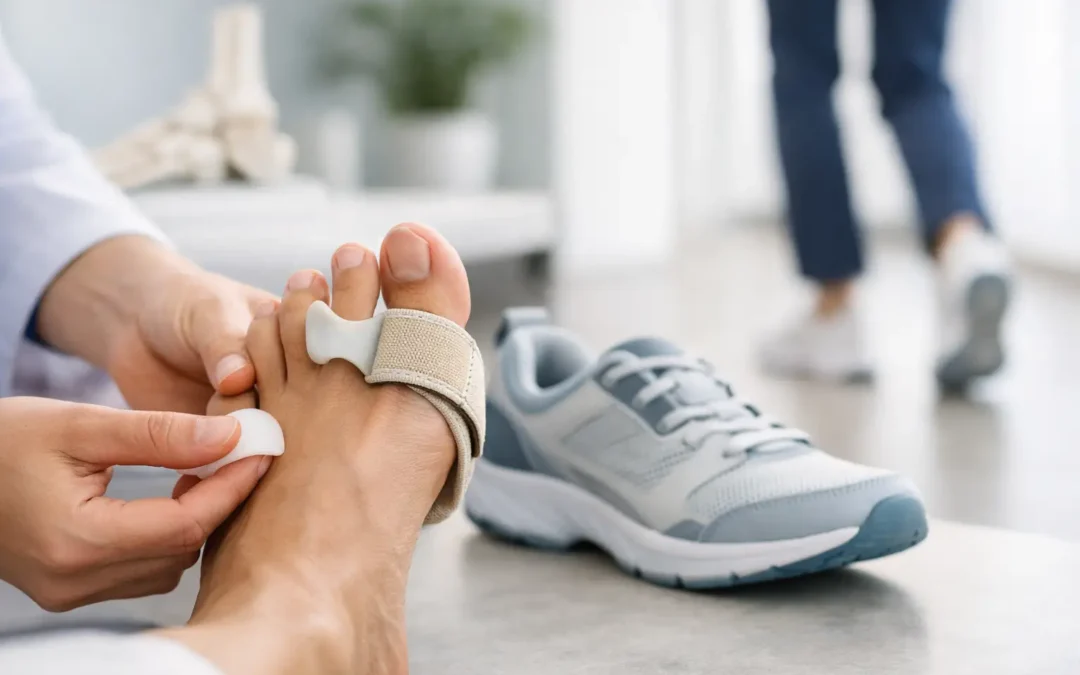
Padding, toe sleeves, toe props or carefully placed offloading devices may protect a prominent joint and reduce friction. These options need to fit comfortably inside the shoe and should not create new pressure between the toes. A podiatrist can recommend an option suited to your toe position and footwear.
Regular treatment of corns and calluses can also make walking more comfortable. This is performed safely in the clinic, with attention to the skin condition and any circulation or sensation concerns. It is not a permanent correction for the deformity, but it can be an important part of ongoing care.
Orthotics and strengthening where appropriate
Prescription orthotics can help when foot mechanics are contributing to pressure beneath the forefoot or instability through the toes. Designed from an assessment and, where required, 3D foot scanning, orthotics may redistribute load, improve support and reduce the forces encouraging the toe to claw.
They do not physically straighten a rigid hammer toe, and it is better to be clear about that trade-off. Their role is to improve comfort and function, particularly where flat feet, a bunion, high forefoot pressure or gait changes are part of the picture. In some cases, simple exercises to maintain toe and ankle mobility can be helpful, especially before the toe becomes fixed. Exercises are usually an addition to appropriate footwear and pressure management, rather than a stand-alone cure.
When surgery may be considered
Surgery may be discussed when a hammer toe is rigid, persistently painful, repeatedly ulcerates, or cannot be accommodated in suitable footwear. It may also be considered if conservative management has been tried carefully but day-to-day activities remain limited.
The type of procedure depends on the joint involved, the flexibility of the toe and whether related problems, such as a bunion, also need attention. Minimally invasive techniques may be suitable in selected cases. These procedures use small incisions and aim to correct the deformity with less disruption to surrounding tissue, but suitability can only be determined after a proper examination.
Surgery is a considered decision, not a quick answer to every bent toe. Recovery can involve swelling, temporary changes to footwear, activity restrictions and follow-up appointments. The benefits must be weighed against factors such as your health, circulation, bone quality, work demands and expectations for sport or walking. A clear discussion of the likely recovery period and potential risks helps you make an informed choice.
Looking after your feet between appointments
Choose shoes that feel comfortable from the first wear rather than relying on them to stretch. Check your toes after longer walks or exercise, especially if you have reduced sensation. If a corn becomes sore, resist the temptation to use blades or strong corn remedies at home, as these can damage healthy skin.
Keep an eye on changes in the shape of the toe as well. A flexible hammer toe often gives you more conservative treatment options than a rigid one. Seeking help before pain starts to change how you walk can protect your comfort, mobility and confidence on your feet.
If a bent toe is stopping you from wearing the shoes you need or enjoying the activities you value, a personalised assessment at Manly Foot Clinic can clarify the most practical next step. The aim is not simply to treat a corn or straighten a toe on paper, but to help you move with less pain and more comfort.