
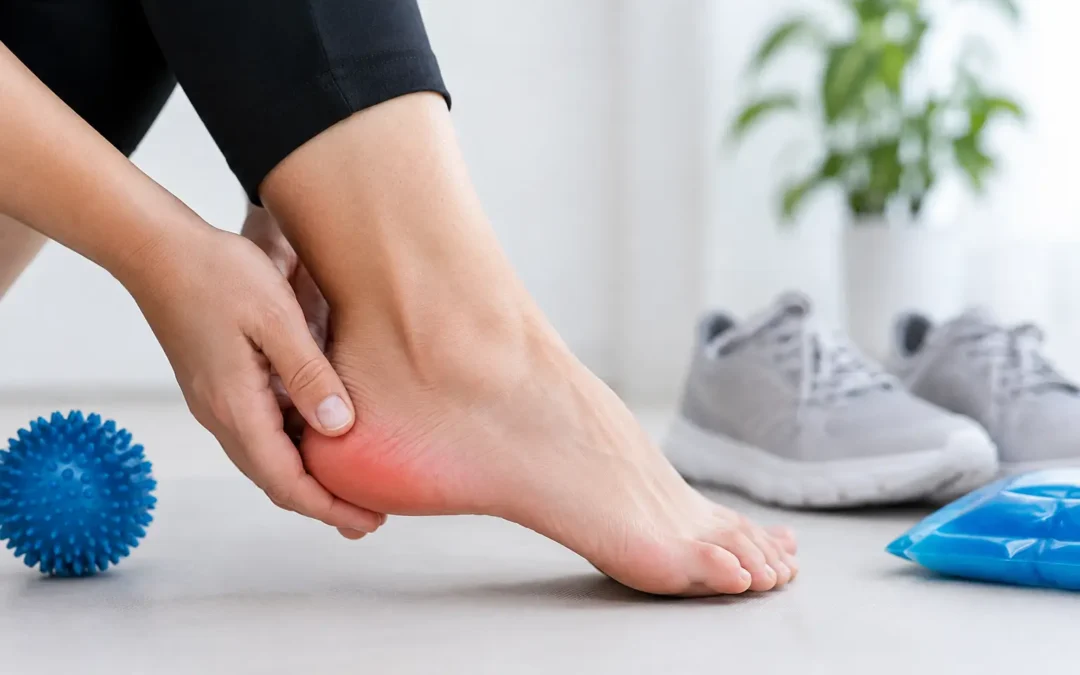
A sharp pain under the heel when you take your first steps in the morning can make even a short walk to the kitchen unpleasant. Many people assume a heel spur is the cause, but the bony spur visible on an X-ray is often not the source of pain itself. More commonly, pain comes from irritation of the plantar fascia, the strong band of tissue running from the heel to the toes.
The best treatments for heel spurs focus on settling the irritated tissue, reducing strain through the foot and addressing the factors that allowed the problem to develop. With a clear diagnosis and a tailored plan, most people improve without surgery.
What is a heel spur?
A heel spur is a small calcium deposit that develops where the plantar fascia attaches to the heel bone. It can form after long-term pulling or stress at that attachment point. Heel spurs are common and may be painless. In fact, some people only discover they have one after an X-ray for an unrelated foot problem.
When heel pain is present, plantar fasciitis is often involved. This condition may cause pain beneath the heel, particularly after rest, with the first few steps in the morning, or after standing and walking for long periods. The discomfort may ease once you are moving, then return later in the day.
Not every sore heel is a heel spur or plantar fasciitis. Fat pad bruising, nerve irritation, Achilles tendon conditions, stress injury and inflammatory arthritis can produce similar symptoms. This is why assessment matters, especially when pain persists, becomes severe or affects your walking.
Best treatments for heel spurs: start with the cause
Treatment is most effective when it is matched to the way your foot moves, your daily activity, footwear and the precise location of pain. A podiatry assessment may include examining the foot and ankle, checking joint movement and muscle flexibility, observing your gait, and considering imaging where clinically appropriate.
The aim is not simply to treat an X-ray finding. It is to reduce pain, restore comfortable movement and lower the risk of recurrence.
Supportive footwear and activity changes
Footwear is often a practical first step. Shoes with a stable heel, cushioning and adequate arch support can reduce stress on the plantar fascia. Worn-out runners, very flat sandals, thongs and unsupportive shoes can make symptoms more noticeable, particularly if you spend hours standing or walking on hard surfaces.
You do not necessarily need to stop all activity. However, temporarily reducing aggravating exercise, such as running, hill walking or court sports, may allow the heel to settle. Lower-impact options may be more comfortable while recovery is underway. A gradual return to activity is usually more successful than pushing through worsening pain.
Stretching and strengthening programmes
Tight calf muscles and limited ankle movement can increase the pull through the plantar fascia. Specific calf stretches, plantar fascia stretches and strengthening exercises can improve flexibility and load tolerance over time.
The right programme depends on the person. An active runner, a parent constantly on their feet and an older adult with reduced balance may need different exercises and progression. Exercises should be performed consistently but should not create sharp or escalating heel pain. A podiatrist can show you the correct technique and adjust the programme as symptoms improve.
Taping, heel cushions and short-term support
Taping can provide temporary support to the arch and may reduce symptoms while longer-term measures take effect. Heel cushions or heel cups can also improve comfort for some people by dispersing pressure under the heel.
These options can be useful, but they do not suit every presentation. For example, a heel lift may help one person but aggravate another if it changes pressure through the forefoot or affects their back, knee or Achilles tendon. Comfort, fit and response to treatment should guide the choice.
Prescription orthotics
Prescription orthotics are designed to improve support and control the way forces travel through the feet during standing and walking. They may be particularly helpful where flat feet, high arches, uneven loading, poor foot mechanics or a sports-related training issue is contributing to persistent heel pain.
Orthotics are not a one-size-fits-all solution. An individual assessment, including gait analysis and, where suitable, 3D scanning, helps determine whether they are likely to help and how they should be designed. They are usually used alongside footwear advice and an exercise plan, rather than as a stand-alone treatment.
Treatments for persistent heel pain
If heel pain has not improved with appropriate footwear, activity modification and a structured home programme, further treatment may be considered. The best option depends on how long the symptoms have been present, the severity of pain, your health history and what has already been tried.
Hands-on treatment and rehabilitation
Podiatric treatment may include techniques to address tight or overloaded soft tissues, combined with a progressive rehabilitation plan. The focus is on improving how the foot and lower limb cope with daily loads, not merely providing short-lived pain relief.
For people returning to sport, changes in training volume, running surfaces, shoe selection and recovery habits may also be needed. A rapid increase in distance, intensity or hill work is a frequent reason heel pain lingers.
Shockwave therapy
Extracorporeal shockwave therapy may be considered for chronic plantar heel pain that has not responded to conservative care. The treatment uses sound waves directed at the affected area to stimulate the body’s healing response. It is generally delivered over a series of appointments and is usually paired with a rehabilitation programme.
Shockwave therapy is not suitable for everyone, and it can cause temporary discomfort during or after treatment. A clinician should assess whether it is appropriate, particularly for people with circulation concerns, certain medical conditions or medications that affect healing.
Injections and medication
Anti-inflammatory medicines or other pain-relief options may have a role for some patients, but they should be discussed with your GP, pharmacist or treating clinician, particularly if you have stomach, kidney, heart or blood pressure concerns.
Corticosteroid injections can provide short-term relief in selected cases, but they are not routinely the first choice for plantar heel pain. Repeated or poorly targeted injections may weaken the plantar fascia and carry a small risk of rupture. If an injection is being considered, the expected benefit and potential risks should be carefully weighed against other options.
When is surgery considered for a heel spur?
Surgery is rarely needed. Most heel spur and plantar fascia pain responds to a well-managed conservative programme, although recovery can take several months. The presence of a spur alone is not a reason to remove it.
Surgical treatment may be considered only when pain remains significant after a sustained period of appropriate non-surgical care and the diagnosis is clear. Depending on the cause, procedures may address the plantar fascia, associated nerve irritation or another structural problem. When surgery is appropriate, minimally invasive techniques may support a more comfortable recovery, but every procedure still requires careful planning, rehabilitation and realistic expectations.
When to arrange an assessment
Seek professional assessment if heel pain lasts more than a few weeks, repeatedly returns, limits work or exercise, or is not improving with sensible footwear changes and rest. Earlier review is advisable if you cannot bear weight, have marked swelling, bruising, numbness, redness or warmth, pain at night, fever, or a history of diabetes, poor circulation or inflammatory arthritis.
At Manly Foot Clinic, heel pain assessment is centred on finding the reason your heel is overloaded and creating a practical plan for your lifestyle. That may involve conservative care, gait assessment, prescription orthotics or a more advanced treatment pathway when needed.
Heel pain does not need to become the condition that dictates how far you walk, what exercise you avoid or how you begin each day. The most useful next step is an accurate diagnosis and a plan that gives your foot the support, time and treatment it needs to recover.