
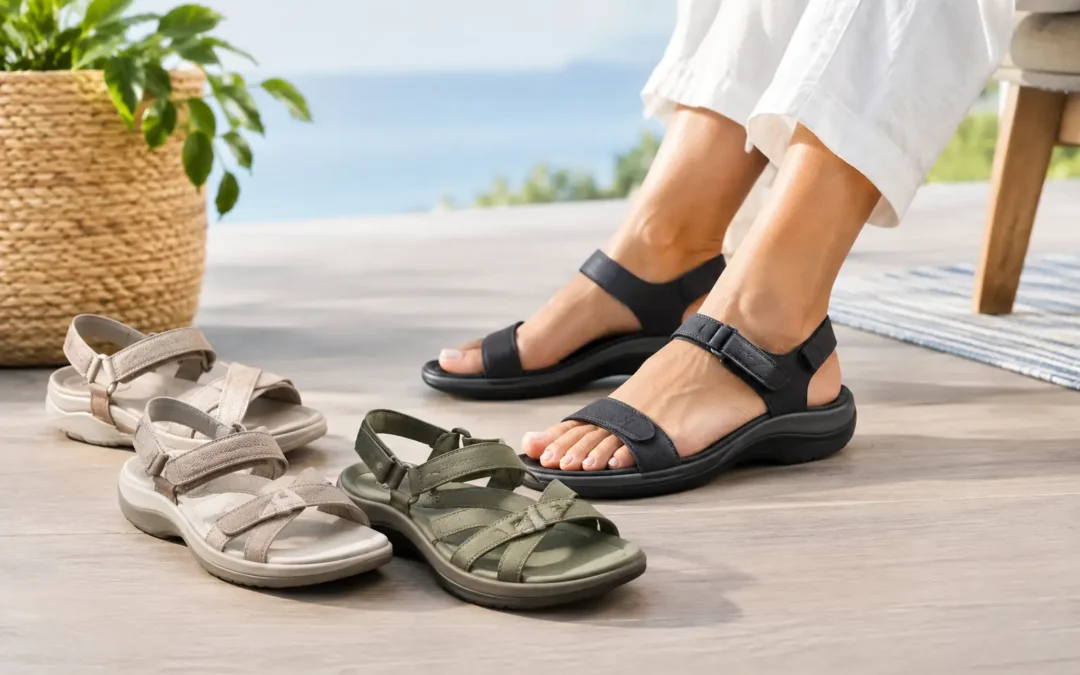
A pair of sandals can feel fine for a short walk to the beach, then leave your arches, heels or knees aching after a full afternoon on your feet. The best sandals for arch support do more than add a raised bump beneath the middle of the foot. They should hold the foot securely, support its natural shape and reduce strain with every step.
For many people across the Northern Beaches, sandals are a practical part of daily life for much of the year. However, not all open footwear is suitable for long walks, standing at work or managing an existing foot condition. Choosing well can make a genuine difference to comfort and mobility, particularly if you have flat feet, plantar heel pain, arthritis or a history of ankle instability.
What makes a sandal supportive?
Arch support is only one part of a well-designed sandal. A supportive footbed follows the contours of the sole, providing gentle contact beneath the arch rather than pressing sharply into it. The aim is not to force the foot into an exaggerated position. It is to help distribute load more evenly across the foot while limiting excessive strain on structures such as the plantar fascia.
A sandal should also have a stable heel cup. This is the shaped section beneath and around the heel that helps guide the rearfoot as you walk. When the heel is poorly supported, the foot may roll inward excessively, particularly in people with flexible flat feet or feet that fatigue easily.
The midsole matters too. Very soft foam can feel comfortable when first tried on, but it may compress quickly and offer little control over longer distances. A firmer sole with some cushioning is often a better balance. It should bend near the ball of the foot, where the toes naturally flex, rather than folding easily through the arch.
Finally, secure straps are essential. A thong-style sandal requires the toes to grip with each step to keep it in place. This can increase pressure through the forefoot and contribute to fatigue. Adjustable straps over the forefoot and around the ankle or heel help keep the foot positioned on the sole without clawing the toes.
Best sandals for arch support: features to prioritise
The right choice depends on your foot shape, activity level and any condition being managed. There is no single sandal that suits every foot. However, several design features consistently make a sandal more useful for walking and everyday wear.
A contoured, firm footbed
Look for a footbed that has a defined arch contour, a cupped heel and a slight rise around the edge of the sole. The support should feel comfortable from the beginning. If a prominent arch presses painfully into the foot, it may be the wrong shape or height for you. More support is not automatically better.
A footbed that is firm enough to resist twisting is usually preferable to one that can be wrung out by hand. This does not mean the sandal has to feel hard. Quality cushioning can still absorb impact while the structure underneath provides stability.
Adjustable upper straps
Feet commonly swell in warm weather, after exercise or later in the day. Adjustable buckles, Velcro straps or other fastening systems allow you to alter the fit without over-tightening the foot. This is particularly useful where bunions, hammer toes or forefoot swelling make standard straps uncomfortable.
Avoid straps that cut across a painful prominence. A soft, padded upper may reduce friction, but it cannot compensate for a strap placed directly over an irritated joint or nerve.
A stable sole and sensible heel height
A broad base provides a more stable platform than a narrow, highly curved sole. For everyday walking, choose a sandal that sits flat and does not rock from side to side. A small heel-to-toe drop may be comfortable for some people, but high wedges or raised heels shift pressure towards the ball of the foot and can aggravate forefoot pain.
Check the outsole as well. A grippy tread is useful around pools, boat ramps and wet footpaths, while a sole with enough thickness can reduce the impact of hard pavement. Very thin, flat sandals offer little protection from repetitive ground forces.
Enough length and width
The foot should sit fully within the boundaries of the footbed. Toes should not hang over the front, and the heel should not sit on the rear edge. Many people buy sandals too short because they prefer the appearance of a close fit, but this often leads to toe gripping and instability.
Width is equally important. The upper should hold the foot without squeezing it. If the foot spills over the edge of the sole, the sandal is unlikely to provide the support it appears to offer.
Match the sandal to how you will use it
A supportive slide may be suitable for short periods around home, at the pool or after sport, but it is usually not the best option for a long walk because it lacks heel security. A sandal with a back strap is generally a better choice for sightseeing, work that involves standing or regular community walking.
Walking sandals can provide excellent comfort when they have a structured footbed, adjustable straps and a durable outsole. They are often more practical than fashion sandals for uneven paths and longer distances, although their heavier construction may not suit everyone.
For beach use, water-resistant materials are helpful, but remember that wet feet can slide on smooth footbeds. If you are walking a significant distance to and from the beach, consider changing into supportive walking shoes rather than relying on casual thongs.
Some people benefit from sandals designed to accommodate prescription orthotics. This is more common in closed footwear, but certain sandals have removable footbeds or deeper construction that can make orthotic use possible. An orthotic should not be forced into a sandal that is too shallow or unstable, as this can raise the heel and make the foot less secure.
Choosing sandals for common foot concerns
People with flat feet often need a sandal with a stable heel cup, a supportive arch contour and secure straps. A completely flat sole may allow the arch to collapse further under load, increasing fatigue through the feet and lower legs. That said, a rigid high arch support can be uncomfortable for a flexible foot, so fit remains important.
For plantar heel pain, often referred to as plantar fasciitis, avoid spending long periods barefoot or in thin, unsupportive sandals. A cushioned but structured sandal can reduce strain during short daily activities. Persistent morning heel pain or pain that returns despite changing footwear should be assessed rather than simply managed by buying increasingly cushioned shoes.
If you have hallux rigidus, which is arthritis and stiffness at the big toe joint, a sandal with a firm sole can reduce the need for painful big-toe bending. A rocker-style sole may help some patients, although it can feel unstable for others and should be selected carefully.
With Morton’s neuroma or forefoot nerve irritation, choose a generous toe area and avoid narrow straps that compress the ball of the foot. People with bunions may similarly need adjustable straps and a wider base. The most attractive style is not always the most comfortable choice, but there are often supportive options that do not look overtly medical.
When sandals are not enough
Footwear can reduce aggravation, but it cannot correct every cause of pain. Ongoing symptoms may indicate a problem that needs a clearer diagnosis, such as tendon injury, arthritis, nerve compression or a stress-related condition. Pain that is severe, worsening, associated with swelling or numbness, or affecting your ability to walk deserves professional attention.
Children should also be assessed individually rather than placed in highly structured footwear solely because their feet appear flat. Many children have flexible flat feet as part of normal development. Pain, frequent tripping, marked asymmetry or difficulty keeping up with peers are more meaningful reasons to seek advice.
A podiatry assessment can examine how your feet function during standing and walking, identify pressure areas and consider how your footwear contributes to symptoms. At Manly Foot Clinic, this may include gait assessment and, where appropriate, planning for prescription orthotics, exercise therapy or other treatment based on your diagnosis.
Before committing to a new pair, try sandals on later in the day when your feet are at their largest. Walk on a firm surface, check that the heel stays centred and pay attention to any rubbing or pressure. The best sandal is one that supports your particular foot without making you compensate elsewhere. Comfortable movement should feel natural, not like something you have to push through.