
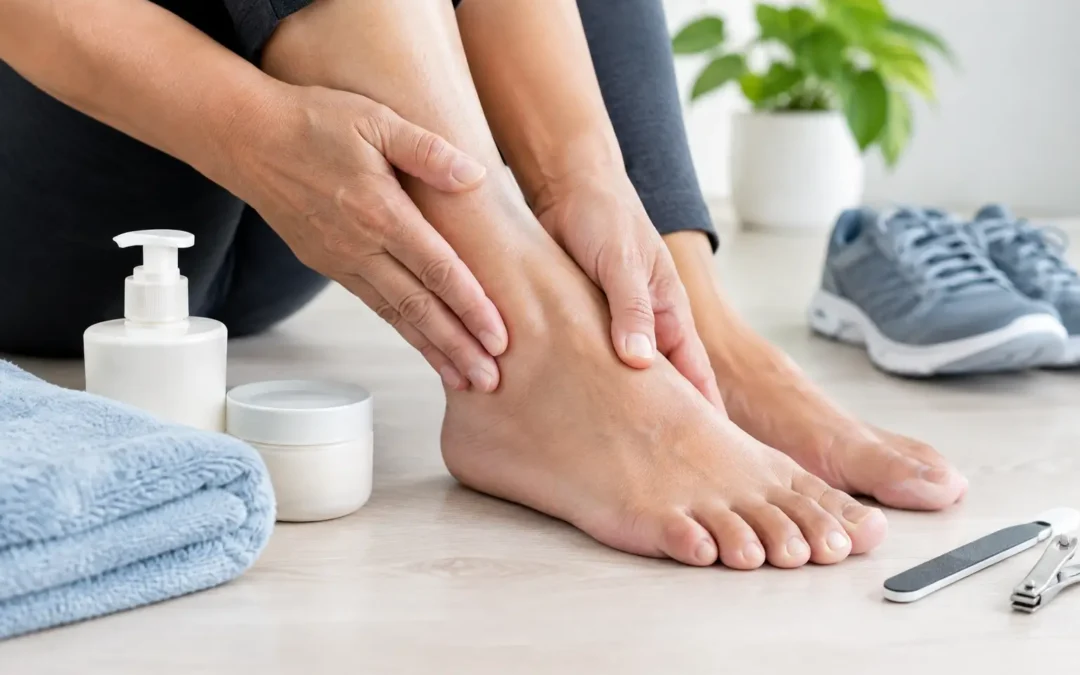
A small blister from a new shoe, a cracked heel after a day at the beach, or a toenail trimmed a little too closely can become more serious when you have diabetes. This diabetic foot care guide explains the practical habits that help protect your feet, preserve comfortable movement and identify problems before they progress.
Diabetes can affect circulation, sensation and the body’s ability to heal. You may not feel a cut, pressure point or burn as clearly as you once did, while reduced blood flow can slow recovery. That combination is why regular foot care is not simply a matter of comfort or appearance. It is a meaningful part of managing your health.
Why diabetes changes the way you care for your feet
Over time, elevated blood glucose can damage the nerves in the feet and lower legs. This is called peripheral neuropathy. It may cause tingling, burning, numbness, sensitivity or a reduced ability to feel pain, heat and pressure. Some people have no obvious symptoms, which is why routine checks matter even when their feet feel fine.
Diabetes may also affect circulation. When blood supply is reduced, skin and soft tissue have fewer resources to repair themselves. A minor wound can then take longer to heal and may be more vulnerable to infection. Foot shape changes, bunions, hammer toes, flat feet and limited joint movement can add pressure in particular areas, especially inside poorly fitted shoes.
Your individual risk depends on factors such as how long you have had diabetes, your blood glucose management, any loss of sensation, circulation concerns, previous ulcers and kidney or cardiovascular disease. A podiatry assessment can clarify your risk level and how often your feet should be reviewed.
A daily diabetic foot care routine
The most effective routine is one you can maintain. Choose a regular time, such as after showering or before bed, and inspect both feet in good light. If bending is difficult, use a mirror, ask a family member for help or consider a long-handled mirror.
Look across the tops, soles, heels, sides, between the toes and around each nail. Pay attention to changes rather than waiting for pain. A daily check should include:
- Skin colour changes, swelling, warmth, redness, cracks, blisters or cuts.
- Corns, callus, rough pressure areas and any fluid or discharge.
- Changes to the nails, including thickening, discolouration, ingrowing edges or tenderness.
- Foreign objects in the shoe or on the sole of the foot, particularly if sensation is reduced.
Wash your feet daily in lukewarm water and dry them carefully, especially between the toes. Test the water with your elbow or a thermometer rather than your foot if your feeling is reduced. Avoid soaking feet for long periods, as this can dry and weaken the skin.
A plain moisturiser can help prevent dry, cracked skin on the heels and soles. Do not apply cream between the toes, where excess moisture may encourage fungal infection or skin breakdown. If you notice persistent scaling, itchiness or peeling, arrange an assessment rather than treating it as a cosmetic issue.
Nail, corn and callus care: take the safe approach
Trim toenails straight across where possible, then gently smooth sharp corners with a nail file. Do not cut down the sides of the nail or dig at an ingrown edge. Thick, curved or fungal nails can be difficult to manage safely at home, particularly when vision, flexibility or sensation is affected.
Avoid corn plasters, acid treatments, razor blades and sharp instruments sold for home callus removal. These products can damage healthy skin and create wounds without you realising. Likewise, do not attempt bathroom surgery on an ingrown toenail, wart or hard skin build-up.
Professional podiatry care is often the safest option for nails, corns and callus in people with diabetes. It also allows the clinician to identify whether recurring pressure is caused by footwear, gait changes, a toe deformity or another underlying issue that needs attention.
Shoes should protect, not create pressure
The right shoe is protective equipment for your feet. It should have a secure fastening, enough depth and width for your toes, a supportive sole and no internal seams or rough areas that rub. A shoe that feels comfortable for five minutes in a shop can still cause pressure after a full day of walking, work or exercise.
Check the inside of each shoe before putting it on. A folded sock, loose insole, small stone or worn lining can create a pressure point. Choose clean, well-fitting socks without tight elastic tops or prominent seams, and change them daily.
Avoid walking barefoot, including around the house, pool, beach, garden or on hot pavement. In the Northern Beaches, sand, shells, hot surfaces and unnoticed sharp objects can be a particular risk for people with reduced sensation. Thongs may be convenient, but they offer limited protection and often require gripping with the toes. For regular walking, choose footwear that stays securely on the foot.
If you have foot deformity, recurring callus, poor balance, previous ulceration or pain with walking, standard retail footwear may not be enough. Prescription orthotics, footwear modifications or a more structured shoe may help redistribute pressure, but these need to be selected for your foot shape, activity level and medical risk.
Do not ignore a warm, swollen or changing foot
Some problems need prompt attention even when they are not painful. Contact a podiatrist or doctor as soon as possible if you notice a new cut, blister, crack, ulcer, redness, swelling, heat, discharge, odour or a sudden change in skin colour. A wound that is not improving, or any sign of infection, should not be watched for several days in the hope it settles.
Seek urgent medical care for spreading redness, fever, increasing swelling, black or blue skin, severe pain, or a wound with pus. A foot that becomes red, hot and swollen without a clear injury also needs urgent assessment. In people with neuropathy, this may occasionally indicate Charcot neuroarthropathy, a condition in which bones and joints can become damaged despite limited pain.
Do not continue exercising on a blister, wound or unexplained swollen foot until you have received clinical advice. Resting pressure from the area can be an important part of protecting healing tissue.
Make foot checks part of your diabetes care plan
Daily self-care works best alongside regular professional assessment. During a diabetic foot review, a podiatrist may check circulation, protective sensation, skin integrity, nail and callus concerns, foot shape, joint movement, footwear and walking pattern. The findings can guide a care plan that is proportionate to your risk.
For some people, an annual review and consistent home care may be appropriate. Others need more frequent appointments because of neuropathy, circulation changes, complex nails, recurrent pressure lesions or a history of ulcers. There is no benefit in taking a one-size-fits-all approach when the condition of each foot can change over time.
Good glucose management, not smoking, staying active within safe limits and attending your usual diabetes reviews also support foot health. If you are beginning a new walking, gym or sporting routine, introduce it gradually and check your feet after activity. New load, distance or footwear can reveal pressure points quickly.
At Manly Foot Clinic, diabetic foot care is approached as an individual management plan, with attention to skin and nail health, circulation and sensation, footwear, gait and the practical goal of keeping you mobile and comfortable. The right plan may be simple, but it should be based on a careful assessment rather than assumptions.
Your feet carry you through ordinary days, work, family life and the activities you enjoy. A few minutes of attention each day, combined with early professional care when something changes, can make a lasting difference to their health.