
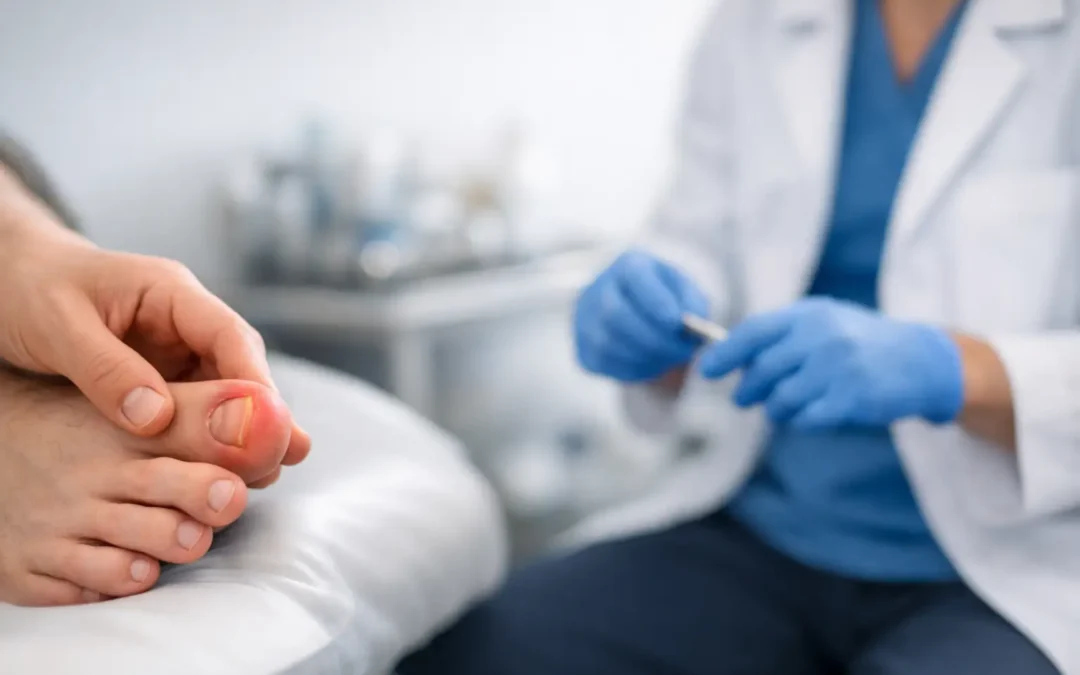
A toenail that catches on a sock, throbs in a shoe or makes every step uncomfortable is more than a minor annoyance. Early ingrown toenail treatment can relieve pressure, settle inflammation and reduce the risk of infection before the problem becomes harder to manage.
An ingrown toenail occurs when the edge or corner of the nail presses into, or grows into, the surrounding skin. It most often affects the big toe, although any toenail can be involved. The skin may become tender, red and swollen, and there may be a small amount of discharge if infection is present. For active people, children, older adults and anyone who spends long periods in enclosed footwear, the pain can quickly interfere with walking, work, sport and sleep.
Why ingrown toenails develop
Ingrown toenails are rarely caused by one thing alone. Cutting nails too short or rounding deeply into the corners is a common trigger, because it leaves a sharp nail edge that can grow towards the skin. Tight shoes, repeated pressure from sport, a stubbed toe and naturally curved or wide nails can also contribute.
Some people are simply more prone to the condition due to nail shape or the way their toes sit in footwear. Sweaty feet, fungal nail changes and thickened nails can make it more difficult to trim the nail safely. In children and teenagers, rapid growth, sport and tightly fitted school shoes may all play a part.
At first, an ingrown toenail may feel like a tender spot at one side of the nail. Without appropriate care, the skin can become increasingly inflamed. It may form excess tissue around the nail edge, sometimes called proud flesh, and the area can become infected. At that stage, trying to cut out the corner yourself often makes the problem worse.
Ingrown toenail treatment depends on the stage
The right treatment depends on how painful the toe is, whether there is infection, how long the problem has been present and whether it keeps returning. A podiatry assessment identifies what is driving the nail into the skin and allows treatment to be tailored to the toe, rather than relying on a one-size-fits-all approach.
Early, mild symptoms
When the nail is only beginning to irritate the skin and there is no significant infection, conservative care may be enough. Keeping the foot clean and dry, choosing footwear with adequate toe room and avoiding pressure on the affected side can help settle irritation.
Warm salt-water soaks may provide short-term comfort for some people, provided the skin is not badly broken down and the toe is dried carefully afterwards. Do not dig under the nail with scissors, tweezers or a sharp object. It is easy to create a wound, leave a nail spike behind or introduce infection.
A podiatrist can carefully remove the offending nail edge or debris, reduce pressure from thickened nail, and advise on safe nail-cutting technique. In some cases, a simple dressing or temporary nail-management method may be used while the area settles. This approach is often effective for a first episode, but the result depends on nail shape and how much the nail continues to curve into the skin.
Painful, inflamed or infected nails
If the toe is very sore, swollen, bleeding, producing pus or has tissue growing over the nail edge, professional treatment should not be delayed. The podiatrist will assess the severity of inflammation and remove the section of nail causing the pressure where appropriate. This is usually much more comfortable and controlled than attempting home treatment.
Antibiotics are not automatically required for every ingrown toenail. They may be considered when there are signs of spreading bacterial infection or when a patient has particular health risks, but removing the source of nail pressure is often central to recovery. Your podiatrist may recommend review by your GP if medication or further medical assessment is needed.
Recurrent ingrown toenails
A nail that repeatedly grows into the same side of the toe may need a more permanent solution. Partial nail avulsion is a minor procedure that removes the troublesome side section of nail. A chemical may be applied to the nail matrix, the area that produces the nail, to prevent that narrow edge from growing back.
The aim is not to remove the whole nail unnecessarily. Most people retain a normal-looking central nail, just slightly narrower than before. The procedure is performed using a local anaesthetic, so the toe is numb during treatment. It is commonly considered when conservative care has not worked, the nail shape makes recurrence likely, or repeated episodes are affecting daily activity.
There is a trade-off worth discussing clearly. Conservative treatment preserves the whole nail and may be all that is needed for an isolated episode. A partial nail procedure involves a short recovery period and dressing care, but can offer a more reliable long-term answer for a persistently ingrown nail.
What to expect after a nail procedure
Following a partial nail procedure, the toe is usually dressed and you will receive clear instructions for keeping it clean and protected. It is sensible to wear open or roomy footwear initially and to avoid activities that place direct pressure on the toe until it is comfortable.
Some drainage is expected as the treated area heals, particularly in the first days or weeks. Regular dressing changes and follow-up appointments allow healing to be monitored and help identify any concerns early. Recovery varies with the extent of inflammation before treatment, general health, circulation and the demands of your work or sport.
Many patients can return to normal day-to-day movement relatively quickly, although high-impact sport, ocean swimming and tight footwear may need to wait until the skin has healed sufficiently. Your podiatrist can give advice based on your particular procedure and activity level rather than a generic timeline.
When home care is not enough
Seek podiatric assessment promptly if pain is increasing, there is pus or a strong odour, redness is spreading beyond the nail, or the toe is making it difficult to walk normally. You should also arrange professional care if the ingrown toenail returns after repeated trimming attempts.
People with diabetes, reduced circulation, peripheral neuropathy or a weakened immune system should not self-treat an ingrown toenail. Even a small break in the skin can become serious when sensation or blood supply is affected. Early assessment provides a safer path to treatment and protects the wider health of the foot.
Parents should also arrange an assessment for a child who is limping, avoiding shoes or sport, or has a red, swollen toe. Children may be reluctant to mention toe pain until it is quite advanced, especially if they are worried about nail cutting.
Preventing another ingrown toenail
Prevention starts with allowing the nail to grow beyond the end of the toe before trimming it straight across. Avoid cutting a deep curve into either corner. If a corner feels sharp, filing it gently is safer than digging down the side of the nail.
Footwear matters as much as nail care. Shoes should have enough depth and width through the toe box so the big toe is not compressed against the upper or neighbouring toes. This is particularly relevant for runners, footballers, dancers and workers who wear enclosed safety footwear for long shifts.
If thick, brittle or discoloured nails are making self-care difficult, regular podiatry treatment can keep them manageable and reduce the chance of sharp edges catching in the skin. Addressing fungal nail changes, foot sweating or a toe deformity may also form part of a longer-term prevention plan.
At Manly Foot Clinic, ingrown toenail care begins with a careful assessment of the nail, skin, footwear and the factors that may be causing repeat pressure. Whether the right option is conservative nail care or a minor procedure, the focus is on restoring comfort and helping you get back to walking without guarding every step.