
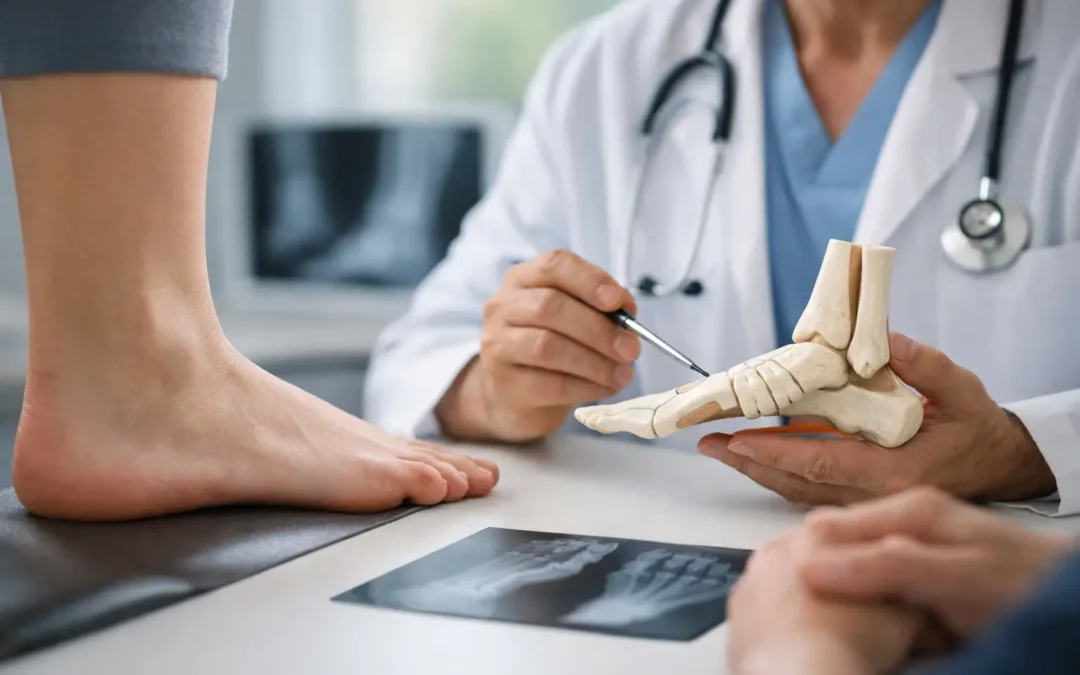
A flat foot that has always been painless may need nothing more than supportive footwear and monitoring. A foot that is becoming painful, changing shape or limiting your walking is different. If you are asking, is flat foot surgery worth it, the answer depends less on the appearance of your arch and more on how your foot functions, how much pain you have and whether non-surgical treatment has provided enough relief.
Flat foot surgery can be very worthwhile for the right person, particularly when a progressive deformity is causing ongoing pain, tendon damage or loss of mobility. It is not, however, a quick fix or the first treatment for every low arch. A careful assessment helps determine whether surgery is likely to improve comfort and function enough to justify the recovery involved.
When flat feet become a clinical problem
Flat feet, also called pes planus, occur when the arch of the foot is low or absent while standing. Many people have flexible flat feet from childhood and live active, comfortable lives without treatment. In these cases, the foot arch may reappear when sitting or standing on tiptoes, and surgery is rarely necessary.
Problems can develop when the foot becomes painful, stiff or increasingly collapsed. Adults may notice aching along the inside of the ankle, pain through the arch or outside edge of the foot, swelling, fatigue after walking, or difficulty keeping up with usual exercise. Shoes may wear unevenly, and the foot can appear to roll inwards more than it once did.
One common cause is posterior tibial tendon dysfunction, now often described as progressive collapsing foot deformity. The posterior tibial tendon helps support the arch. If it becomes inflamed, weakened or torn, the arch may gradually drop and the heel may shift outwards. Arthritis, previous injury, ligament weakness, tight calf muscles and some neurological or inflammatory conditions can also contribute.
For children, flat feet are assessed differently. A flexible, painless flat foot is often a normal developmental variation. Pain, stiffness, one-sided changes, frequent tripping or difficulty participating in sport warrants assessment, but surgery remains uncommon.
Is flat foot surgery worth it when pain persists?
Surgery may be worth considering when pain continues despite an appropriate period of conservative care, particularly if the deformity is progressing or becoming rigid. The goal is not simply to create a higher-looking arch. It is to reduce pain, restore more efficient alignment, protect tendons and joints where possible, and make walking and daily activity more comfortable.
Before surgery is discussed, a podiatrist will usually consider whether the problem can be managed with a tailored combination of footwear advice, activity modification, stretching, strengthening, anti-inflammatory measures where appropriate, and prescription orthotics. Orthotics do not permanently reshape an adult foot, but they can improve support, redistribute pressure and reduce strain on painful tissues.
Many people achieve worthwhile relief with these measures. This is especially true where the flat foot is flexible and symptoms are mild to moderate. Surgery becomes a more realistic option when conservative treatment has been well planned and consistently used but has not delivered an acceptable result.
The decision may also become more urgent when there is evidence of tendon rupture, advancing joint arthritis, a rigid deformity, recurring skin pressure problems, or a foot position that makes suitable shoes difficult to wear. Leaving a progressive collapse untreated can sometimes lead to more complex surgery later, although this is not the case for every person with flat feet.
What surgery is designed to correct
There is no single operation called flat foot surgery. The procedure needs to match the stage of deformity, the structures involved, your age, activity goals and the condition of the joints and tendons.
In a flexible flat foot with posterior tibial tendon damage, surgery may involve repairing or supporting the tendon, transferring another tendon to assist its function, lengthening a tight calf or Achilles tendon, and repositioning the heel bone to improve alignment. A procedure to lengthen the outside of the foot may sometimes be used to support the arch and correct forefoot position.
When joints are arthritic or the foot has become rigid, joint fusion may be recommended. This can provide a stable, less painful foot, but it sacrifices some movement at the fused joints. For someone whose pain is dominated by arthritis and deformity, that trade-off can be worthwhile. For an active person with flexible joints and no arthritis, preserving movement where possible is usually preferable.
Minimally invasive techniques may be suitable for selected parts of a surgical plan. Smaller incisions can reduce soft tissue disruption in some circumstances, but the most appropriate approach depends on the correction required. The priority is a stable, functional result rather than choosing a technique based on incision size alone.
The recovery commitment matters as much as the operation
A successful result requires more than a technically sound procedure. Recovery from flat foot reconstruction is significant and should be planned realistically around work, family responsibilities, driving and home support.
Most patients spend an initial period off the foot or with very limited weight bearing in a cast, splint or protective boot. Depending on the procedure, this may be around six to eight weeks, sometimes longer. Crutches, a knee scooter or other mobility aid may be needed. Swelling can remain noticeable for several months, particularly at the end of the day.
As healing progresses, you move gradually into a walking boot, supportive shoes and rehabilitation. Exercises and gait retraining help restore strength, flexibility and confidence. Return to desk-based work may be possible earlier than return to a role involving long periods on your feet. Higher-impact activities, including running and court sports, can take many months to resume and may need to be modified.
A complete recovery commonly takes six to 12 months, and occasionally longer for complex reconstructions or fusions. This does not mean you will be housebound for that entire period. It means improvement is gradual, and the foot needs time to settle into its corrected position.
Benefits, limitations and possible risks
For well-selected patients, flat foot surgery can substantially reduce pain and improve walking tolerance, shoe comfort and participation in work, exercise or family life. It may also slow further collapse and reduce overload on already stressed joints and tendons.
Yet surgery cannot guarantee a completely pain-free foot or return it to the exact function it had before symptoms began. Pre-existing arthritis, nerve sensitivity, poor tissue quality and longstanding severe deformity can affect the final result. Some patients will still benefit from supportive footwear or orthotics after surgery.
As with any operation, there are risks. These include wound healing problems, infection, blood clots, nerve irritation, ongoing swelling, stiffness, delayed or failed bone healing, problems with metal implants and under-correction or over-correction of alignment. Smoking, poorly controlled diabetes, circulation concerns and some medications can increase surgical risk or slow healing. These factors need open discussion before an operation is planned.
The key question is whether the likely improvement outweighs these risks and the temporary restrictions for you. Someone who can no longer complete a comfortable walk, work a shift or enjoy regular activity despite good conservative care may view recovery very differently from someone with occasional discomfort that settles with orthotics.
A thorough assessment should come first
An informed decision starts with identifying why your foot is flat and where your pain is coming from. Assessment may include observing how you stand and walk, checking joint movement and muscle strength, testing the posterior tibial tendon, examining footwear wear patterns, and assessing the calf, ankle and surrounding joints.
Weight-bearing X-rays are often useful because they show the foot’s alignment under load. Ultrasound, CT or MRI may be considered when tendon injury, arthritis, coalition or other structural concerns need clarification. Gait analysis and 3D orthotic assessment can also help guide conservative treatment and surgical planning.
At Manly Foot Clinic, the focus is on creating a treatment plan that fits the person, not simply the X-ray. For some patients, targeted rehabilitation and prescription orthotics provide the practical answer. For others, particularly where deformity and pain continue to progress, surgical correction may offer the best path back to comfortable movement.
Questions to ask before deciding
It is reasonable to ask what is causing your flat foot, which structures the procedure will address and what could happen if you choose not to have surgery. You should also understand the expected period of non-weight bearing, the likely time away from work and driving, the role of physiotherapy or podiatric rehabilitation, and what level of activity is realistic after recovery.
Ask how your individual health, footwear needs and activity goals affect the recommendation. A clear surgical plan should explain both the benefits being sought and the compromises involved, especially if a joint fusion is proposed.
Flat foot surgery is worth it when it offers a meaningful improvement in pain, stability and mobility that conservative treatment cannot achieve. The best next step is a detailed assessment that gives you a clear diagnosis and a practical choice between continued non-surgical care and a recovery plan that is genuinely worthwhile for your life.